

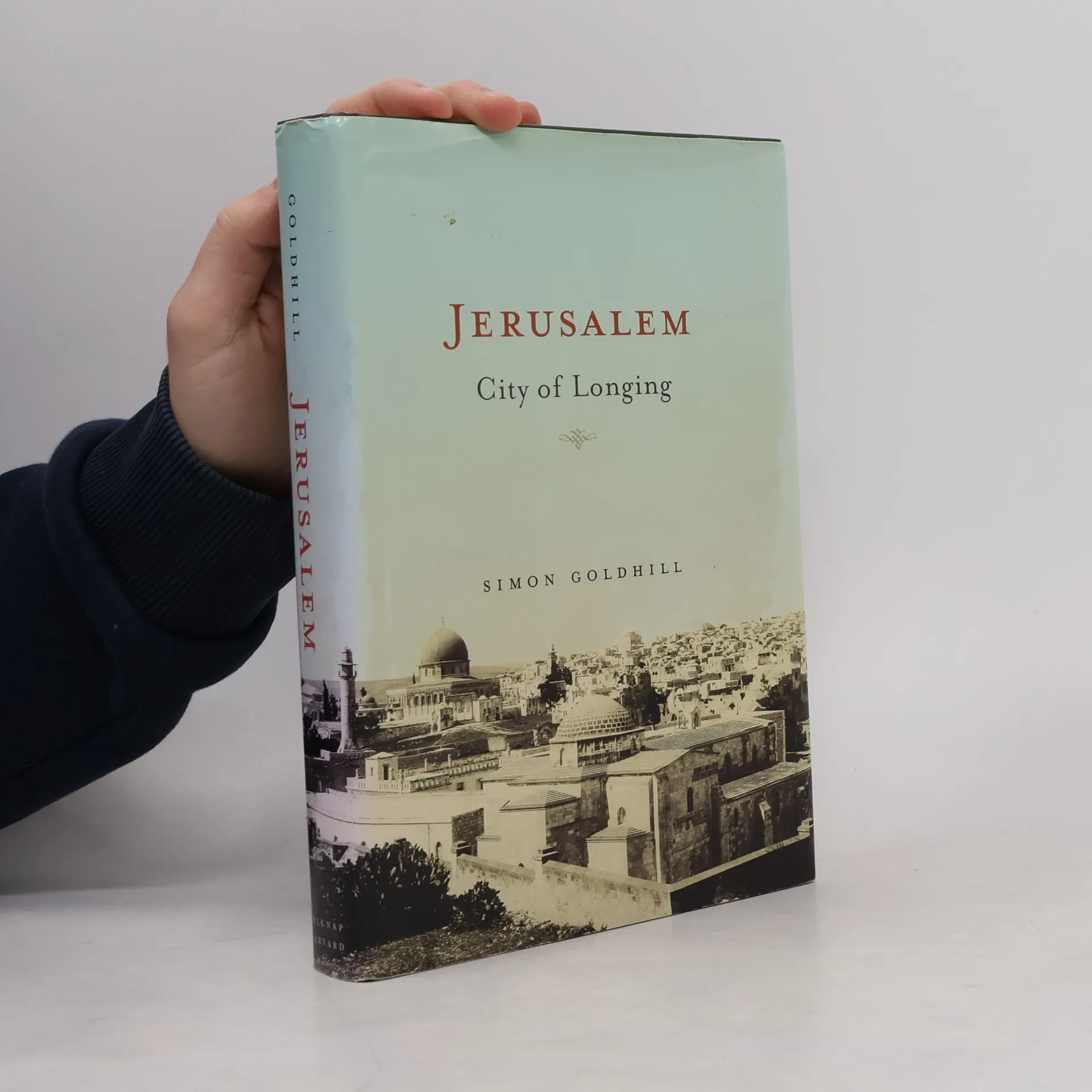
Jerusalem is renowned for its iconic religious monuments, including the Dome of the Rock, the Church of the Holy Sepulchre, and the Western Wall of the Temple. Since the nineteenth century, it has attracted countless tourists and religious pilgrims from the three Abrahamic faiths. However, the city is far more than a mere tourist destination; it is a place where every square mile is rich with historical significance, religious fervor, and extraordinary narratives. Each ruling Empire has left its mark: the Jews, Romans, Christians, Muslims, and modern Israelis have all shaped the city in unique ways. Jerusalem's uniqueness lies in its complex tapestry of passion, conflict, architectural splendor, and spiritual yearning, intertwined with political struggles. Its history is defined by three dominant forces: religion, war, and monumentality. In this exploration, Simon Goldhill delves into the intricate archaeology of human imagination, hope, and disaster, guiding us through the layers of this image-filled and ideology-laden city—from the foundations of the Old City to the heights of the Holy Sepulchre. Along the journey, we uncover a rich history, forgotten stories, and contemporary political dynamics that contribute to Jerusalem's status as one of the most contested cities globally.
Simon Goldhill Bücher

Reading Greek Tragedy
- 380 Seiten
- 14 Lesestunden
Revised edition of the pioneering Reading Greek Tragedy, which serves as an advanced, critical introduction for non-specialist readers who want to appreciate the plays in all their complexity. Includes a substantial new Introduction which engages with critical and scholarly developments in Greek tragedy since the original publication.
What Is a Jewish Classicist?
- 200 Seiten
- 7 Lesestunden
In recent years, the personal politics of academic institutions have sparked intense debate regarding access to education and the influence of identity on scholarship. This collection of essays from a prominent scholar of ancient Greece offers a thought-provoking exploration of these issues. It examines the role of personal voice in scholarship, the interplay of religion and cultural identity within academia, and the transformative nature of translation in engaging with ancient literature. The first essay addresses how scholars can discuss their positionality and its impact on their work, questioning whether anyone can narrate their own story with sufficient self-awareness and sophistication. The titular second essay adopts a socio-anthropological lens, investigating patterns of inclusion and exclusion in the classics discipline, particularly the historical marginalization of Jews and their gradual assimilation post-World War II. This discussion prompts critical reflections on contemporary issues of race and identity in academia and their broader societal implications. The third essay shifts focus to the technological aspects of the discipline, emphasizing translation as a crucial, transformative practice rather than a mere technique. It argues that each generation requires its own translations to redefine its relationship with antiquity, underscoring the evolving nature of scholarship in response to changing cultural conte