




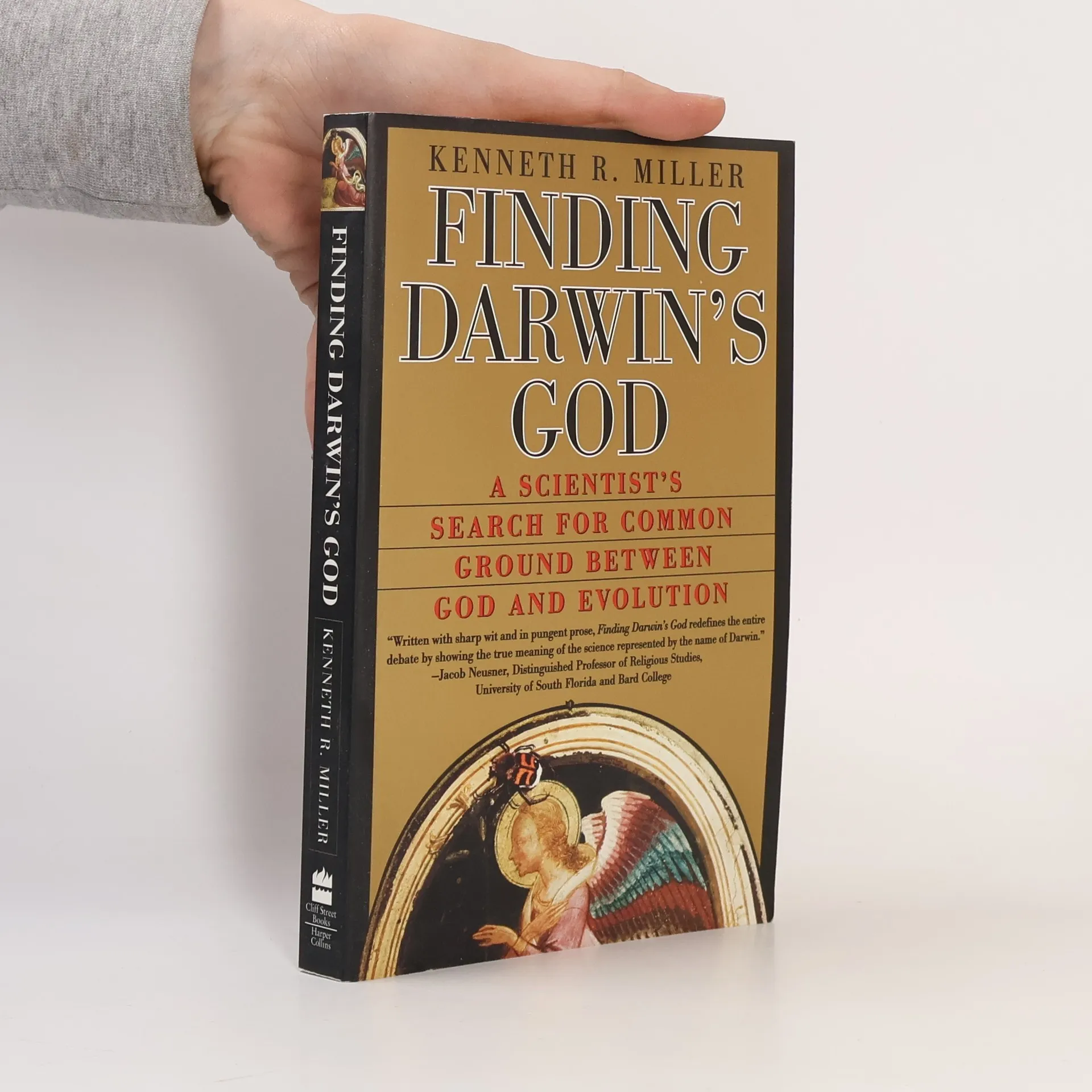
Finding Darwin's God
A Scientist's Search for Common Ground Between God and Evolution
- 338 Seiten
- 12 Lesestunden
Question: Who made us? Is it God or evolution? In this thought-provoking exploration, Kenneth R. Miller provides a compelling resolution to the evolution versus creationism debate. As a distinguished biology professor at Brown University, Miller reveals that the world of science is far more fascinating than both mainstream scientific views and creationist critiques suggest. He systematically dismantles the arguments of evolution's most vocal opponents, affirming the validity of Darwin's insights, even within the complex realms of biochemistry and molecular biology. Miller asserts that evolution is not only accurate but also compatible with spiritual beliefs. He challenges the notion that evolution undermines worldviews reliant on spirituality or necessitates agnosticism for scientific integrity. Instead, he argues that evolution enriches both scientific understanding and spiritual perspectives. Throughout this engaging narrative, Miller addresses the perceived conflicts between science and religion, demonstrating that the challenges evolution poses to Western religions are often overstated. Ultimately, his analysis serves as a guide for those grappling with profound questions about existence and human origins, revealing how evolution can enhance our understanding of both the natural world and our spiritual lives.