
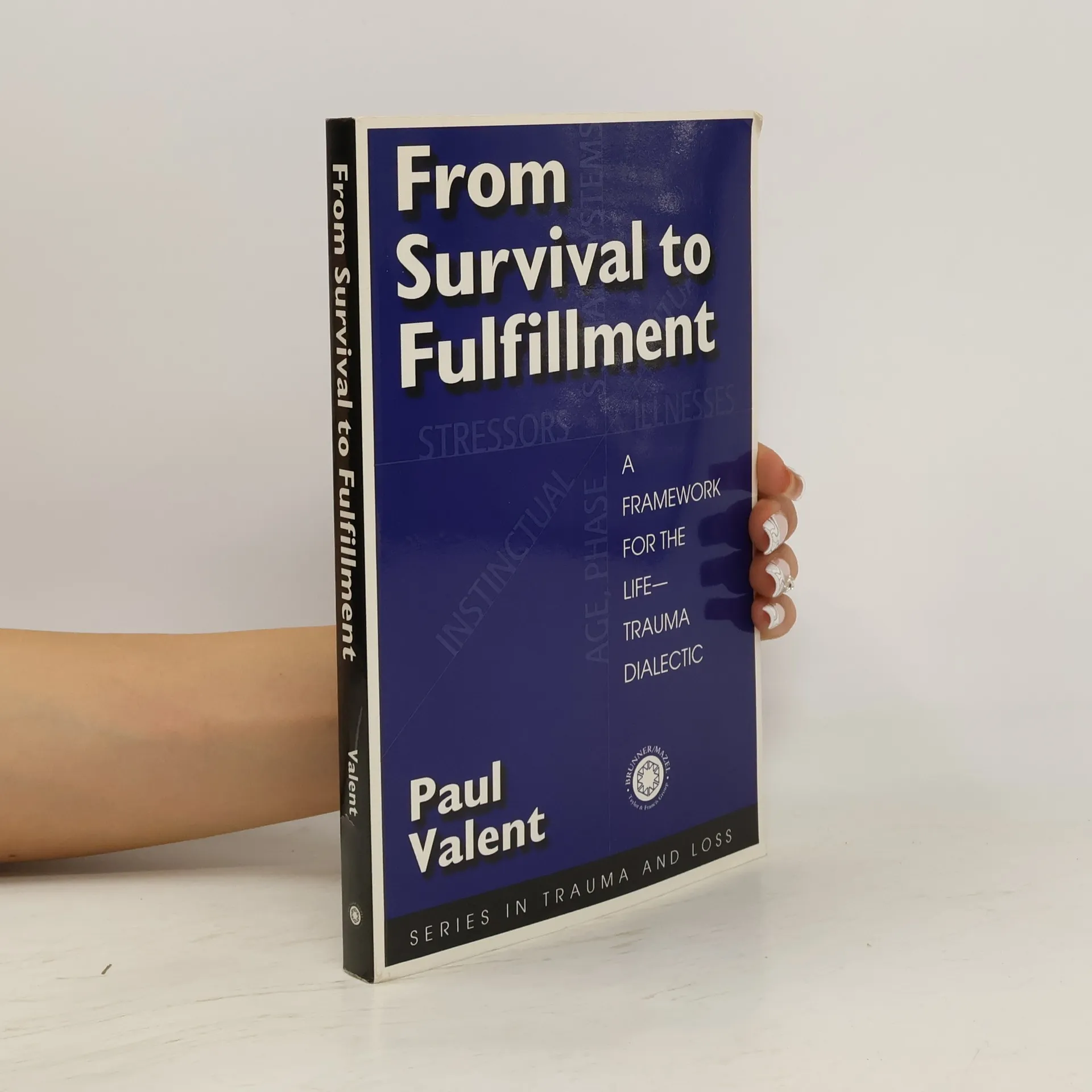
Paul Valent sees that the dialectic is not between life and death but between
life and trauma. This text theorizes that the big issues of life can now be
approached through the science of traumatology.
Violence is the plague of our civilization. It threatens us daily through its many domestic violence, criminal violence, sexual abuse, terrorism, state violence, revolution, war, and genocide.The recently evolved discipline of traumatology has amply described commonalities in the consequences of violence. But there was no corresponding discipline of violentology, which explained why violence occurred in the first place.Inexorably, Valent was drawn to take the leap from healing the minds of victims to try to understand the minds of perpetrators.Valent unpicks the minds of perpetrators in each field of violence. He develops a lens by which to understand violence from individual to international, and from primitive to spiritual dimensions. We come to understand how aggressions that helped our species to survive now threaten our species with extinction. Such understanding may help to eliminate our current plague, just as understanding helped to eliminate the original one.Valent explains his thesis through many stories accessible to both professionals and lay readers. One story interweaving throughout is Valent’s own story. From a child who survived the Holocaust, he ferrets out the minds of his perpetrators in his quest to prevent future violence.Violence, for Valent, is not an isolated feature of the human condition. Surprisingly close to violence are struggles for love. Readers also learn about that aspect of humanity.
Helps the reader understand the very wide mental health effects of this
pandemic, and thus to understand how distress may be better managed today and
in the future.