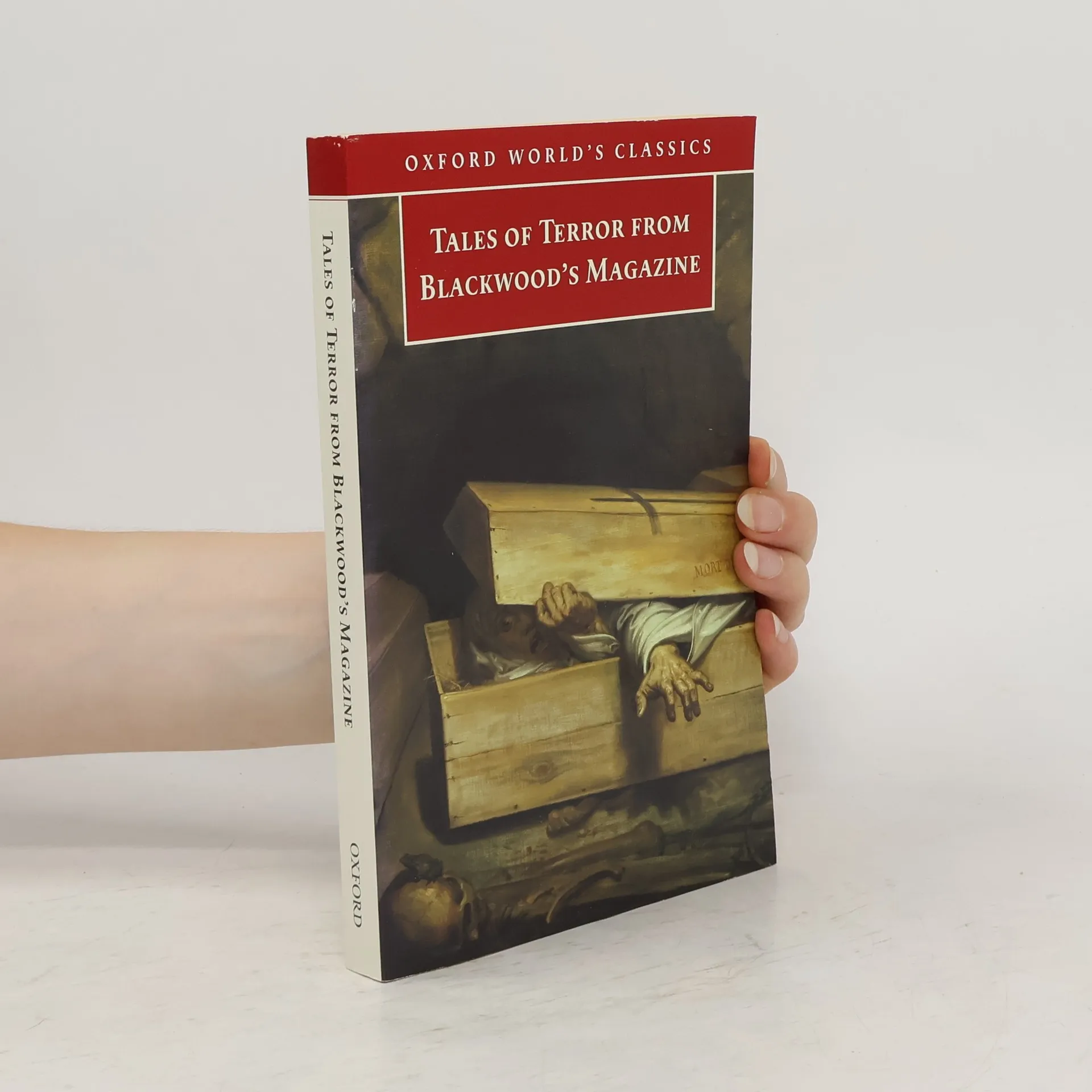
The tales of terror and hysteria published in the heyday (1817-32) of "Blackwood's Edinburgh Magazine" became a literary legend in the 19th century. This edition selects some of the best and most representative tales from the magazine's first 15 years including work by Walter Scott and John Galt
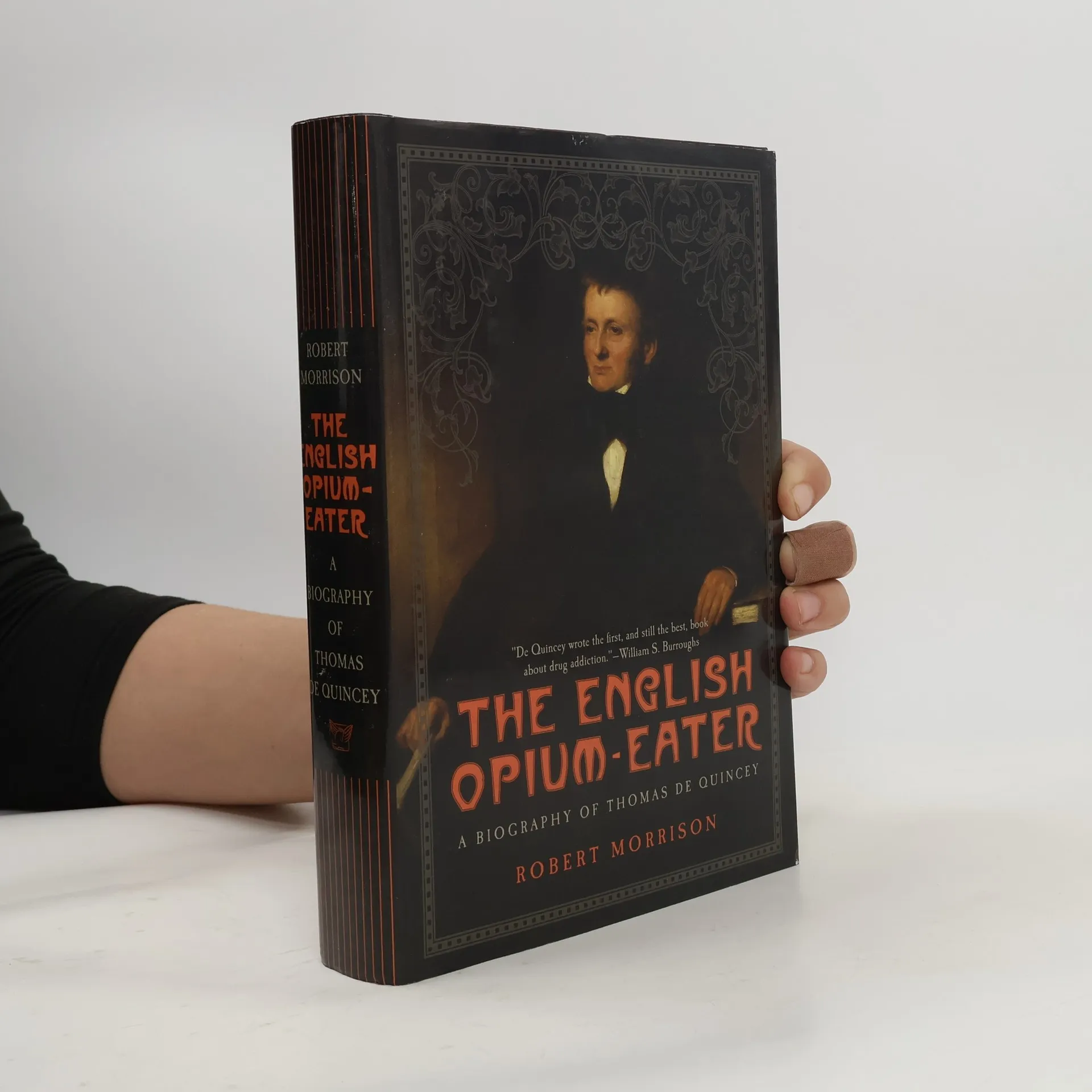
Author of the famed and scandalous Confessions of an English Opium-Eater , Thomas De Quincey (1785-1859) has long lacked a full-fledged biography. His friendships with leading poets and men of letters in the Romantic and Victorian periods—including William Wordsworth, Samuel Taylor Coleridge and Thomas Carlyle—have long placed him at the center of nineteenth century literary studies. He was a man who engaged with nearly every facet of literary culture, including the roles played by publishers, booksellers, and journalists in literary production, dissemination and evaluation. His writing was a tremendous influence on Edgar Allan Poe, Charles Dickens, and William Burroughs. De Quincey is a fascinating (and topical) figure for other reasons, too: a self-mythologizing autobiographer whose attitudes to drug-induced creativity and addiction strike highly resonant chords for a contemporary readership. Robert Morrison’s biography passionately argues for the critical importance and enduring value of this neglected icon of English literature.
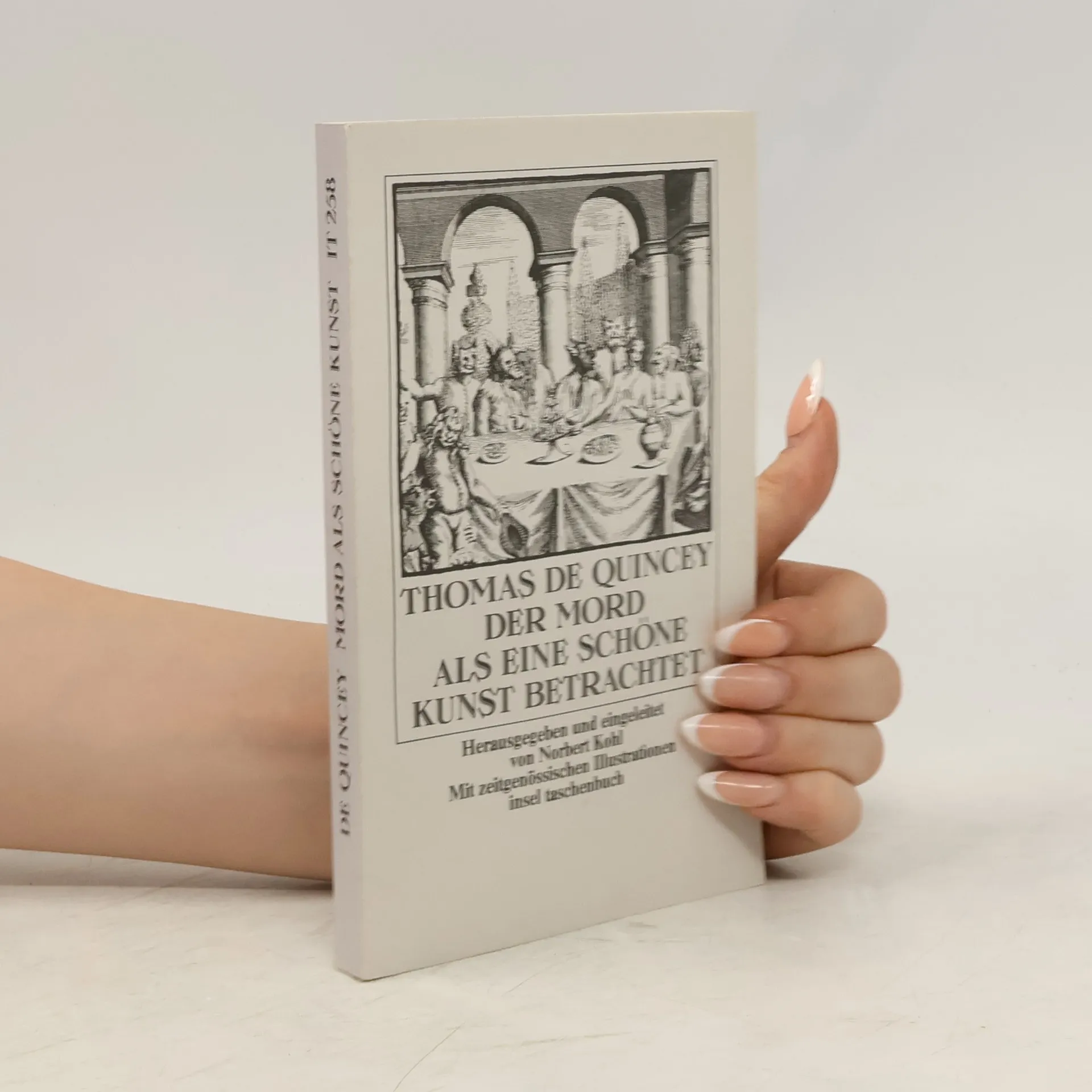
De Quinceys Text, der mit schwarzem Humor in stilistisch brillanter Weise den künstlerisch vollendeten Mord nahezu rechtfertitgt, zählt zu den großen englischen Essays. Dass es darin nicht allein um Satire geht, schreibt der Literaturkritiker Joachim Kalka im 'Spiegel spezial' vom Oktober 2003:" Mit seinem kühnen Essay ' Der Mord als schöne Kunst betrachtet' ist der englische Romantiker Thomas DeQuincey so etwas wie der Schutzheilige der Kriminalromans geworden - all der Texte, die den Mord ästhetisch auffassen, als Problem mit eleganter Lösung. De Quincey wirft uns beiläufig zurück auf die eigentlich ängstigende Frage, bei der die Gemütlichkeit aufhört: Was gefällt uns daran so sehr?"