



Joseph P. Farrell Bücher
Dieser Autor befasst sich mit unkonventionellen Perspektiven auf Geschichte und Wissenschaft und verknüpft scheinbar unterschiedliche Bereiche wie Nazi-Deutschland, Physik und antike Bauwerke. Seine Arbeit erforscht Mysterien und verborgene Agenden, von denen er glaubt, dass sie unsere Welt prägen. Umfassende Forschungsergebnisse werden in einem argumentativen Stil präsentiert, der etablierte Narrative in Frage stellt. Leser können kühne Theorien und provokante Interpretationen erwarten.


Was hat es mit der geheimnisumwobenen „Glocke“ auf sich? 1945 verließ ein geheimes Hightech-Waffenprojekt mit dem Decknamen „die Glocke“ seinen unterirdischen Bunker in Niederschlesien – und mit ihr Hans Kammler, Viersterne-General der SS. An Bord eines riesigen sechsmotorigen Ultralangstreckenflugzeugs vom Typ Junkers 390 verschwanden die Glocke, Kammler und sämtliche Projektunterlagen für immer von der Bildfläche. Ging dieser Flug nach Amerika oder nach Argentinien? Der Großteil der Wissenschaftler und Techniker, die an diesem Projekt gearbeitet hatten, wurden von der SS ermordet. So verschwand eine Geheimwaffe, die laut einem deutschen Physik-Nobelpreisträger als „kriegsentscheidend“ galt – eine Einstufung, die höher war als die der Atombombe. Welche bahnbrechenden physikalischen Geheimnisse waren mit der Glocke verbunden? Um sie zu schützen, scheuten überlebende Nazis auch nach dem Krieg keine Mittel. Dr. Joseph P. Farrell, spezialisiert auf wenig dokumentierte Aspekte in Wissenschaft und Geschichte, enthüllt in diesem Buch eine Reihe exotischer Technologien, die im Dritten Reich erforscht wurden. Er wirft damit ein neues Licht auf die gängige Sichtweise über den Ausgang des Zweiten Weltkrieges sowie auf den Roswell-Vorfall und MAJIC-12, das mysteriöse Geheimteam der amerikanischen Regierung zur Untersuchung von UFOs.
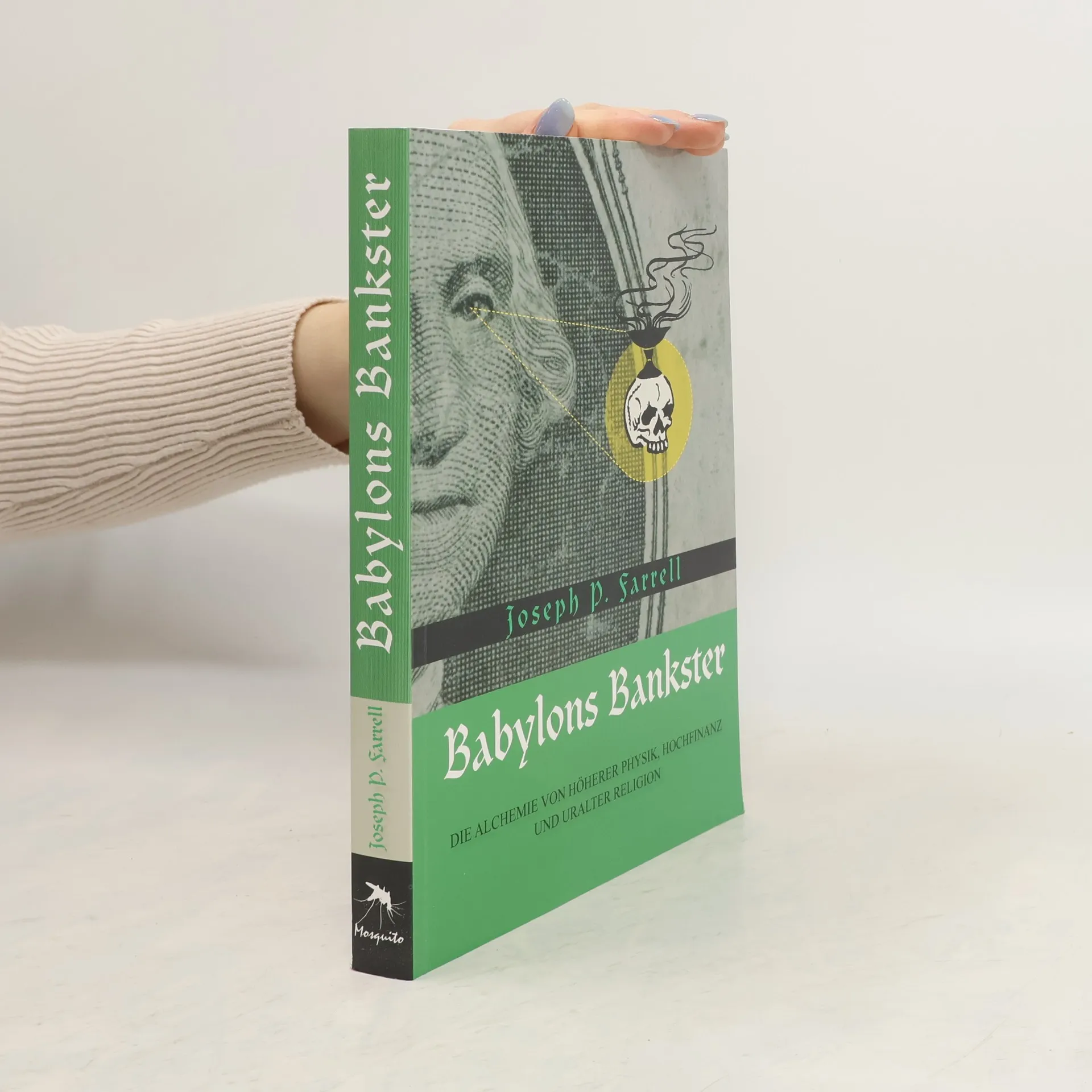
Babylons Bankster
Die Alchemie von Höherer Physik, Hochfinanz und uralter Religion
Seit den Tagen des alten Babylon bis ins New York der heutigen Zeit verfolgt eine internationale Klasse von Gangster-Bankiers eine konsistente Strategie, um die Menschheit zu versklaven. Sie tun dies, indem sie sich der Hoheit des Staates über die Erschaffung und Ausgabe von Geld bemächtigt haben und damit die öffentliche Entwicklung alternativer Technologien in der Physik und der Energiewirtschaft bremsen. Joseph P. Farrell zeigt, dass eine tiefe Physik hinter den astrologischen Berechungen der großen ökonomischen Depressionen existiert und enthüllt dabei die Verbindung der Bankster mit den Tempeln der Antike und warum jene Tempel für die Operationen der Bankster so grundlegende Bedeutung hatten. Sklaverei, Inbesitznahme der geldschaffenden Macht des Staates, die Erfindung von Schulden als Form von Geld, ökonomische Zyklen und Astrologie: Dies waren seit den alten Zeiten die Praxis und die Strategien der Bankster, und es ist, wie Farrell am Ende seines Buchs bemerkt, „höchste Zeit, jetzt mit ihnen aufzuräumen.“

A major new interpretation of Vergil's epic poem as a struggle between two incompatible versions of the Homeric heroThis compelling book offers an entirely new way of understanding the Aeneid. Many scholars regard Vergil's poem as an attempt to combine Homer's Iliad and Odyssey into a single epic. Joseph Farrell challenges this view, revealing how the Aeneid stages an epic contest to determine which kind of story it will tell--and what kind of hero Aeneas will be.Farrell shows how this contest is provoked by the transgressive goddess Juno, who challenges Vergil for the soul of his hero and poem. Her goal is to transform the poem into an Iliad of continuous Trojan persecution instead of an Odyssey of successful homecoming. Farrell discusses how ancient critics considered the flexible Odysseus the model of a good leader but censured the hero of the Iliad, the intransigent Achilles, as a bad one. He describes how the battle over which kind of leader Aeneas will prove to be continues throughout the poem, and explores how this struggle reflects in very different ways on the ethical legitimacy of Rome's emperor, Caesar Augustus.By reframing the Aeneid in this way, Farrell demonstrates how the purpose of the poem is to confront the reader with an urgent decision between incompatible possibilities and provoke uncertainty about whether the poem is a celebration of Augustus or a melancholy reflection on the discontents of a troubled age.
Where did the custom of duelling originate, and why did it spread so quickly all over Europe and the Americas?
While researching his other books, the author found information that shows The Nazi International is still in existence today and has become a corporate power that has fused with state power. This allows The Nazi International to continue to pursue their goal of creating a pan-European federation under their leadership. In order to realize this goal, they have turned to the American financial and corporate elite to institute financial fraud, international banking, hidden systems of finance, black budgets and breakaway civilizations, allowing them to disrupt and control global finance
Nazi International
- 413 Seiten
- 15 Lesestunden
Presents an expose on secret Nazi technology, Nazi survival, and post-war Nazi manipulation of technologies. This title includes: pre-World War II Nazi partnerships in the USA, including those with the Bush family; and, Nazi Germany's penetration of the Muslim world including Wilhelm Voss and Otto Skorzeny in Gamel Abdul Nasser's Egypt.
What do the Fourth Crusade, the exploration of the New World, secret excavations of the Holy Land, and the pontificate of Innocent the Third, all have in common? Venice and the Templars. What do they have in common with Jesus, Gottfried Leibniz, Sir Isaac Newton, Rene Descartes, and the Earl of Oxford? Egypt and a body of doctrine known as Hermeticism. In this book, noted author and researcher Joseph P Farrell takes the reader on a journey through the hidden history of the Middle Ages, the Renaissance and early Enlightenment, connecting the dots between Venice, international banking, the Templars, and hidden knowledge, drawing out the connections between the notorious Venetian "Council of Ten," little known Venetian voyages to the New World, and the sack of Constantinople during the Fourth Crusade. That hidden role of Venice and Hermeticism reached far and wide, into the plays of Shakespeare (a.k.a. Edward DeVere), Earl of Oxford, into the quest of the three great mathematicians of the Early Enlightenment for a lost form of analysis, and back into the end of the classical era, to little known Egyptian influences at work during the time of Jesus.
A examination of stereotypical ideas about Latin and their effect on how Latin literature is read. schovat popis