Gratis Versand in ganz Österreich
Bookbot

Vincent Foster Hopper

    Medieval Number Symbolism
    English Verbs
    A pocket guide to correct grammar
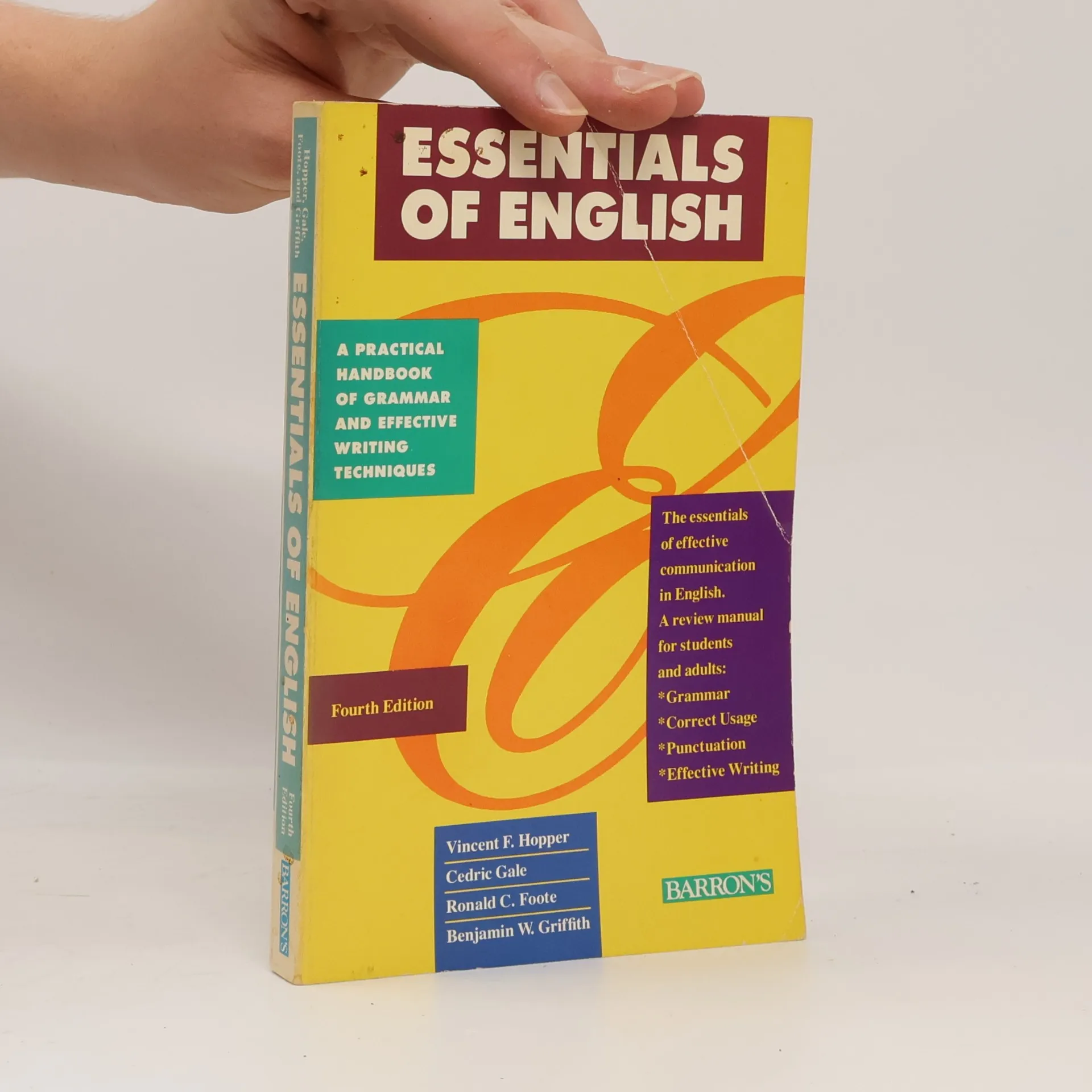
    • Good writing is based on sound, logical thinking. That is the approach taken in this concise, comprehensive guide to the principles of good grammar and standard English word usage. A practical analysis of the parts of speech demonstrates how they work together in a correctly constructed sentence.

      A pocket guide to correct grammar
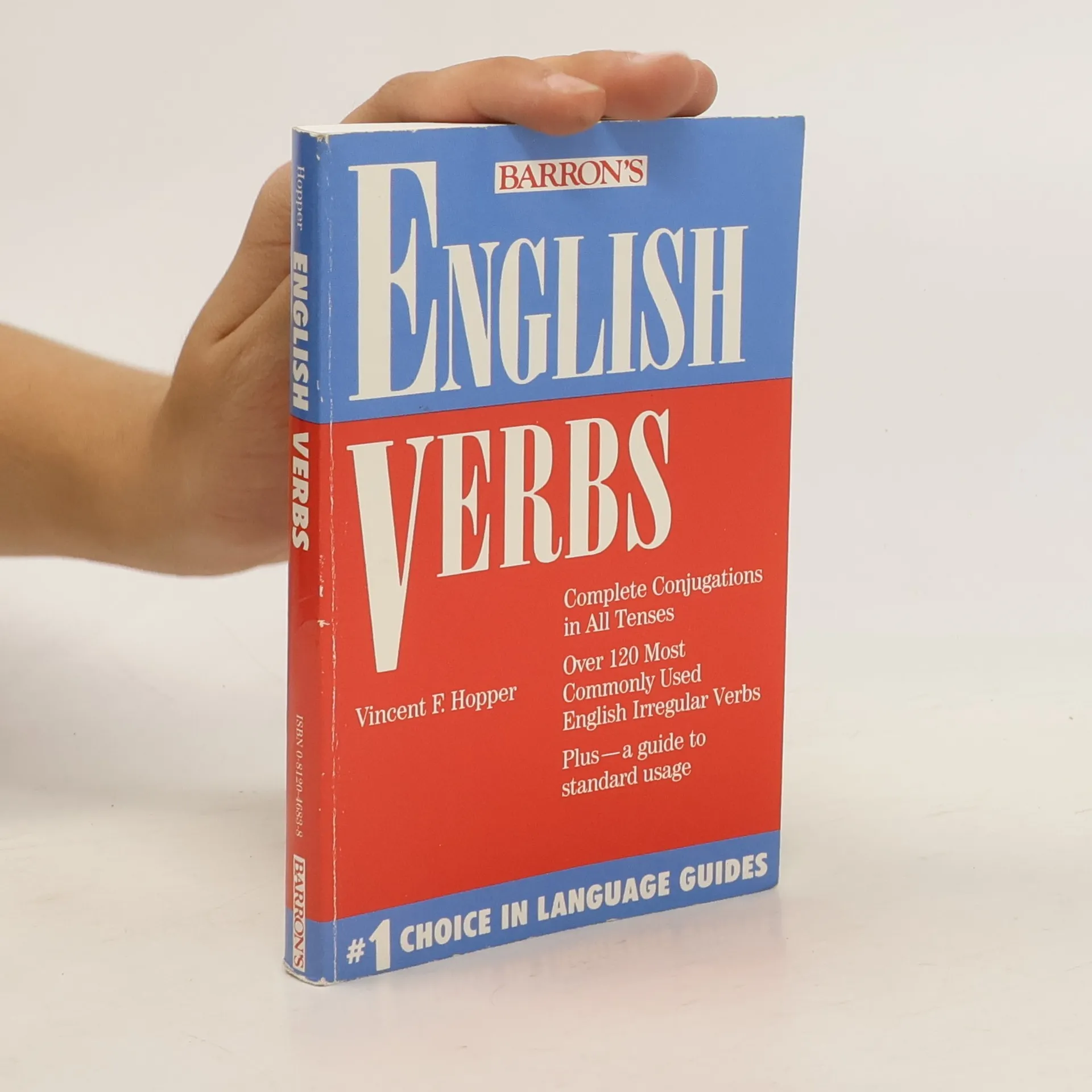
    • A complete pocket conjugation guide of all tenses, which contains over 3000 of the most commonly used English irregular verbs. To facilitate comprehension, a review of English Grammar & a guide to standard usage are included. This new quick-reference handbook is ideal for those who speak English as a second language.

      English Verbs
    • Medieval Number Symbolism

      Its Sources, Meaning, and Influence on Thought and Expression

      • 256 Seiten
      • 9 Lesestunden

      For Dante and other people in the Middle Ages, numbers had a different set of connotations than they do for moderns. The symbolism of numbers was both widespread and profoundly ingrained in the culture. In this classic study, a noted scholar reveals “how deeply rooted in medieval thought was the consciousness of numbers, not as mathematical tools, nor yet as the counters in a game, but as fundamental realities, alive with memories and eloquent with meaning.” For example, the number three — linked to the Trinity — was of special significance, and “endowed every repetition of the number three with a richness of meaning which can be but dimly grasped by the modern reader.” Numbers derived from constellations, planets, stellar revolutions, and other astronomical phenomena were also thought to have divine associations. These and many other aspects of the topic are illuminated here. In the first three chapters, the author examines the three main sources of number symbolism; basic, elementary symbols derived from man’s struggles to count and identify such natural groupings as fingers and toes; the ancient Babylonian science of astrology; and Pythagorean number theory, which fixed the relationship of the numbers to one another. The fourth and fifth chapters deal with the Gnostics’ elaborate combination of these elements, and the adoption and elaboration of number philosophy by the early Church Fathers. The last two sections examine medieval number philosophy and Dante’s use of number symbolism, particularly in The Divine Comedy. Of special interest to medievalists, numerologists, and students of literature, this volume will also fascinate anyone interested in symbology or cultural aspects of the Middle Ages.

      Medieval Number Symbolism