

A new interpretation of the work of Bramante, suggesting an agenda for contemporary architectural practiceIn On Bramante , architect Pier Paolo Tamburelli considers the work of the celebrated Italian Renaissance architect Donato Bramante and through this reappraisal suggests a possible agenda for current architectural practice. Bramante, Tamburelli argues, offers an excellent starting point to imagine a contemporary theory of space, to reflect on the relationship between architecture and politics, and to look back—with neither nostalgia nor contempt—at the tradition of Western classicism.Starting from a discussion of the difference in the work of Bramante in Milan (1481–1499) and Rome (1499–1514), Tamburelli highlights the peculiarities of Bramante’s architecture, especially in comparison to that of his predecessor Leon Battista Alberti and successor Andrea Palladio. This in turn opens up new possibilities for appreciating his spatial experiments, and to derive from Bramante’s abstraction and disassociation of form from function a revised theory of space for contemporary architecture. Such a theory might even advance a newfound political understanding of classicism, and a model—perhaps more valid now than ever before—for a public architecture.The text is bookended by a series of color photographic plates of Bramante’s works by photographer Bas Princen.
Pier Paolo Tamburelli Bücher
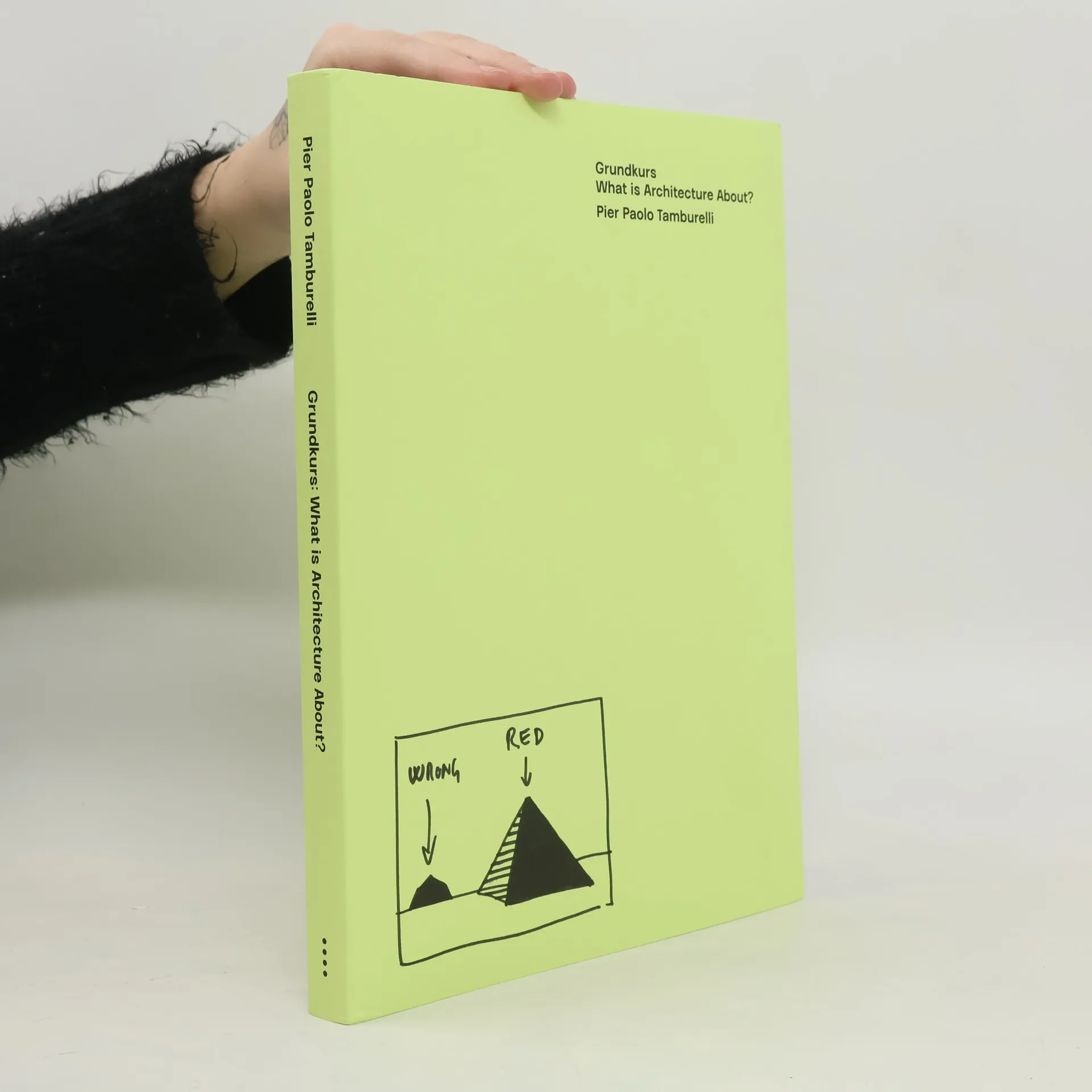

In this collection of lessons, architect and educator Pier Paolo Tamburelli explores the foundations of architecture, offering new perspectives on building the world. Developed for the ‘Grundkurs’ at Vienna Technical University, Tamburelli’s lessons are illustrated through annotated sketches that range from rough to precise, and from sarcastic to sincere, showcasing his unique expressiveness. This volume serves as a sourcebook of architectural ideas, providing an accessible introduction to the discipline that values intuitive processes like notetaking, drawing, and association over grand theories. The lessons revolve around dialectic pairs such as Roof/Wall, Shelter/Memory, and Language/Action, which are experimental and provocative, creating a framework for exploring architecture. Tamburelli highlights the power of images to transcend rigid theoretical constraints, embraces the wisdom of notes, and enjoys the intrigue of cryptic messages. These eight lessons, reproduced in full, offer numerous pathways through architecture, inviting both newcomers and experts to engage with this ancient discipline in a fresh and intimate way. The book includes an introduction by the author and an afterword by Mark Lee, Chair of the Department of Architecture at Harvard GSD.