

Diese spannende Erkundung der Natur des Lebens verbindet auf brillante Weise die Aufregung intellektueller Entdeckungen mit einer fruchtbaren Mischung von Einsichten und bietet dem allgemeinen Leser einen faszinierenden Einblick in die neue Wissenschaft der Komplexität und in die Ordnungskräfte, die am Rand des Chaos wirken.
Stuart Kauffman Bücher
28. September 1939
Stuart Kauffman ist ein amerikanischer theoretischer Biologe und Forscher komplexer Systeme, der sich auf den Ursprung des Lebens auf der Erde konzentriert. Seine Arbeit legt nahe, dass die Komplexität biologischer Systeme ebenso stark aus Selbstorganisation und Dynamiken entfernt vom Gleichgewicht entstehen könnte wie aus Darwins natürlicher Selektion. Er wendet auch Boolesche Netzwerkmodelle auf vereinfachte genetische Schaltkreise an und trägt so zum Verständnis der emergenten Eigenschaften des Lebens bei.

Investigations
- 308 Seiten
- 11 Lesestunden
In the tradition of Schrödinger's classic, this book offers a profound investigation into the essence of life, challenging the foundational scientific approaches of Newton, Boltzmann, Bohr, and Einstein. Building on ideas introduced in Kauffman's At Home in the Universe, which was praised for its passionate and courageous insights, the author explores the interaction between physical systems—like humans and their environments. He argues that these systems act as autonomous agents, prompting the question: what truly defines life? By delving into concepts of autonomous agents within the frameworks of thermodynamics and information theory, Kauffman provides a novel perspective that transcends traditional scientific thought. The work unpacks the implications of his definition, laying the groundwork for a new understanding of organization and the emergence of a general biology that could apply to biospheres beyond Earth. Additionally, he proposes four candidate laws to explain how these autonomous agents co-create their biosphere, introducing the intriguing notion of a "co-creating" cosmos. This book encapsulates Kauffman's most significant ideas, presenting a transformative approach to understanding life itself, both on our planet and throughout the universe.
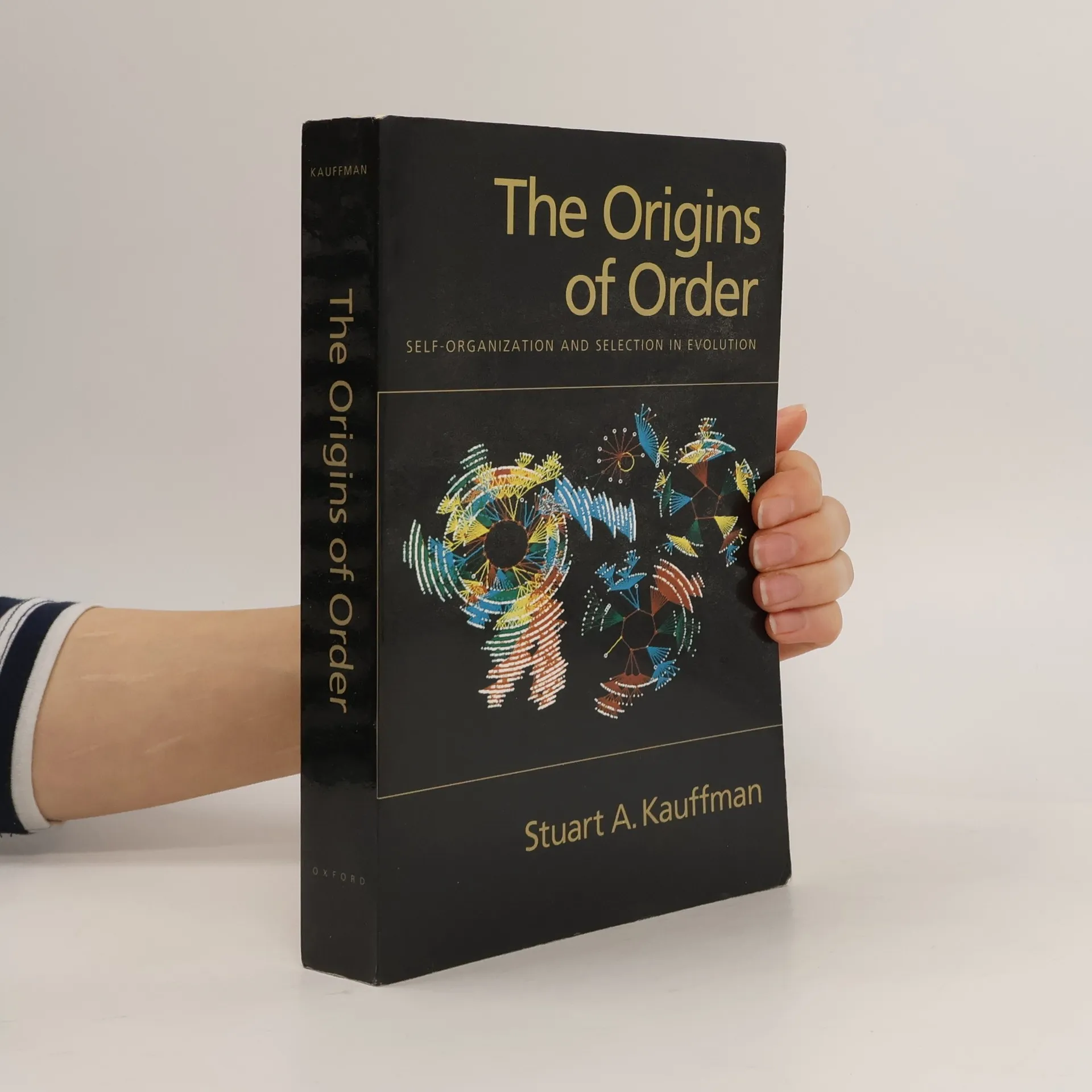
Stuart Kauffman presents a groundbreaking paradigm for evolutionary biology that integrates Darwinian concepts with insights from biology, physics, chemistry, and mathematics. The book delves into the origins of life and the maintenance of order in complex biological systems, emphasizing self-organization—the spontaneous emergence of order seen throughout nature. Kauffman posits that self-organization is crucial to the Darwinian process of natural selection, yet it has not been systematically incorporated into evolutionary theory. The mechanisms that enable complex systems to adapt remain poorly understood, as does the role of selection in fostering adaptability. This exploration reveals how complex systems can unexpectedly demonstrate remarkable order, which is vital for comprehending life's emergence and evolution on Earth. Key topics include the new biotechnology of applied molecular evolution, with significant implications for drug and vaccine development; the interplay between order and chaos in natural systems; and the predictive capabilities of statistical mechanics in biology. The approaches discussed may redefine the future of biological science, appealing to anyone interested in cutting-edge life sciences research.