
Gratis Versand in ganz Österreich
Bookbot

Sam Harris

    9. April 1967
    Sam Harris
    The four horsemen : the discussion that sparked an atheist revolution
    Making Sense
    Waking Up
    Das Ende des Glaubens
    Erwachen
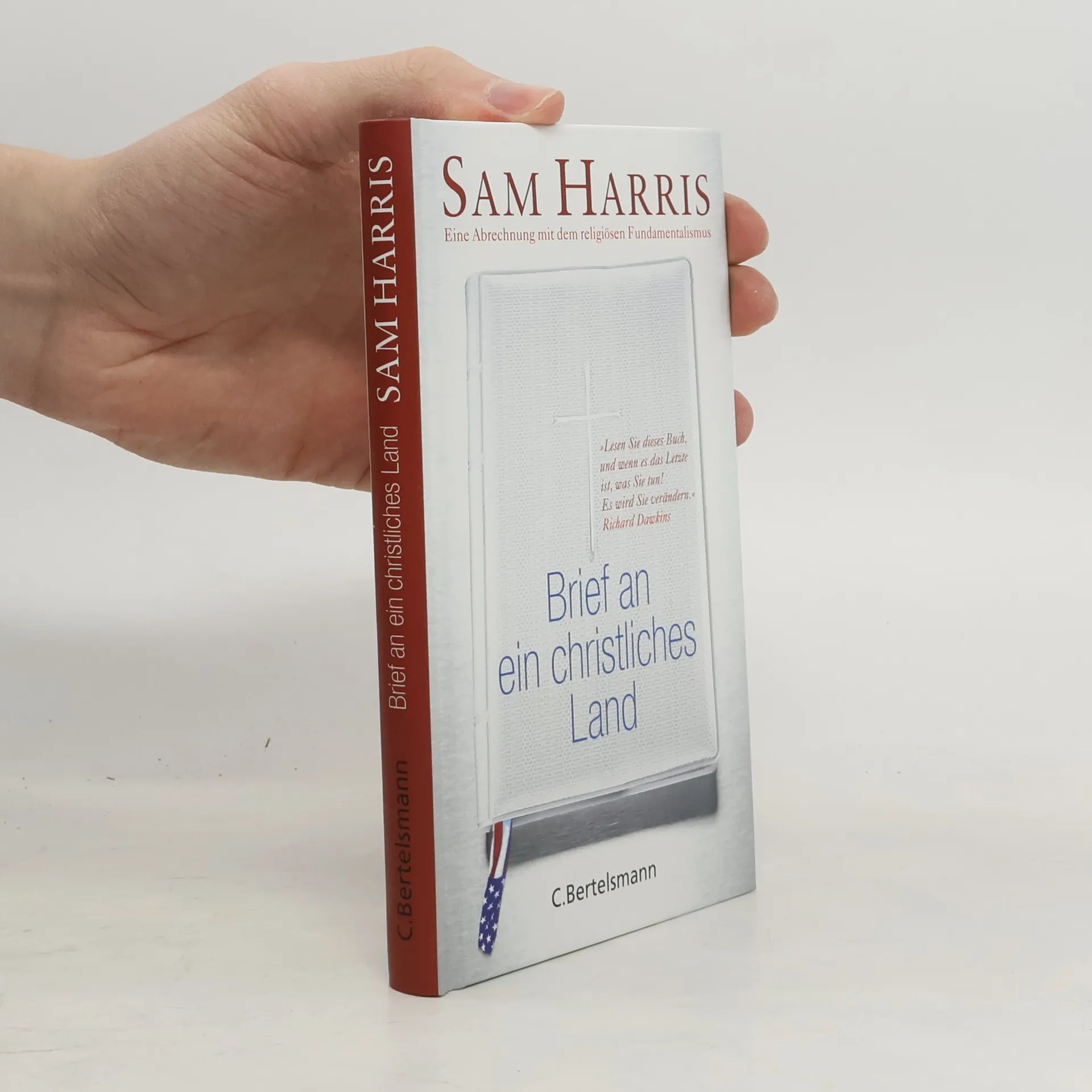
    Brief an ein christliches Land
    • Entlarvende Analyse des Missbrauchs von Religion am Beispiel des christlichen Fundamentalismus Religion steht wieder hoch im Kurs, aber der Glaube und die spirituellen Bedürfnisse der Menschen werden missbraucht: Weltweit sind die Fundamentalisten auf dem Vormarsch. Ausgehend von der christlich-fundamentalistischen Renaissance in den USA beschreibt Sam Harris die Religionen als tickende Zeitbomben. Mit ihrem Freund-Feind-Denken gefährden sie den inneren Konsens einer Gesellschaft und bedrohen den Weltfrieden. Harris entlarvt Unfriedlichkeit und Vernunftferne des Christentums, die aber jeder organisierten Religion immanent sind. Seine Streitschrift ist von funkelnder sprachlicher Eleganz und bestechend scharfer Argumentation.

      Brief an ein christliches Land
    • Erwachen

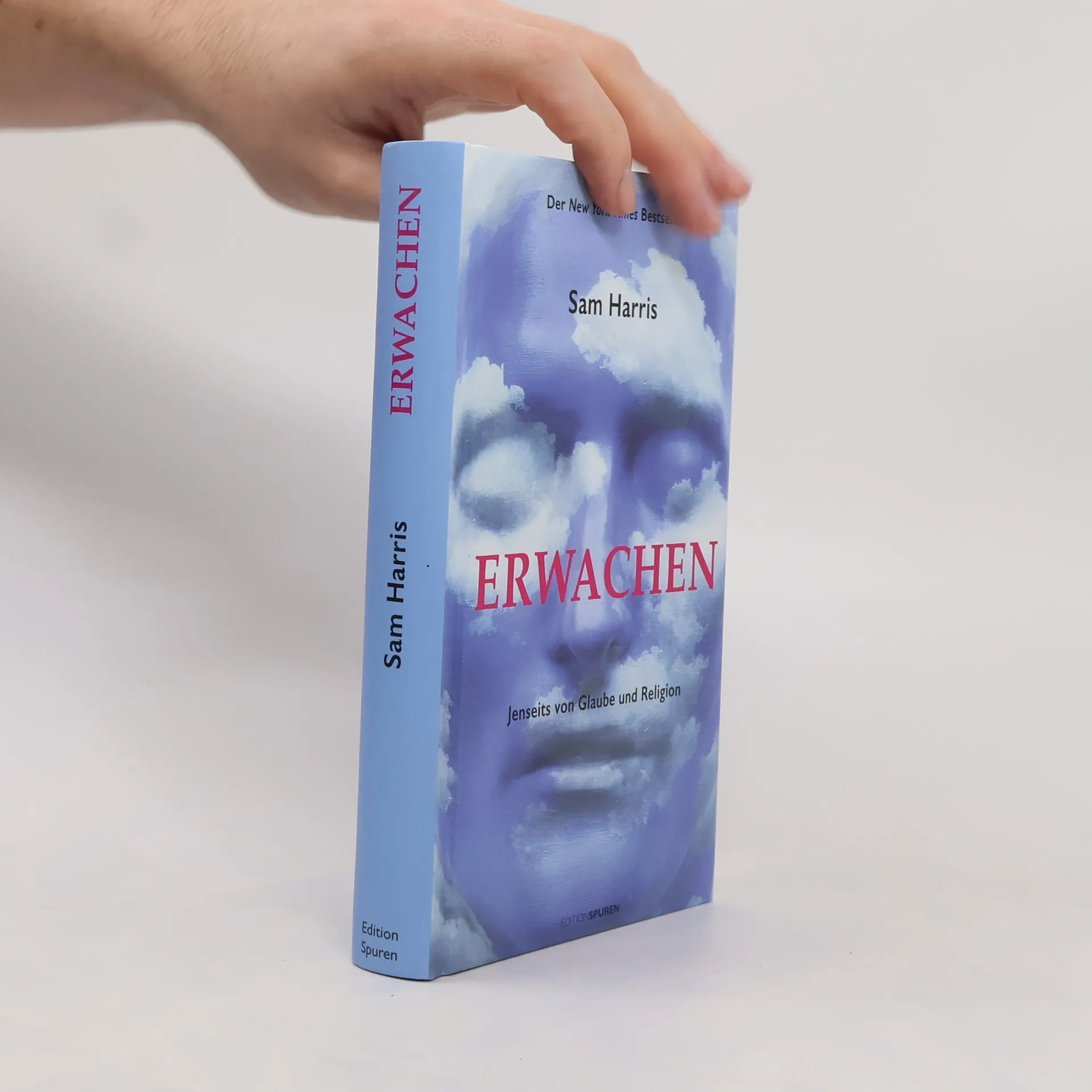
      Spiritualität jenseits von Glaube und Religion

      3,8(8)Abgeben

      Mitten in unserer Gesellschaft vollzieht sich ein grundlegender Wandel: Immer mehr Menschen wenden sich von Religionen ab und suchen nach geistigen Erfahrungen an anderen Orten. Sam Harris diskutiert in diesem Kontext, was wir heute als „Spiritualität“ bezeichnen. In einer Mischung aus persönlichem Erfahrungsbericht und wissenschaftlichen Grundlagen zeigt der Neurowissenschaftler auf, wie ein Erwachen jenseits von religiösem Glauben und Hoffnung möglich ist. Das Werk bietet eine Untersuchung des Selbst und eine Anleitung zur Transzendenz, indem es die Natur des Bewusstseins erforscht. Es erklärt Meditationspraktiken, beleuchtet psychoaktive Substanzen und warnt vor machtgierigen Gurus. Harris fordert die Leser heraus, ihre grundlegenden Annahmen über die alltägliche Wahrnehmung zu hinterfragen und bietet Perspektiven, die das Leben verändern können. Als Neurowissenschaftler argumentiert er, dass das Ego eine Illusion ist, ein Produkt unserer Hirnaktivität. Mit seiner langjährigen Meditationspraxis zeigt er Wege auf, wie wir ein erfüllteres Leben in besserer Verbindung mit unserer Umgebung führen können, wenn wir diese Illusion hinter uns lassen. Sam Harris ist ein renommierter Autor und Podcaster, der sich regelmäßig mit anderen Forschern austauscht.
      Erwachen
    • Das Ende des Glaubens

      Religion, Terror und das Licht der Vernunft

      3,9(39350)Abgeben

      Seit Krieg wieder heilig ist und Politiker zu Kreuzzügen aufrufen, wird von einem Wiedererstarken der Religion gesprochen. Sam Harris betrachtet den Zusammenhang zwischen Religion und Gewalt nüchtern und untersucht die Hintergründe des islamistischen Terrors sowie Gewaltausbrüche anderer Glaubenssysteme. Er spricht aus, was andere kaum zu denken wagen, und unterscheidet zwischen Religion und Spiritualität – ein Weckruf in glaubensverdunkelter Zeit. Die leidenschaftliche und freimütige Analyse der Gefahren und Verrücktheiten organisierter Religion hat Leser wie Natalie Angier überzeugt, die sich vom Autor persönlich verstanden fühlte. Richard Dawkins fordert auf, Harris zu lesen und aufzuwachen. Selbst Kritiker erkennen die tief- und weitreichende Analyse an, die The Economist lobt. Stephanie Merritt beschreibt das Werk als Frontalangriff auf die Idee der religiösen Toleranz und als Anstoß zur Säkularisierung unserer Gesellschaft. Sam Harris hat Philosophie an der Stanford University studiert und in Neurowissenschaften an der UCLA promoviert. Seit dreißig Jahren beschäftigt er sich mit mystischen Erfahrungen verschiedener spiritueller Traditionen. Für sein erstes Buch erhielt er 2005 den PEN-Preis für Sachbücher. Mit über 500.000 verkauften Exemplaren und weiteren Werken wie Lügen und Erwachen ist er ein gefragter Vortragsredner und Moderator des Podcasts Making Sense. Zudem bietet er meditative Impulse über die App Waking Up

      Das Ende des Glaubens
    • Waking Up

      • 256 Seiten
      • 9 Lesestunden
      4,2(801)Abgeben

      For the millions of people who want spirituality without religion, Sam Harris's new book is a guide to meditation as a rational spiritual practice informed by neuroscience and psychology. From bestselling author, neuroscientist, and "new atheist" Sam Harris, Waking Up is for the increasingly large numbers of people who follow no religion, but who suspect that Jesus, Buddha, Lao Tzu, Rumi, and the other saints and sages of history could not have all been epileptics, schizophrenics, or frauds. Throughout the book, Harris argues that there are important truths to be found in the experiences of such contemplatives-and, therefore, that there is more to understanding reality than science and secular culture generally allow. Waking Up is part seeker's memoir and part exploration of the scientific underpinnings of spirituality. No other book marries contemplative wisdom and modern science in this way, and no author other than Sam Harris-a scientist, philosopher, and famous sceptic-could write it.

      Waking Up
    • Making Sense

      • 464 Seiten
      • 17 Lesestunden
      4,1(251)Abgeben

      Neuroscientist, philosopher, podcaster and bestselling author Sam Harris, has been exploring some of the greatest questions concerning the human mind, society, and the events that shape our world. Harris' search for deeper understanding of how we think has led him to engage and exchange with some of our most brilliant and controversial contemporary minds - Daniel Kahneman, Robert Sapolsky, Anil Seth and Max Tegmark - in order to unpack and understand ideas of consciousness, free will, extremism, and ethical living. For Harris, honest conversation, no matter how difficult or contentious, represents the only path to moral and intellectual progress. Featuring twelve conversations from the hit podcast, these electric exchanges fuse wisdom with rigorous interrogation to shine a light on what it means to make sense of our world today.

      Making Sense
    • Known as the "four horsemen" of the New Atheism, four thinkers of the twenty-first century met only once. Their examination of ideas was wide-ranging. Everything that was said as they agreed and disagreed with one another, interrogated ideas and exchanged insights about religion and atheism, science and sense speaks to our present age. The dialogue was recorded, and is transcribed and presented in this book

      The four horsemen : the discussion that sparked an atheist revolution
    • Letter to a Christian nation

      • 112 Seiten
      • 4 Lesestunden
      4,1(1050)Abgeben

      "A hard-hitting polemic against religious fundamentalism" - Foreword by Richard Dawkins ' Thousands of people have written to tell me that I am wrong not to believe in God. The most hostile of these communications have come from Christians. This is ironic, as Christians generally imagine that no faith imparts the virtues of love and forgiveness more effectively than their own. The truth is that many who claim to be transformed by Christ's love are deeply, even murderously, intolerant of criticism. While we may want to ascribe this to human nature, it is clear that such hatred draws considerable support from the Bible. How do I know this? The most disturbed of my correspondents always cite chapter and verse.' So begins Letter to a Christian Nation, Sam Harris's hard-hitting rebuttal of religious fundamentalism and blind belief . With deceptively simple arguments, he demolishes the myths on which Christianity was built, challenges believers to open their eyes to the contradictions of their faith and warns us of the dangers of America's ever increasing unification of Church and State. Sam Harris is the author of the New York Times bestseller The End of Faith- Religion, Terror, and the Future of Reason and winner of the 2005 PEN/Martha Albrand Award for First Non-fiction. He is a graduate in philosophy from Stanford University and is now completing a doctorate in neuroscience. He lives in New York.

      Letter to a Christian nation
    • “A civil but honest dialogue...As illuminating as it is fascinating.” —Ayaan Hirsi Ali Is Islam a religion of peace or war? Is it amenable to reform? Why do so many Muslims seem to be drawn to extremism? And what do words like jihadism and fundamentalism really mean? In a world riven by misunderstanding and violence, Sam Harris—a famous atheist—and Maajid Nawaz—a former radical—demonstrate how two people with very different religious views can find common ground and invite you to join in an urgently needed conversation. “How refreshing to read an honest yet affectionate exchange between the Islamist-turned-liberal-Muslim Maajid Nawaz and the neuroscientist who advocates mindful atheism, Sam Harris...Their back-and-forth clarifies multiple confusions that plague the public conversation about Islam.” —Irshad Manji, New York Times Book Review “It is sadly uncommon, in any era, to find dialogue based on facts and reason—but even more rarely are Muslim and non-Muslim intellectuals able to maintain critical distance on broad questions about Islam. Which makes Islam and the Future of Tolerance something of a unicorn...Most conversations about religion are marked by the inability of either side to listen, but here, at last, is a proper debate.” —New Statesman

      Islam and the Future of Tolerance - A Dialogue
    • The Moral Landscape

      • 384 Seiten
      • 14 Lesestunden
      4,0(402)Abgeben

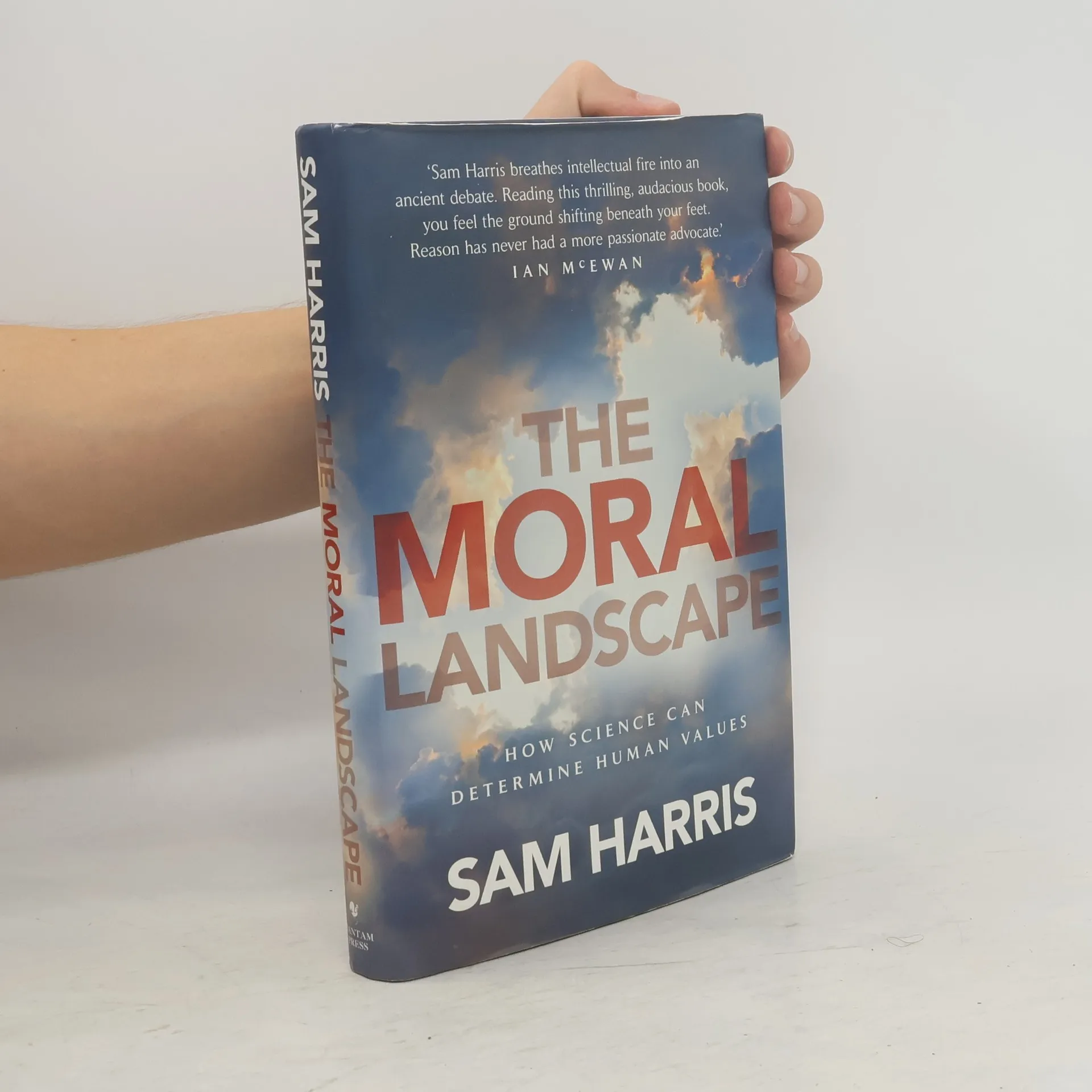
      Sam Harris's first book, The End of Faith, ignited a worldwide debate about the validity of religion. In the aftermath, Harris discovered that most people - from religious fundamentalists to nonbelieving scientists - agree on one point- science has nothing to say on the subject of human values. Indeed, our failure to address questions of meaning and morality through science has now become the primary justification for religious faith. In this highly controversial book, Sam Harris seeks to link morality to the rest of human knowledge. Defining morality in terms of human and animal well-being, Harris argues that science can do more than tell how we are; it can, in principle, tell us how we ought to be. In his view, moral relativism is simply false - and comes at an increasing cost to humanity. And the intrusions of religion into the sphere of human values can be finally repelled- for just as there is no such thing as Christian physics or Muslim algebra, there can be no Christian or Muslim morality. Using his expertise in philosophy and neuroscience, along with his experience on the front lines of our 'culture wars', Harris delivers a game-changing book about the future of science and about the real basis of human cooperation.

      The Moral Landscape
    • Ham

      Slices of a Life: True-Life Tales

      • 304 Seiten
      • 11 Lesestunden
      3,4(5)Abgeben

      The collection features personal essays that blend humor and sentimentality, showcasing the author's experiences with friendship, love, and celebrity. Sam Harris reflects on his journey of growing up and achieving sobriety, drawing comparisons to notable writers like David Sedaris and David Rakoff. Through engaging storytelling, he offers insights into his life and the challenges he has faced, making the essays both entertaining and relatable.

      Ham