John Stuart Mill S Philosophy Of Scientific Method
- 514 Seiten
- 18 Lesestunden


Published in 1946, this volume does not purpose to be a treatise on logic. The author's contributions to the substance of logical doctrine have been made in his other works. What he has attempted in the studies that form this volume is an exploration of the periphery of logic, the relation of logic to the rest of the universe, the philosophical presuppositions which give logic its meaning and the applications which give it importance. It is his belief that formal logic is the heart of philosophy, since the subject matter of logic is the formal aspect of all being. From this standpoint he explores the relation of logic to such fields of study as natural science, ethics, history and general philosophy.
Although differing in their emphases, all three contributors seek a more plausible and nonskeptical philosophical account of the status of scientific theories in relation to observation.
Over the past two centuries the field of logic has developed at an explosive pace into new areas far removed from the traditional syllogism and formal proof. The purpose of this well-known introductory treatment is to chart, clearly and lucidly, this new domain of today's vastly sophisticated logic. Author Morris R. Cohen explores "the periphery of logic, the relations of logic to the rest of the universe, the philosophical presuppositions which give logic its meaning, and the applications which give it importance."Beginning with an exploration of the traditional scope of logic as the medium of formal proofs, the text pursues a modern investigation of the relationship between logic and the mind, logic and speech, logic in metaphor and fiction―and most significantly, logic and the concept of abstract reasoning as applied to the empirical world. Additional topics include logic and statistical method, probability, and scientific models. Concise and highly readable, this volume is suitable for college undergraduates and other readers interested in logic. 1944 edition.
Illustrates the role of logic in various areas of humanistic and scientific thought.
Již z dálky viděl Pat O'Mulligan jjezdce, který sjížděl s kopce, poznal dlouhonohého, ocelově šedého hřebce, běžícího nenapodobitelným mírným, ale plynulým tryskem.

Structure of Science: Problems in the Logic of Scientific Explanation - 2nd Edition.
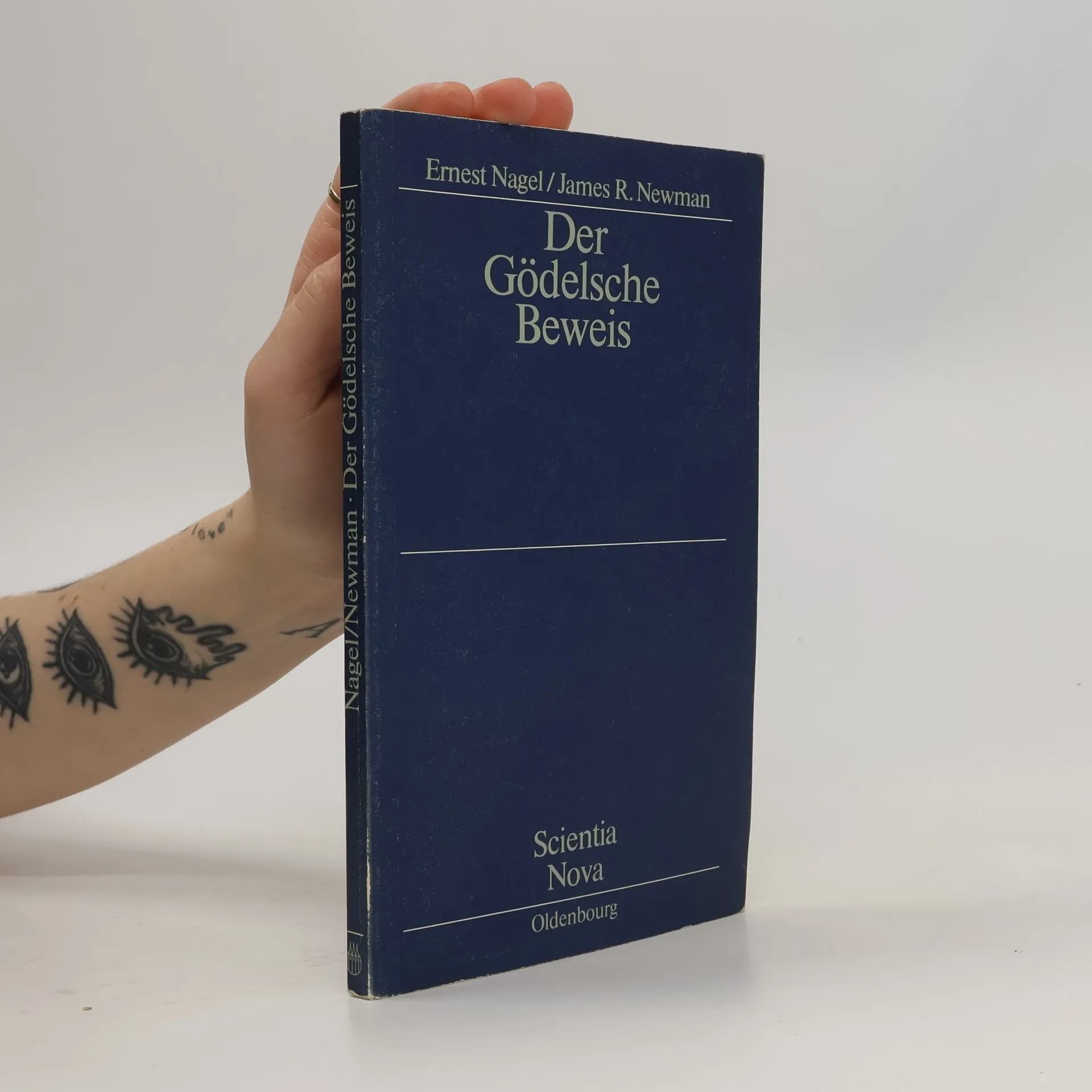
Spätestens seit Douglas R. Hofstadters "Gödel, Escher, Bach" ist der Name Gödel auch bei Nichtmathematikern bekannt geworden. 1931 hatte Kurt Gödel unter dem Titel "Über formal unterscheidbare Sätze der Principia Mathematica und verwandter Systeme" seinen Unvollständigkeitssatz publiziert. Nagel und Newman haben das Wesentliche an Gödels Ergebnissen für Nichtfachleute dargestellt. Die vorliegende 6. Auflage ist ein unveränderter Nachdruck der längst klassisch gewordenen Ausgabe von 1958