
Gratis Versand ab € 9,99
Bookbot

Clorinda Donato

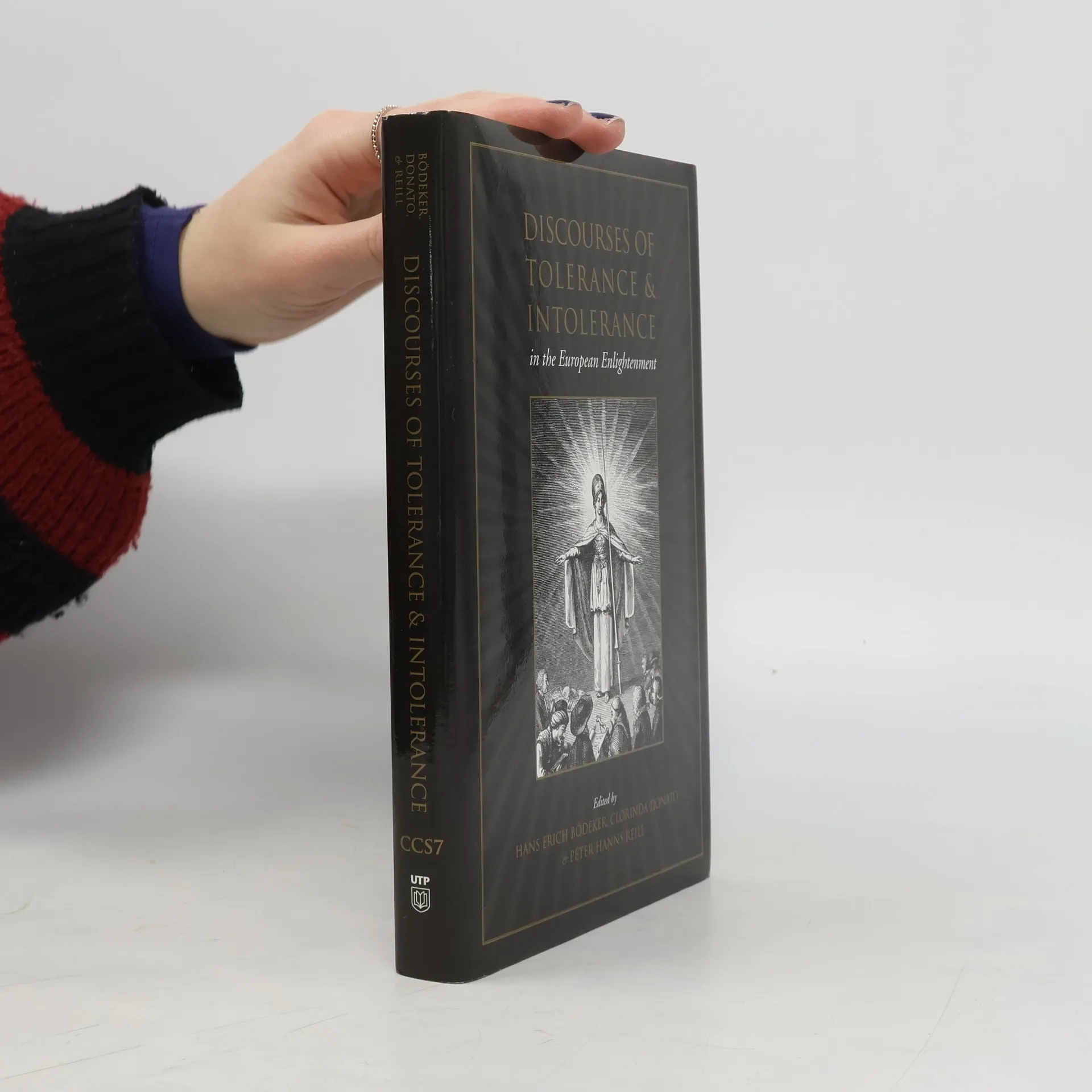
    Discourses of Tolerance & Intolerance in the European Enlightenment
    The Life and Legend of Catterina Vizzani
    • The Life and Legend of Catterina Vizzani

      Sexual Identity, Science and Sensationalism in Eighteenth-Century Italy and England

      • 405 Seiten
      • 15 Lesestunden

      Catterina Vizzani, a young Roman woman, pursued her love interest while disguised as a man. To escape potential legal repercussions for her sexual orientation, she transformed into Giovanni Bordoni, fully embracing a male identity through the most significant physical change available in the eighteenth century. This volume presents Giovanni Bianchi's 1744 Italian account of Vizzani/Bordoni, now available for the first time alongside a modern English translation, offering insight into Bianchi's objective exploration of gender. It also includes John Cleland's embellished 1751 version, highlighting the differing sexual politics between Bianchi's original and Cleland's narrative. Clorinda Donato examines Bianchi's work as an anatomical practitioner and his advocacy for tolerance of diverse sexual orientations. The chapters delve into medical and philosophical inquiries regarding sexual preference, reproduction, identity, and gender fluidity, reflecting Enlightenment anatomists' efforts to understand the connection between mind and reproductive organs. Additionally, Cleland's critique of women who 'pass' as men reveals the social implications of gender ambiguity. The volume explores the motivations behind Bianchi and Cleland's storytelling, framing it as either a narrative of empowerment or a cautionary tale amid shifting sexual attitudes in Europe, balancing scientific inquiry with social norms.

      The Life and Legend of Catterina Vizzani2020
      3,5
    • The principle of tolerance is one of the most enduring legacies of the Enlightenment. However, scholarly works on the topic to date have been primarily limited to traditional studies based on a historical, 'progressive' view or to the critiques of contemporary writers such as Adorno, Horkheimer, Foucault, and MacIntyre, who believed that the core beliefs of the Enlightenment, including tolerance, could actually be used as vehicles of repression and control rather than as agents promoting individual and group freedom. This collection of original essays by a distinguished international group of contributors looks at the subject in a new light and from a number of angles, focusing on the concept of tolerance at the point where the individual, or group, converges or clashes with the state.The volume opens with introductory essays that provide essential background to the major shift in thinking in regard to tolerance that occurred during the eighteenth century, while considering the general problem of writing a history of tolerance. The remaining essays, organized around two central themes, trace the expansion of the discourses of tolerance and intolerance. The first group treats tolerance and intolerance in relation to the spheres of religious and political thought and practice. The second examines the extension of broad issues of tolerance and intolerance in the realms of race, gender, deviancy, and criminality. While offering an in-depth consideration of these complex issues in the context of the Enlightenment, the volume sheds light on many similar challenges facing contemporary society.

      Discourses of Tolerance & Intolerance in the European Enlightenment2008