


Gratis Versand in ganz Österreich
Bookbot

Jeffrey C. Alexander

    30. Mai 1947

    Jeffrey Alexander ist ein amerikanischer Soziologe und einer der weltweit führenden Gesellschaftstheoretiker. Er ist die Gründungsfigur der von ihm als „starkes Programm“ bezeichneten Schule der Kultursociologie. Dieser Ansatz befasst sich mit den tiefen kulturellen Codes und symbolischen Systemen, die menschliches Verhalten und soziale Strukturen prägen. Seine Arbeit konzentriert sich darauf, wie Bedeutungen geschaffen und verbreitet werden und wie sie unser kollektives Leben und unsere Wahrnehmung der Realität beeinflussen, und bietet einen tiefen Einblick in soziale Ordnung und kulturelle Dynamiken.

    Theoretical Logic in Sociology - 3: The Classical Attempt at Theoretical Synthesis
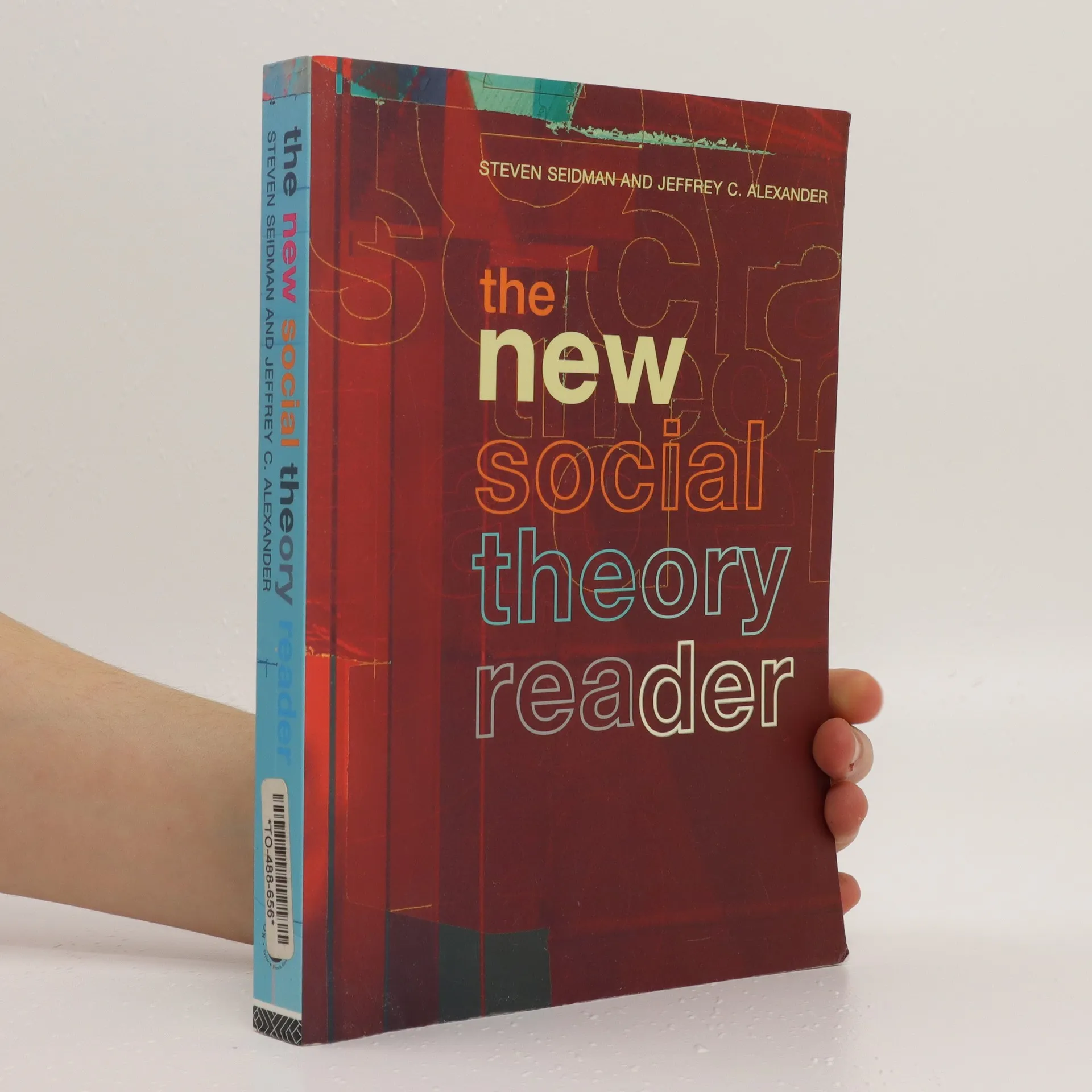
    The New Social Theory Reader
    The dark side of modernity
    Performance and Power
    The Civil Sphere
    What Makes a Social Crisis?
    • What Makes a Social Crisis?

      • 180 Seiten
      • 7 Lesestunden
      4,5(4)Abgeben

      In this book Jeffrey Alexander develops a new sociological theory of social crisis and applies it to a wide range of cases, from the church paedophilia crisis to the #MeToo movement. He argues that crises are triggered not by objective social strains but by the discourse and institutions of the civil sphere. When strains become subject to the utopian aspirations of the civil sphere, there emerges widespread anguish about social justice and the future of democratic life. Once admired institutional elites come to be represented as perpetrators and the civil sphere becomes legally and organizationally intrusive, demanding repairs in the name of civil purification. Resisting such repair, institutional elites foment backlash, and a war of the spheres ensues. This major new work by one of the world’s leading social theorists will be of great interest to students and scholars in sociology, politics, and the social sciences generally.

      What Makes a Social Crisis?
    • The Civil Sphere

      • 816 Seiten
      • 29 Lesestunden
      4,0(1)Abgeben

      What binds societies together and how can these social orders be structured in a fair way? Jeffrey C. Alexander's masterful work, The Civil Sphere, addresses this central paradox of modern life. Feelings for others - the solidarity that is ignored or underplayed by theories of power or self-interest - are at the heart of this novel inquiry into the meeting place between normative theories of what we think we should do and empirical studies of who we actually are. Solidarity, Alexander demonstrates, creates inclusive and exclusive social structures and shows how they can be repaired. It is not perfect, it is not absolute, and the horrors which occur in its lapses have been seen all too frequently in the forms of discrimination, genocide, and war. Despite its worldly flaws and contradictions, however, solidarity and the project of civil society remain our best hope: the antidote to every divisive institution, every unfair distribution, every abusive and dominating hierarchy. This grand, sweeping statement and rigorous empirical investigation is a major contribution to our thinking about the real but ideal world in which we all reside.

      The Civil Sphere
    • Performance and Power

      • 232 Seiten
      • 9 Lesestunden
      4,2(7)Abgeben

      Performativity has emerged as a critical new idea across the humanities and social sciences, from literary and cultural studies to the study of gender and the philosophy of action. In this volume, Jeffrey Alexander demonstrates how performance can reorient our study of politics and society. Alexander develops a cultural pragmatics that shifts cultural sociology from texts to gestural meanings. Positioning social performance between ritual and strategy, he lays out the elements of social performance - from scripts to mise-en-scène, from critical mediation to audience reception - and systematically describes their tense interrelation. This is followed by a series of empirically oriented studies that demonstrate how cultural pragmatics transforms our approach to power. Alexander brings his new theory of social performance to bear on case studies that range from political to cultural power: Barack Obama's electoral campaign, American failure in the Iraqi war, the triumph of the Civil Rights Movement, terrorist violence on September 11th, public intellectuals, material icons, and social science itself. This path-breaking work by one of the world's leading social theorists will command a wide interdisciplinary readership.

      Performance and Power
    • The dark side of modernity

      • 200 Seiten
      • 7 Lesestunden
      3,0(1)Abgeben

      In this book, one of the world s leading social theorists presents a critical, alarmed, but also nuanced understanding of the post-traditional world we inhabit today. Jeffrey Alexander writes about modernity as historical time and social condition, but also as ideology and utopia.

      The dark side of modernity
    • The New Social Theory Reader

      • 424 Seiten
      • 15 Lesestunden
      3,5(8)Abgeben

      This comprehensive reader will give undergraduate students a structured introduction to the writers and works which have shaped the exciting and yet daunting field of social theory. Throughout the text, key figures are placed in debate with each other and the editorial introductions give an orienting overview of the main points at stake and the areas of agreement and disagreement between the protagonists. The first section sets out some of the main schools of thought, including Habermas and Honneth on New Critical Theory, Bourdieu and Luhmann on Institutional Structuralism and Jameson and Hall on Cultural Studies. Thereafter the reader becomes issues based, looking at: * Justice and Truth * Nationalism, Multiculturalism, Globalisation * gender, sexuality, race, post-coloniality The New SocialTheory Readeris an essential companion for students who will not just use it on their theory course but return to it again and again for theoretical foundations for substantive subjects and issues.

      The New Social Theory Reader
    • Populism in the Civil Sphere

      • 316 Seiten
      • 12 Lesestunden

      As populism increasingly influences contemporary societies, scholars struggle to define it, with a consensus emerging that it represents a deviation from democracy, contributing to the precarious state of many societies today. This volume seeks to unravel the complexities of populism by applying a new social theory, prompting a reevaluation of normative judgments surrounding this often-misunderstood phenomenon. Rather than viewing populism as a mere democratic deviation, it is framed as a natural aspect of civil sphere dynamics, which can threaten democracy only at its extremes. The polarizing nature of populism breeds anxiety about the erosion of civil solidarity. Left populists perceive civil solidarity as an illusion, arguing that democratic discourse masks private interests and that social and cultural distinctions merely reflect the dominance of a ruling class. Conversely, right populists express distrust toward the civil sphere, labeling initiatives like affirmative action as particularistic and disparaging revered civil symbols. This raises critical questions about the survival of a vital civil center amid such populist critiques from both sides. The insights provided in this volume offer sophisticated theoretical perspectives and well-researched empirical studies, appealing to those invested in understanding significant political developments today.

      Populism in the Civil Sphere
    • The Cambridge Companion to Durkheim

      • 442 Seiten
      • 16 Lesestunden

      Long recognized as a foundational figure in the development of social scientific thought, Emile Durkheim's work has been the subject of intense debate over the years. This authoritative and comprehensive collection of essays re-examines the impact of Durkheim's thought, considering the historical significance of his work as well as evaluating his ideas in relation to current issues and debates. Leading authorities in the field have contributed to this landmark volume that redefines the relevance of Durkheim to the human sciences in the twenty-first century.

      The Cambridge Companion to Durkheim