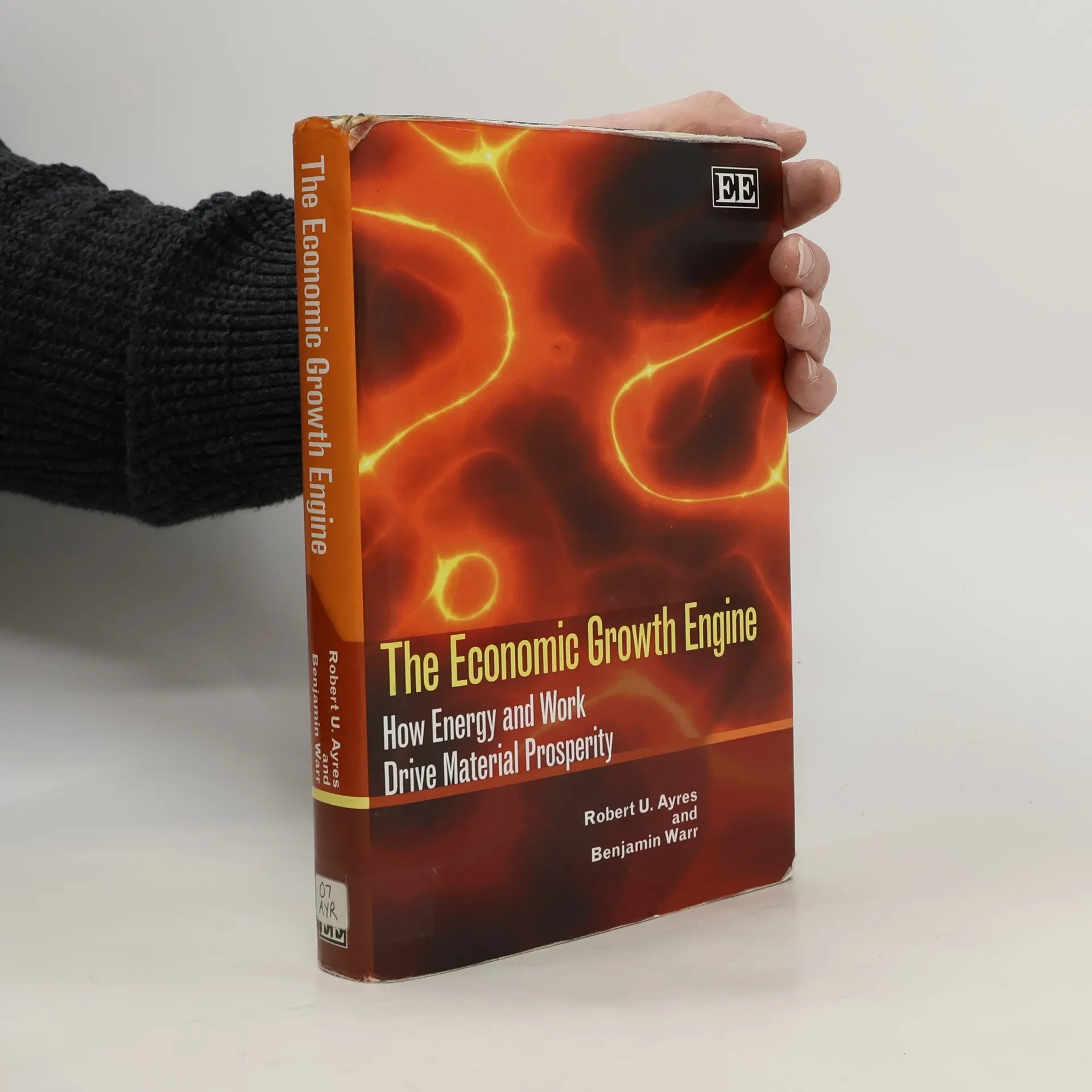
Would you want your great-grandchildren in 2100 to inherit a 22nd-century industrial economy? This book emphasizes the critical relationship between wealth and energy efficiency, urging a shift in perspective on fossil energy—from a continuous income source to a finite capital that should be invested in sustainable energy solutions. Without this change, future generations may face a broken economy reliant on cheap fossil fuels. Current economic theories often attribute income growth to technical progress, which is poorly defined and measured. However, the authors demonstrate that access to "useful work" explains most income changes since 1900 in countries like Japan, Britain, and the USA. They warn that rising fossil fuel prices and stagnating energy conversion efficiencies threaten future income growth. Following the energy shocks of 2008, the authors provide a unique analysis of the role of energy services in GDP growth, challenging conventional economic assumptions. They argue that economic growth has been largely driven by decreasing energy costs, and without technological improvements, rising energy prices could stifle growth in advanced economies. This work explores the relationship between thermodynamics and economics, integrating neo-classical and evolutionary growth theories. It raises crucial questions about whether efficiency gains can offset impending energy scarcity, highlighting that future economic growth
Benjamin Warr Bücher