

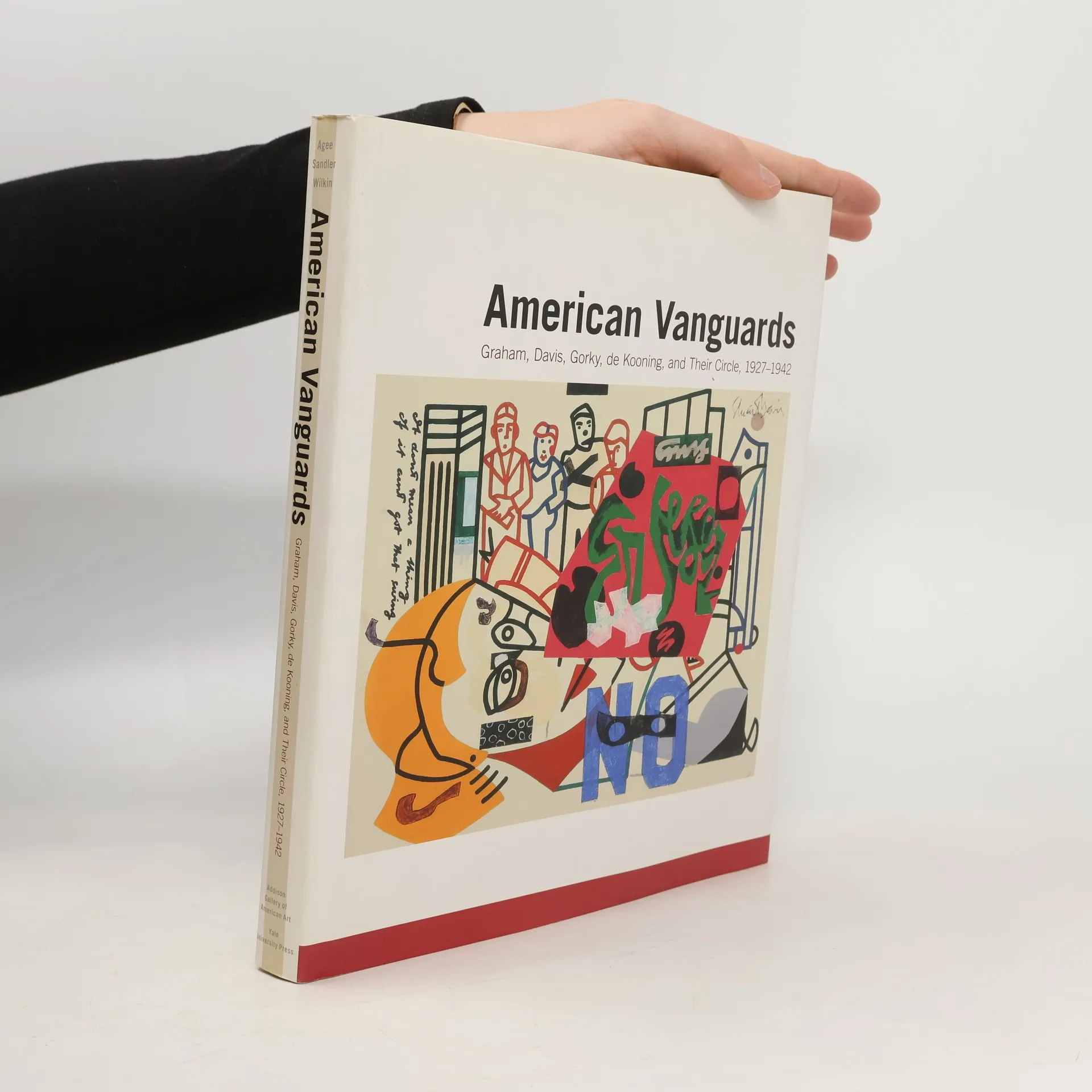
American Vanguards
Graham, Davis, Gorky, de Kooning, and Their Circle, 1927-1942
- 256 Seiten
- 9 Lesestunden
This examination delves into the art and influence of John Graham and his circle, whose contributions were pivotal in the evolution of American modernism during the interwar period. The enigmatic Graham (1886–1961) significantly impacted New York artists from the 1920s to the 1940s. Alongside contemporaries like Stuart Davis, Arshile Gorky, and Willem de Kooning, Graham redefined the possibilities of painting and sculpture. His circle, which included influential figures such as Jackson Pollock and David Smith, played a crucial role in shaping American modernism. The exhibition features approximately eighty-seven artworks from this era, illustrating the interconnectedness and shared inspirations among Graham's associates. Three scholarly essays explore the intricate relationships within this artistic community. William C. Agee situates Graham's group within the New Classicism movement, which sought to recover from World War I's impact by referencing classical and Renaissance art. Irving Sandler examines the social and political dynamics among Davis, Gorky, Graham, and de Kooning in the mid-1930s. Karen Wilkin highlights the circumstances that united these artists and their collective dedication to modernism, revealing the artistic cross-pollination in their works. This critical analysis offers fresh insights into the New York School, Abstract Expressionism, and the vibrancy of American modernism in the interwar years.