

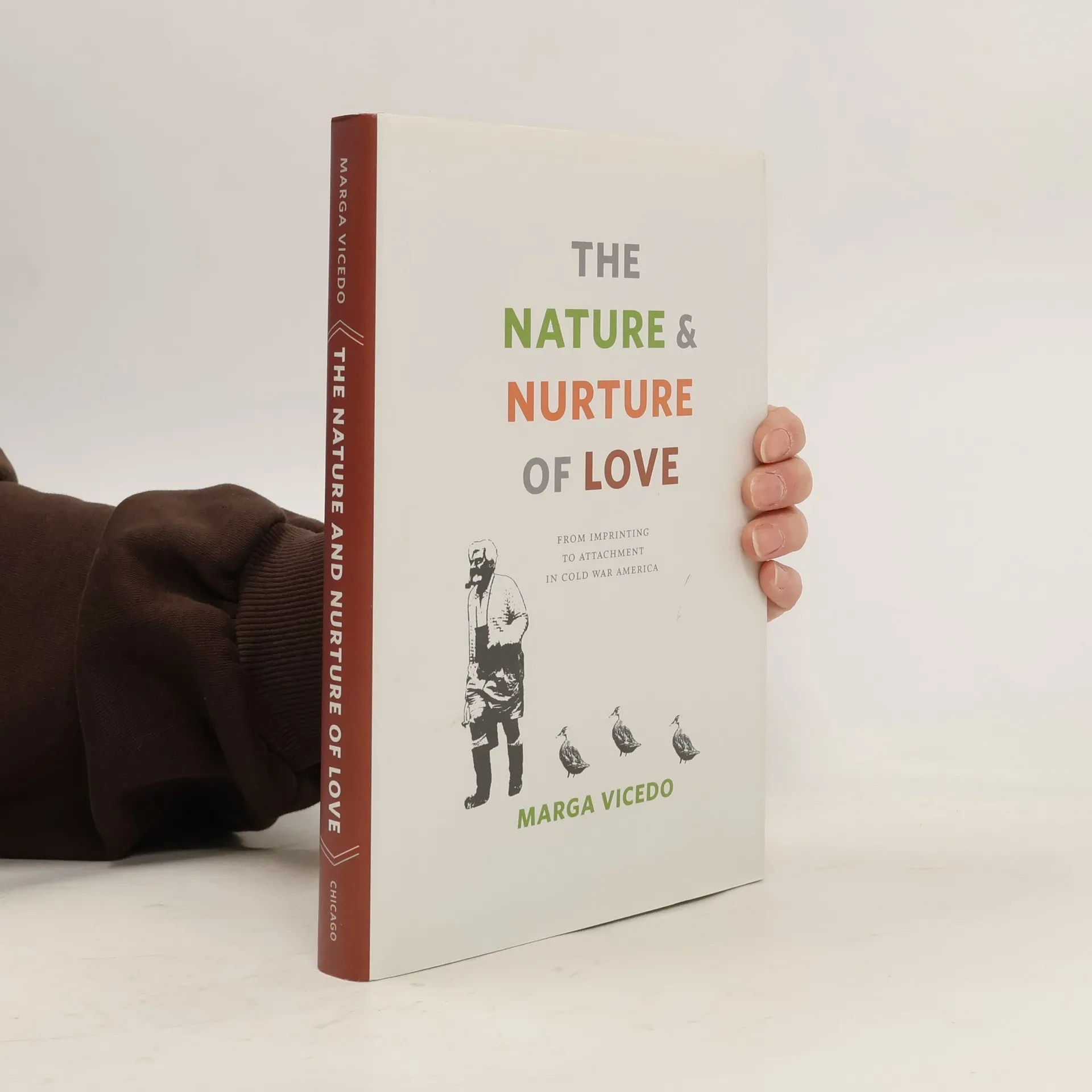
The Nature and Nurture of Love
From Imprinting to Attachment in Cold War America
- 321 Seiten
- 12 Lesestunden
The belief that maternal care and love shape a child's emotional well-being and future personality is pervasive, often depicted in stories where protagonists' issues stem from troubled maternal relationships. This raises questions about how we came to view mother love as a determinant of emotional development and its implications for both children and mothers. Marga Vicedo explores scientific perspectives on children's emotional needs and maternal love from World War II to the 1970s, focusing on John Bowlby’s ethological theory of attachment behavior. She traces the evolution of Bowlby’s work and the interdisciplinary research that informed his theory, including Konrad Lorenz’s studies on geese imprinting, Harry Harlow’s monkey experiments, and Mary Ainsworth’s observations of mother-child interactions in Uganda and the U.S. Vicedo's historical analysis highlights the opposition from key psychoanalysts and animal researchers to the idea of emotions as biological instincts. Despite these critiques, she contends that attachment theory played a crucial role in framing mother love as a biological necessity, which introduced a new rationale for biology's influence on human behavior, leading to significant and often detrimental consequences for mothers and the perception of maternal love.