

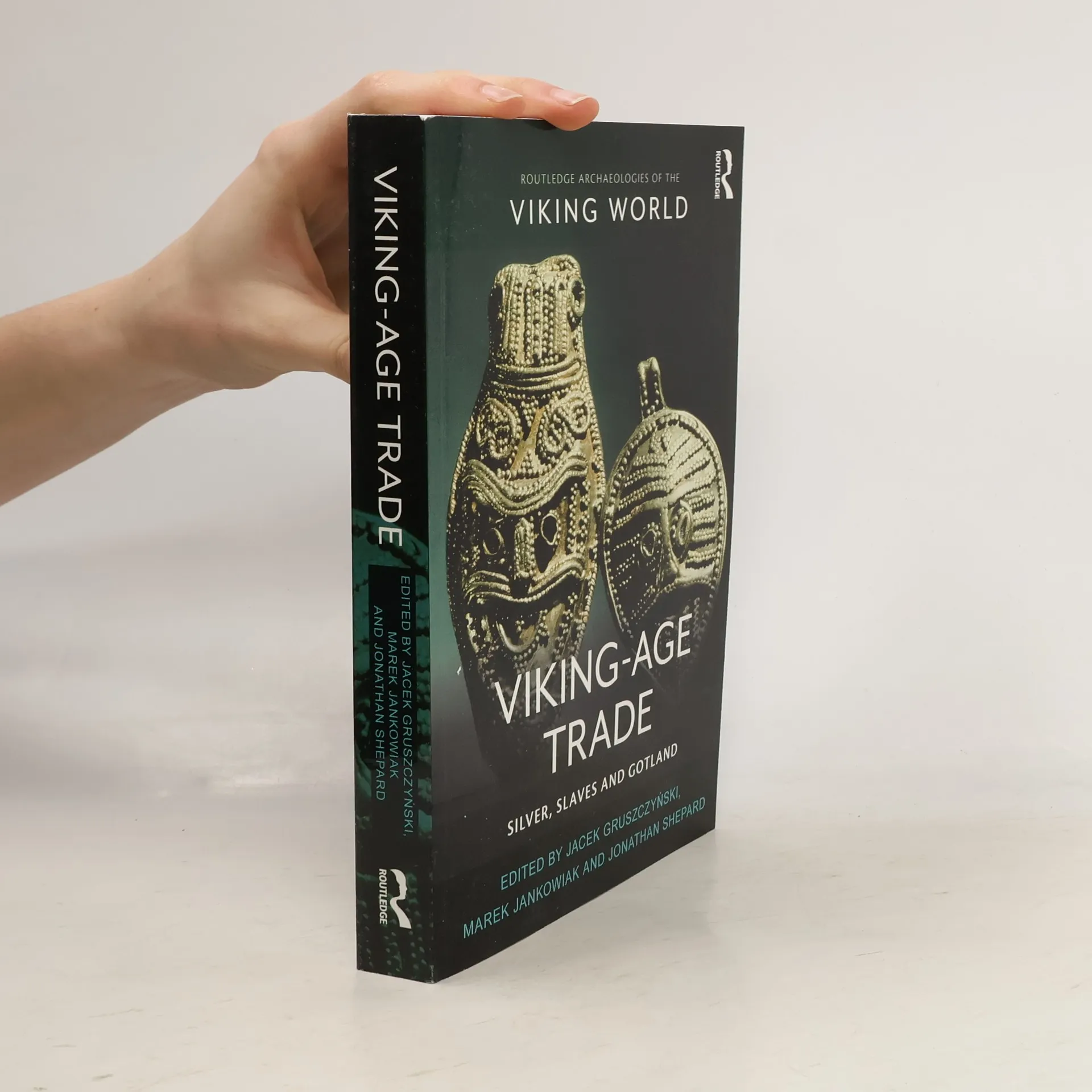
Routledge Archaeologies of the Viking World: Viking-Age Trade
Silver, Slaves and Gotland
- 498 Seiten
- 18 Lesestunden
The influx of silver dirhams from the Muslim world into eastern and northern Europe during the ninth and tenth centuries is well-documented, with a significant concentration of hoards found on the Baltic island of Gotland. Recent findings indicate that dirhams also reached the British Isles. While the fur trade has been suggested as a key driver for these transactions, the slave trade offers a complementary explanation. This volume does not aim to provide a comprehensive overview of hoard finds or fully answer why silver traveled north, but it emphasizes the role of the slave trade in facilitating trans-continental exchanges. The interconnectedness of these trade networks was complex and often unclear, even to those living at the time, and has been overlooked in modern scholarship. Contributions to this volume illuminate various processes and significant locations, including the mints of Central Asia, the timeline of dirham inflows to Rus and northern Europe, and the reasons behind silver deposits, particularly on Gotland. It also examines the functioning of networks that may resemble contemporary drug and slave trafficking in the British Isles, as well as the additional networks introduced by the Vikings. This collection of general surveys, new evidence, and regional case studies provides a more robust framework for understanding Gotland and the early medieval slave trade than previously available.