


Gratis Versand ab € 14,99. Mehr Infos.
Bookbot

Ellen Meiksins Wood

    1. Jänner 1942 – 14. Jänner 2016

    Ellen Meiksins Wood war eine amerikanisch-kanadische marxistische Historikerin und Wissenschaftlerin. Gemeinsam mit Robert Brenner legte sie die Grundlagen des Politischen Marxismus, einer Richtung der marxistischen Theorie, die die Geschichte in den Mittelpunkt ihrer Analyse stellt. Ihre Arbeit löste eine Abkehr von Strukturalismen und Teleologie hin zu historischer Spezifität als umstrittenen Prozess und gelebte Praxis aus. Woods Schriften, teils in Zusammenarbeit mit ihrem Ehemann Neal Wood verfasst, betonten historische Kontingenz und den inhärenten Kampf gesellschaftlicher Transformationen und zeugen von einer tiefen Auseinandersetzung mit den Dynamiken der Geschichte.

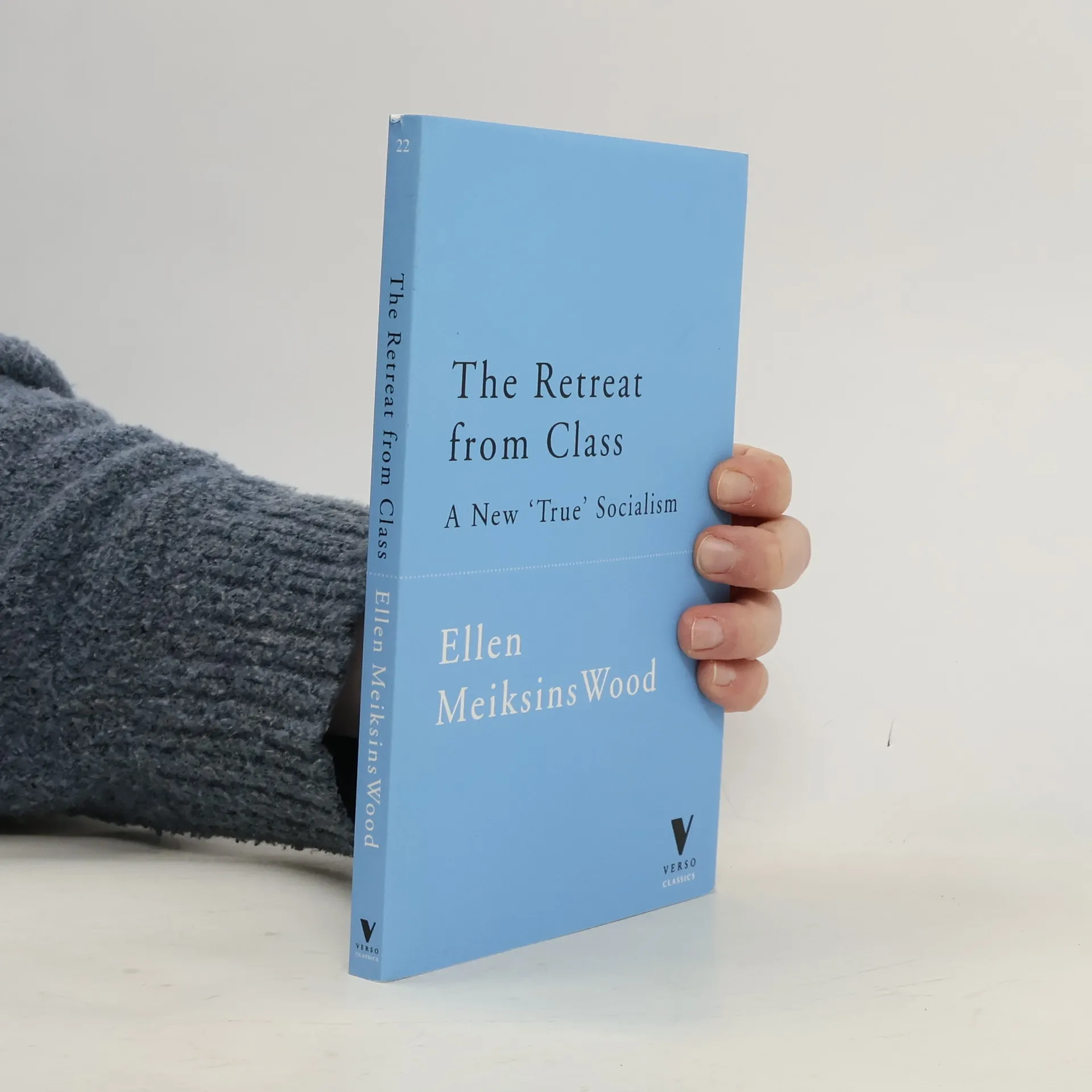
    The Retreat from Class
    Democracy Against Capitalism
    Transformation des Kapitalismus
    Demokratie contra Kapitalismus
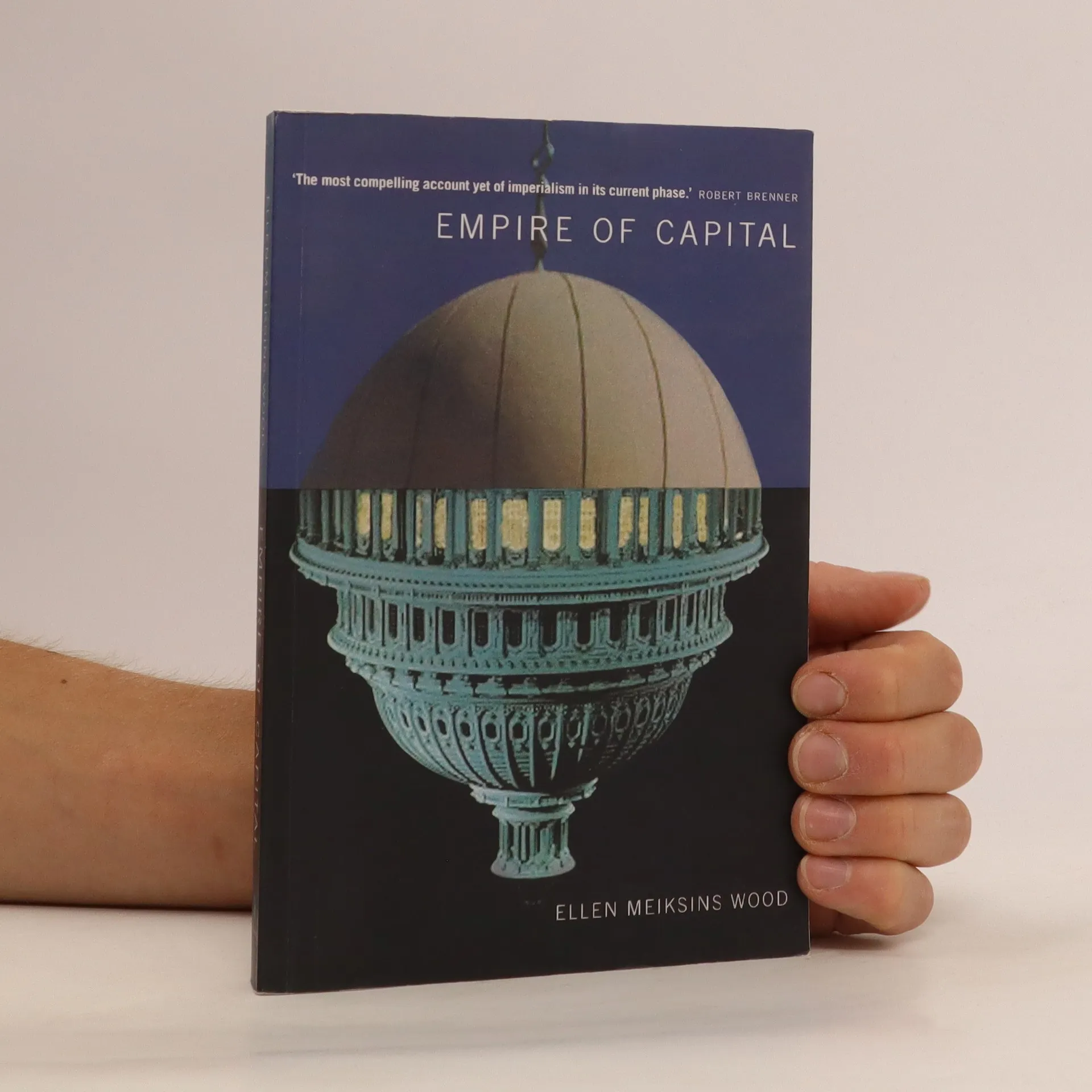
    Das Imperium des Kapitals
    Der Ursprung des Kapitalismus
    • Der Ursprung des Kapitalismus

      • 232 Seiten
      • 9 Lesestunden

      Wenige Fragen der Geschichte haben so viele aktuelle politische Implikationen wie die scheinbar so einfache: Wie ist der Kapitalismus entstanden? In dieser erhellenden Arbeit widerlegt Ellen Meiksins Wood die meisten vorhandenen Darstellungen über den Ursprung des Kapitalismus, denen es nicht gelingt, die spezifischen Eigenschaften des Kapitalismus als Gesellschaftssystem zu erkennen, und die ihn stattdessen als Höhepunkt einer natürlichen menschlichen Neigung zum Handel erscheinen lassen. Aber nur mit einem richtigen Verständnis der Anfänge des Kapitalismus, so Wood, können wir uns die Möglichkeit seines Endes vorstellen. Ellen Meiksins Wood beginnt ihre Erforschung der Ursprünge des Kapitalismus mit einer Untersuchung der klassischen Denker von Adam Smith bis hin zu Max Weber, um dann die großen marxistischen Debatten zwischen Autoren wie Paul Sweezy, Maurice Dobb, Robert Brenner, Perry Anderson und E. P. Thompson zu erkunden. In ihrer eigenen Darstellung der agrarischen Ursprünge des Kapitalismus stellt sie schließlich die Verbindung des Kapitalismus mit Städten, die Gleichsetzung von »kapitalistisch« mit »bürgerlich« und die von diesen Annahmen abgeleiteten Konzeptionen von Moderne und Postmoderne infrage.

      Der Ursprung des Kapitalismus
      4,8
    • Das Imperium des Kapitals

      • 208 Seiten
      • 8 Lesestunden

      Was bedeutet Imperialismus, wenn es keine Kolonialherrschaft gibt? Kapitalismus ermöglicht eine neue Form der Dominanz durch rein wirtschaftliche Mittel, so Ellen Meiksins Wood. Deshalb würde sicherlich auch der schärfste Veteran aus dem Weißen Haus die globale Hegemonie lieber auf diese Art ausüben, ohne kostspielige koloniale Verwicklungen. Dennoch hat das wirtschaftliche Imperium des Kapitals einen neuen, grenzenlosen Militarismus geschaffen, wie Wood eindrucksvoll zeigt. Indem sie den neuen Imperialismus mit historischen Erscheinungsformen wie dem römischen oder spanischen Reich vergleicht und die Entwicklung des kapitalistischen Imperialismus bis zur englischen Dominanz über Irland und des britischen Empires über Amerika und Indien zurückverfolgt, zeigt Wood, wie das heutige kapitalistische Imperium – eine globale Wirtschaft, von Nationalstaaten verwaltet – eine neue militärische Doktrin eines Krieges hervorgebracht hat, der sowohl zeitlich als auch in Bezug auf seine Ziele keine Grenzen kennt.

      Das Imperium des Kapitals
      4,0
    • Transformation des Kapitalismus

      • 32 Seiten
      • 2 Lesestunden

      Die Politik des Kapitalismus / Ellen Meiksins Wood --Liberalismus, Selbstschutz der Gesellschaft und die Widerspüchlichkeit des Kapitalismus / John Bellamy Foster.First work translated from English by Hinrich Kuhls; 2nd work by Joachim Wilke.First work originally appeared in Monthly review, vol. 51, no. 4 (September 1999) with title: The politics of capitalism; 2nd work: Monthly review, vol. 50, no. 11 (April 1999) with title: Contradictions in the universalization of capitalism.

      Transformation des Kapitalismus
    • Democracy Against Capitalism

      Renewing Historical Materialism

      • 316 Seiten
      • 12 Lesestunden

      This work offers a contemporary reinterpretation of Marxism, arguing that it remains a powerful lens for critically analyzing capitalism. It delves into the relevance of Marxist theory in understanding modern economic structures and social dynamics, highlighting its strengths in addressing contemporary issues. The author presents a compelling case for why Marxism continues to be a vital framework for critique and discussion in today's capitalist society.

      Democracy Against Capitalism
      4,3
    • The Retreat from Class

      • 160 Seiten
      • 6 Lesestunden

      A survey of influential trends in contemporary Marxist theory which examines the relationship between class, politics and ideology. The introduction discusses the relevance of the text in a post-Soviet world and argues for a re-examination of class politics.

      The Retreat from Class
      4,3
    • NATO’s war on Yugoslavia in the spring of 1999 was unleashed in the name of democracy and human rights. This view was challenged by the world’s three largest countries, India, China and Russia, who saw the bombing of Serbia and Kosovo as a naked attempt to assert US dominance in an unstable world.In the West, media networks were joined by substantial sectors of left/liberal opinion in supporting the war. Nonetheless, a wide variety of figures emerged to challenge the prevailing consensus. Their work, gathered here for the first time, forms a collection of key statements and anti-war writings from some of democracy’s most eloquent dissidents—Noam Chomsky, Harold Pinter, Edward Said and many others—who provide carefully researched examinations of the real motives for the US action, dissections and critiques of the ideology of ‘humanitarian warfare’, and chartings of the unnecessary tragedy of a region laid to waste in the pursuance of Great Power politics.This reader presents some of the most important texts on NATO’s Balkan crusade and forms a major intervention in the debate on global geo-political strategy after the Cold War.

      Masters of the Universe? NATO's Balkan Crusade
      4,0
    • This book presents a groundbreaking perspective on the evolution of political theory, challenging traditional narratives and interpretations. It delves into the influences that have shaped political thought throughout history, examining key figures and movements that have redefined the landscape of governance and power. By integrating a diverse range of sources and methodologies, it offers fresh insights and connections that illuminate the complexities of political ideologies and their impact on contemporary society.

      Citizens to Lords: A Social History of Western Political Thought from Antiquity to the Middle Ages
      4,2
    • The formation of the modern state, the rise of capitalism, the Renaissance and Reformation, the scientific revolution and the Age of Enlightenment have all been attributed to the “early modern” period. Nearly everything about its history remains controversial, but one thing is certain: it left a rich and provocative legacy of political ideas unmatched in Western history. The concepts of liberty, equality, property, human rights and revolution born in those turbulent centuries continue to shape, and to limit, political discourse today. Assessing the work and background of figures such as Machiavelli, Luther, Calvin, Spinoza, the Levellers, Hobbes, Locke and Rousseau, Ellen Wood vividly explores the ideas of the canonical thinkers, not as philosophical abstractions but as passionately engaged responses to the social conflicts of their day.

      Liberty and Property: A Social History of Western Political Thought from the Renaissance to Enlightenment
      4,2