

Af Klint's botanical portfolio showcases her profound spiritual connection with the flora of Sweden. Between 1919 and 1920, she immersed herself in nature, drawing flowers found in forests and fields. This resulted in 46 sheets that form her Nature Studies portfolio, now part of the Museum of Modern Art, New York. Using pencil and vibrant watercolor, af Klint combined detailed depictions of blossoms with abstract diagrams: a sunflower paired with nested circles, lily of the valley alongside a colorful checkerboard, and catsfoot against mirrored spirals. These elements reflect her belief that observing nature reveals deeper aspects of human character. Published alongside the first public exhibition of this rare portfolio, the accompanying text presents the drawings with contextual artworks and translations of her unpublished writings. An overview essay by curator Jodi Hauptman discusses the portfolio's creation, while contributions from Ewa Lajer-Burcharth, Laura Neufeld, and Lena Struwe explore the imagery, materiality, and botanical knowledge within these works. Hilma af Klint (1862-1944), trained at Stockholm's Royal Academy of Fine Arts, established herself as a professional artist and developed a unique abstract vocabulary in the early 20th century, influenced by her spiritual explorations and connection to the natural world.
Jodi Hauptman Bücher

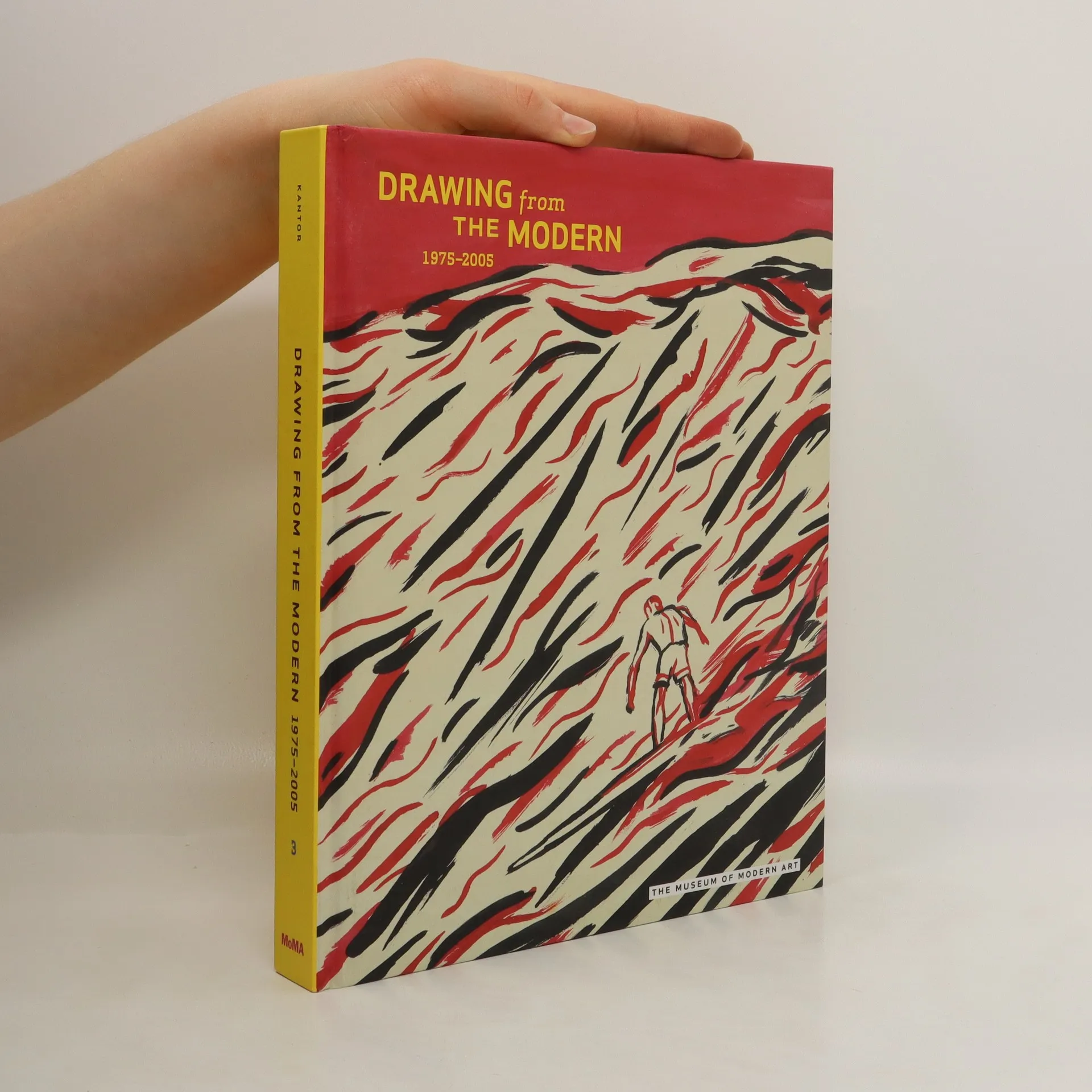

Drawing from the Modern
- 229 Seiten
- 9 Lesestunden
This package contains the following products: 9780781789820 Karch Focus on Nursing Pharmacology, 5e 9780781780698 Hogan-Quigley Bates' Nursing Guide to Physical Examination and History Taking 9781451183757 Hogan-Quigle Student Laboratory Manual for Bates' Nursing Guide
Jodi Hauptman examines the procedures and context behind Kelly's formative 1951 abstraction Ellsworth Kelly's landmark 1951 work Colors for a Large Wall is the culmination of an extraordinarily productive moment in the artist's early career, a time when he developed his singular form of abstraction. After serving in the US Army during World War II, he returned to France in 1948 and lived and worked there until 1954. Connecting with artists of an earlier generation, discovering Paris with his peers, and surveying monuments of the past, Kelly began an audacious creative journey in which, paradoxically, he sought to eliminate "invention" from the process of making art. In this volume of the MoMA One on One series, curator Jodi Hauptman looks closely at the evolution of Colors for a Large Wall, unpacking Kelly's toolbox of close observation of the world, chance procedures, collage and the monochrome, and examining his ambition to create art on a public, architectural scale.