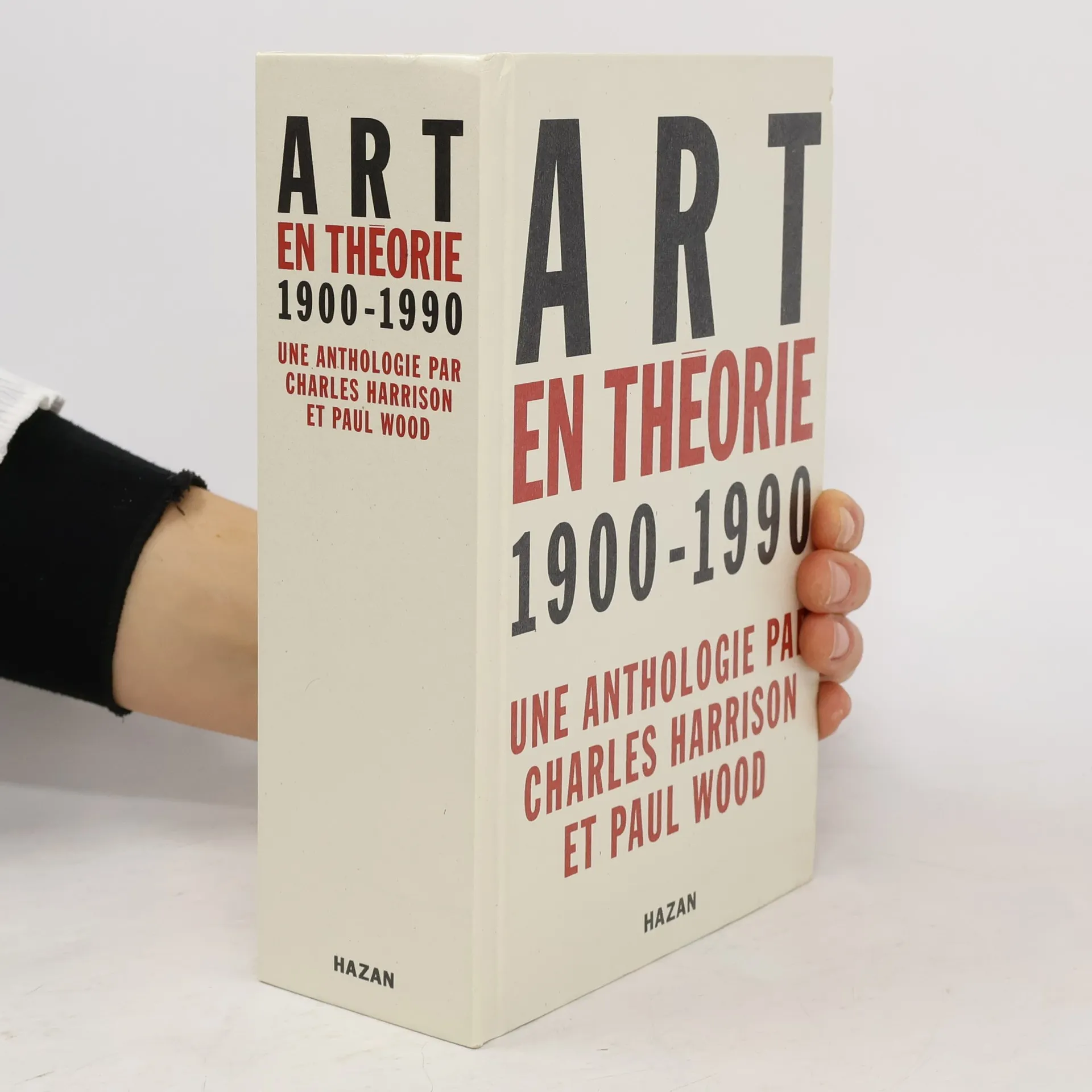
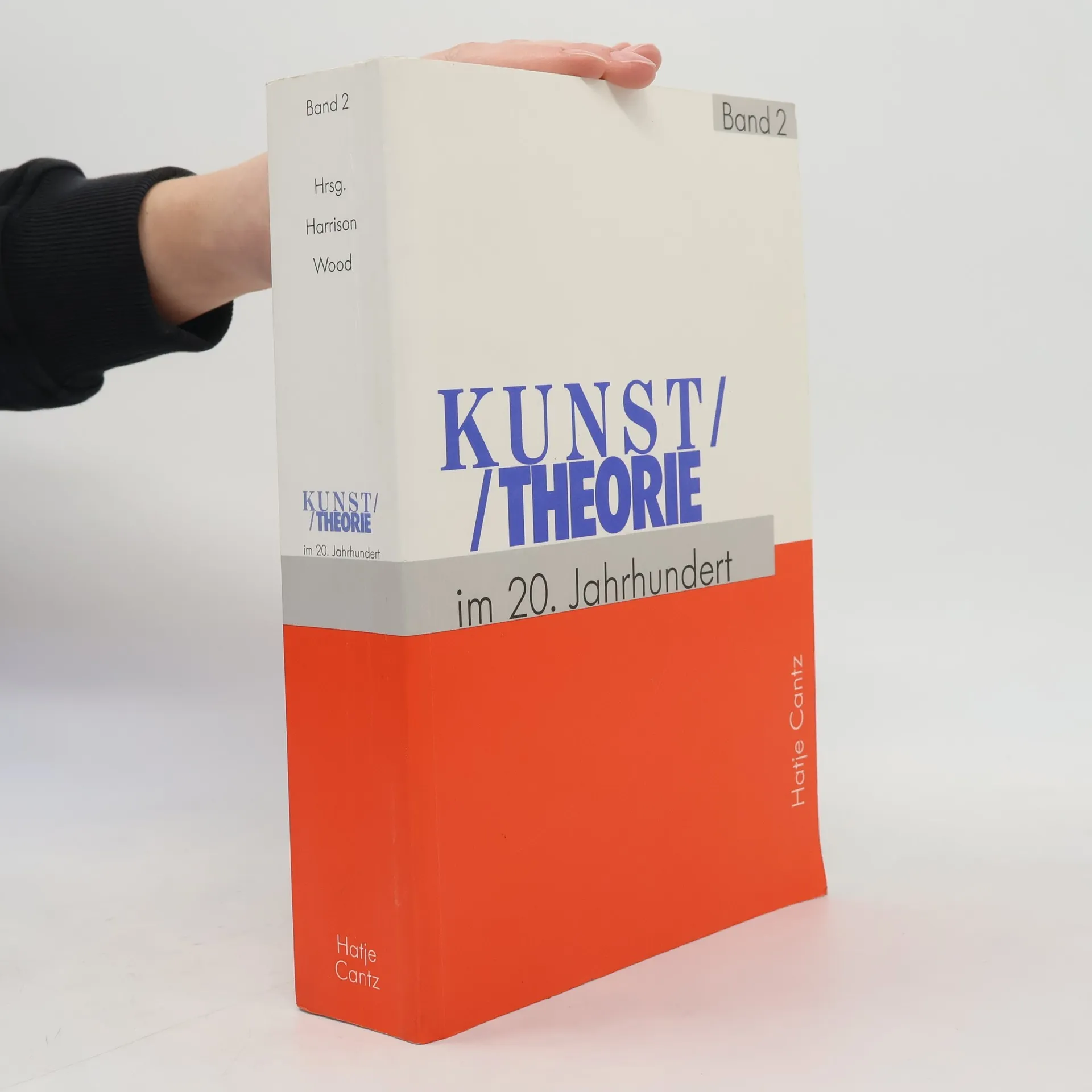
Kunsttheorie im 20. Jahrhundert 2
Künstlerschriften, Kunstkritik, Kunstphilosophie, Manifeste, Statements, Interviews
- 1449 Seiten
- 51 Lesestunden


Charles Townsend Harrison war ein herausragender britischer Kunsthistoriker, der viele Jahre lang Kunstgeschichte lehrte. Seine Arbeit konzentrierte sich auf die Geschichte und Theorie der Kunst und hinterließ eine unauslöschliche Spur. Er wurde für seine tiefen Einblicke und seine Fähigkeit, fesselnde Vorträge über Kunstwerke zu halten, geschätzt. Sein Vermächtnis lebt in den Werken fort, die Generationen von Studenten und Forschern inspiriert haben.
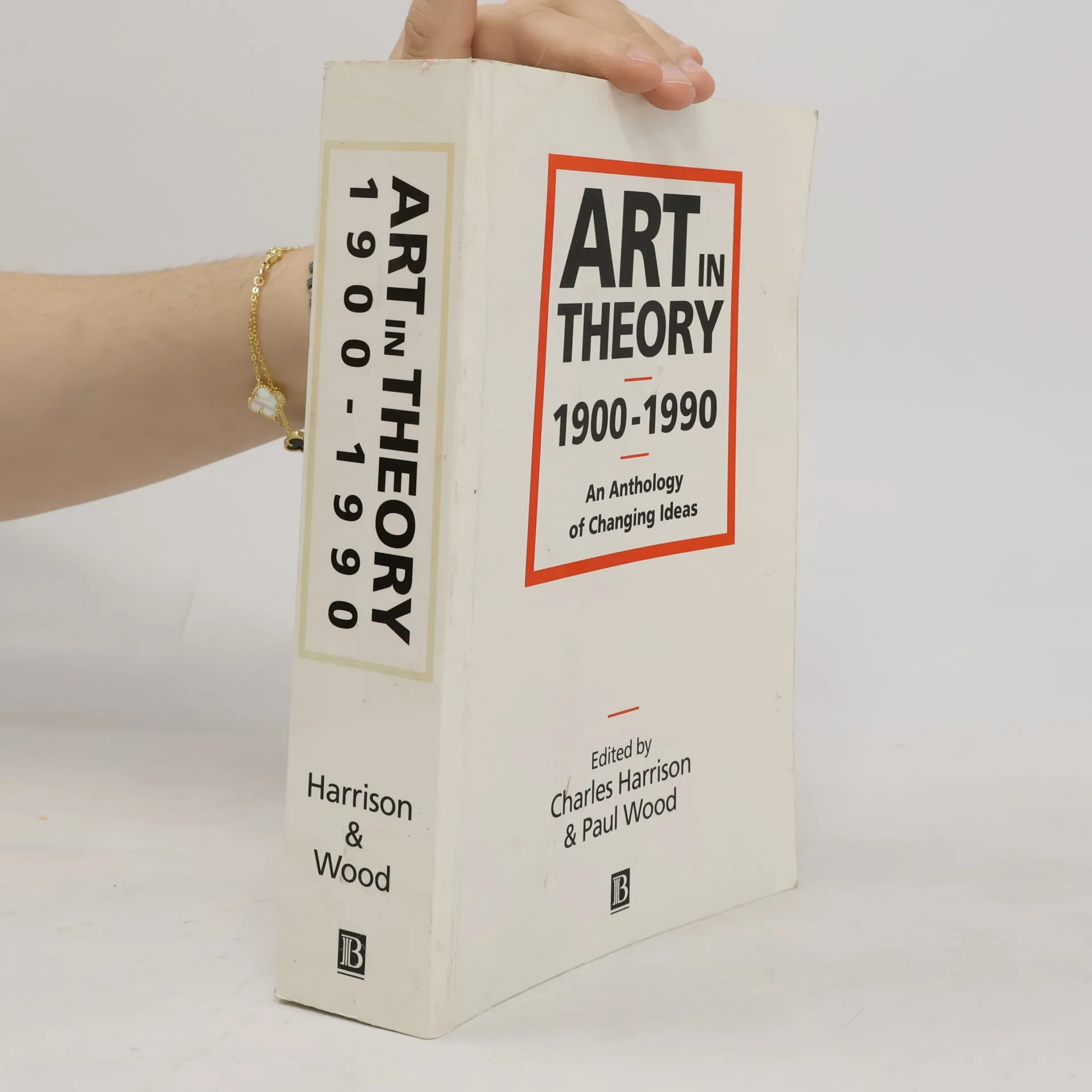
Künstlerschriften, Kunstkritik, Kunstphilosophie, Manifeste, Statements, Interviews
Diese bis heute umfassendste, zweibändig angelegte Quellensammlung zieht ein enzyklopädisches Resümee der modernen Kunsttheorie in Europa und Amerika. Allen an Kunst, Kunstphilosophie und Kunstkritik interessierten Lesern stellt sie eine repräsentative Auswahl relevanter Texte zur Verfügung, die bisher nur schwer aufzufinden oder verstreut veröffentlicht waren. Die gebundene Ausgabe, die 1998 bei Hatje Cantz erschienen ist, wurde schnell zum 'Standardwerk der Standardtexte', das wir Ihnen nun als broschierte Studienausgabe zu einem sensationell günstigen Preis anbieten können. Die annähernd 400 Beiträge von Künstlern, Kunsttheoretikern, Philosophen, Soziologen, Politikern und Schriftstellern - Manifeste, Aufsätze, Briefe, Essays, Buchkapitel, Interviews, Vortragstexte von 1895 bis 1991 - wurden in acht Hauptkapitel chronologisch und thematisch geordnet und mit editorischen Einführungen versehen; ein Personen- und Sachregister dient der bequemen Erschließung. Gegenüber dem äußerst erfolgreichen englischen Original mit dem Titel Art in Theory von 1992 ist die deutsche Ausgabe um rund 75 Beiträge erweitert worden und macht zudem viele fremdsprachige Texte - von Kasimir Malewitsch bis Jeff Koons, von Georges Bataille bis Gajatri Spivak - erstmals in übersetzter Form zugänglich.
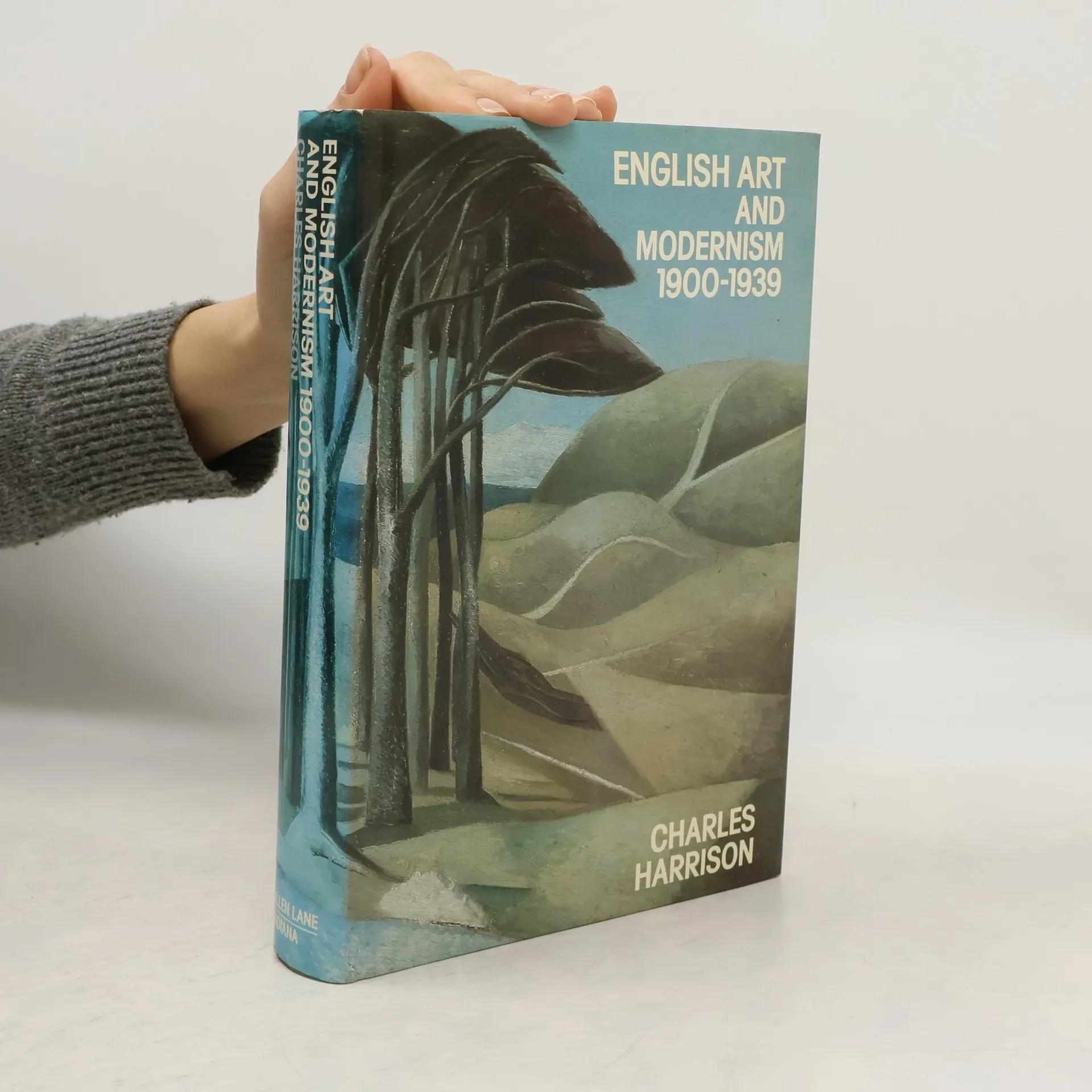
This lavishly illustrated book is both a detailed history of the development of modern art in England in the early 20th century and a study of the evolution of the concept of modernism among English artists, critics, and theorists. First published in 1981 to great acclaim, the book is now available in paperback with a new introduction and new colour plates. Charles Harrison explores the two main phases of modern art activity during the period: the years before and during the First World War, when the principal factions were Sickert's Camden Town Group, the English Post-Impressionists, and the Vorticists; and the 1930s, when a new avant garde assembled in response to recent developments in European art, only to divide into groupings of abstract artists, Surrealists, and Realists. Harrison discusses the artists of the period, the most important individual works, and the writings of the critics. His book is a major contribution to knowledge about the art and theory of modernism.
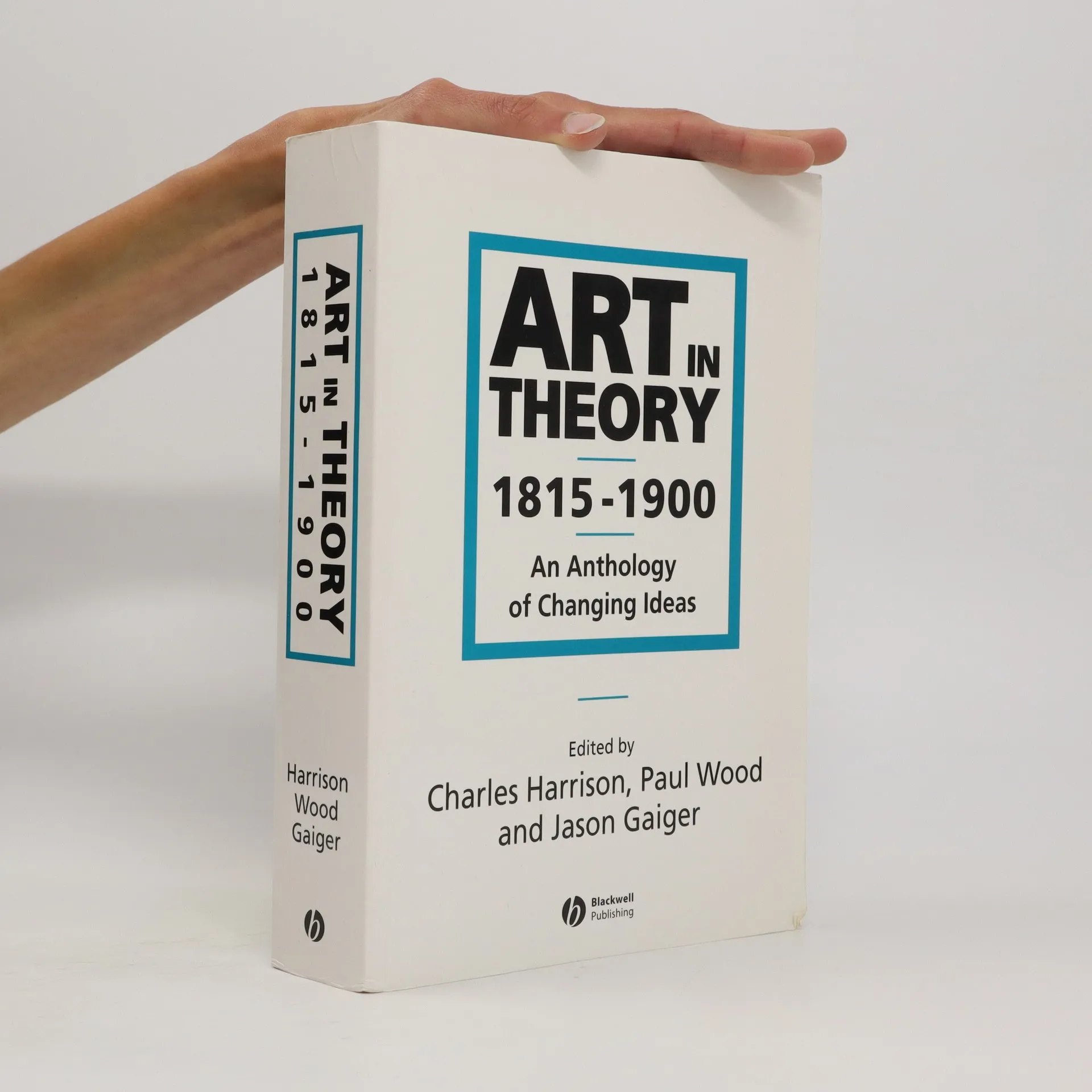
This comprehensive collection of documents on 19th-century art theories includes 236 texts, offering an essential guide for informed study. Like its companion volume, it presents a wide array of writings from artists, critics, philosophers, and literary figures, with about one-third featuring new translations from various languages. The anthology explores diverse themes such as genius and originality, landscape painting, Realism, Modernity, Impressionism, optics, color theory, and the aesthetics and rise of photography. Each section begins with an essay that contextualizes the ideas historically, linking theoretical debates to artistic practice. Texts are introduced with outlines detailing their original context and significance in the evolution of modern artistic theory. An extensive bibliography further supports research and study. This volume not only serves as a key resource for understanding art theory but also reflects the broader cultural discussions of the 19th century, making it indispensable for scholars and enthusiasts alike.
Art in Theory 1815-1900 provides the most wide-ranging and comprehensive collection of documents ever assembled on nineteenth-century theories of art.
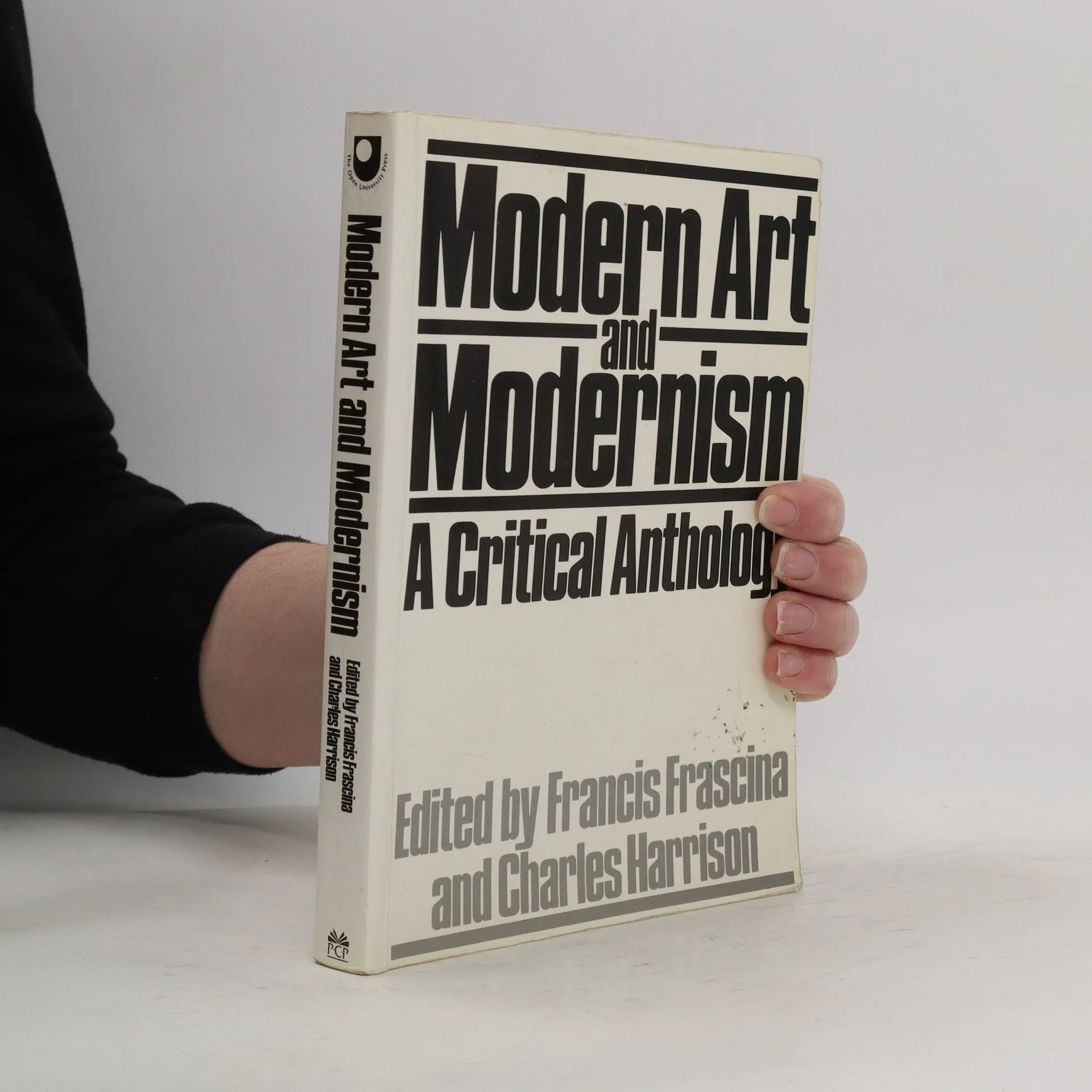
Modern Art and Modernism offers first-hand material for the study of issues central to the development of modern art, its theory and criticism. The history of modern art is not simply a history of works of art, it is also a history of ideas and interpretations. The works of critics and theorists have not merely been influential in deciding how modern art is to be seen and understood, they have also influenced the course it has taken. The nature of modern art cannot be understood without some analysis of the concept of Modernism itself. Modern Art and Modernism presents a selection of texts by the major contributors to debate on this subject, from Baudelaire to Zola in the 19th century to Greenburg and T J Clark on our own times. It offers a balanced selection of essays by contributors to the mainstream of Modernist criticism, representative examples of writing on the themes of abstraction and expressionism in modern art, and a number of important contributions to the discussion of aesthetics and the social role of the artist.
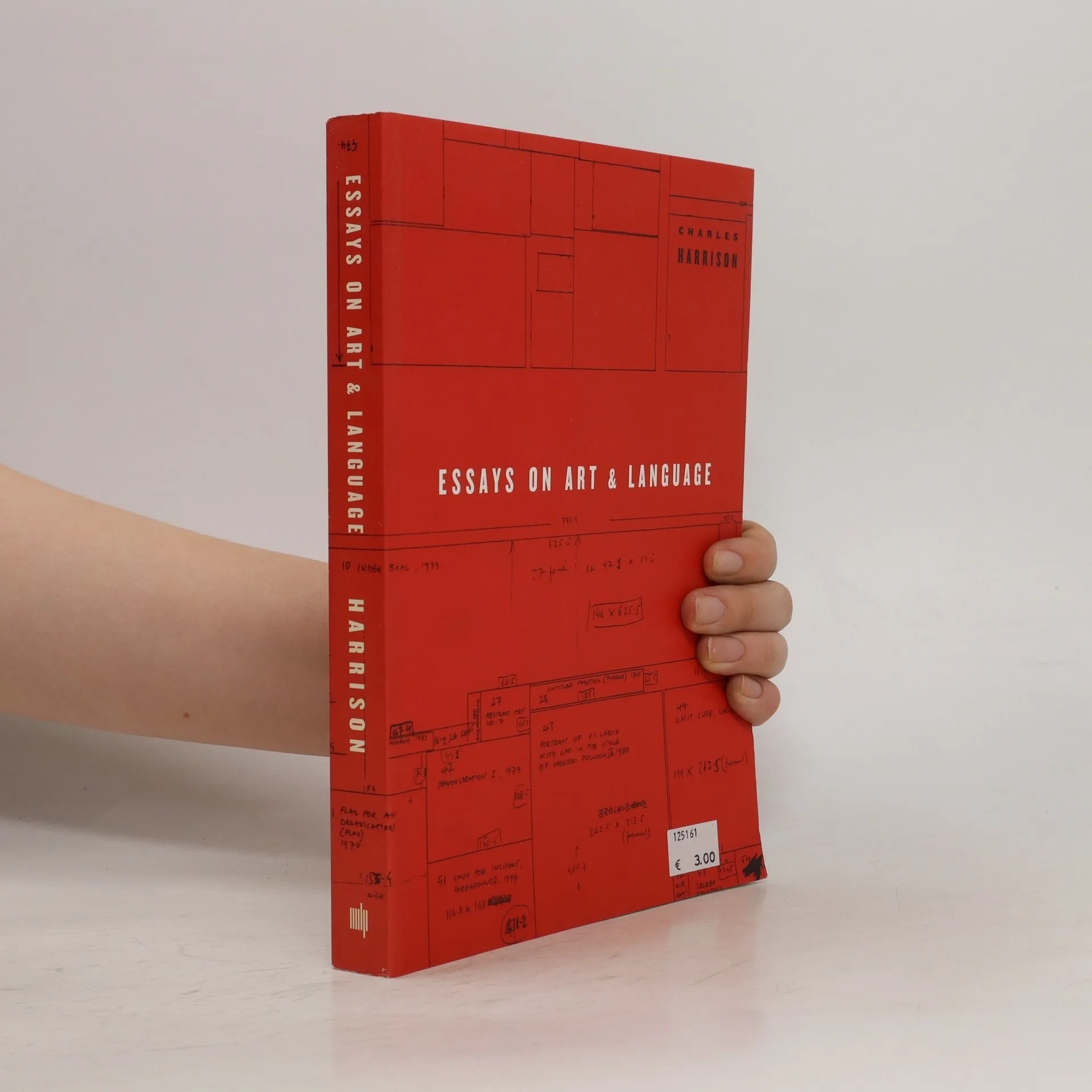
Critical and theoretical essays by a long-time participant in the Art & Language movement. These essays by art historian and critic Charles Harrison are based on the premise that making art and talking about art are related enterprises. They are written from the point of view of Art & Language, the artistic movement based in England—and briefly in the United States—with which Harrison has been associated for thirty years. Harrison uses the work of Art & Language as a central case study to discuss developments in art from the 1950s through the 1980s. According to Harrison, the strongest motivation for writing about art is that it brings us closer to that which is other than ourselves. In seeing how a work is done, we learn about its achieved identity: we see, for example, that a drip on a Pollock is integral to its technical character, whereas a drip on a Mondrian would not be. Throughout the book, Harrison uses specific examples to address a range of questions about the history, theory, and making of modern art—questions about the conditions of its making and the nature of its public, about the problems and priorities of criticism, and about the relations between interpretation and judgment.
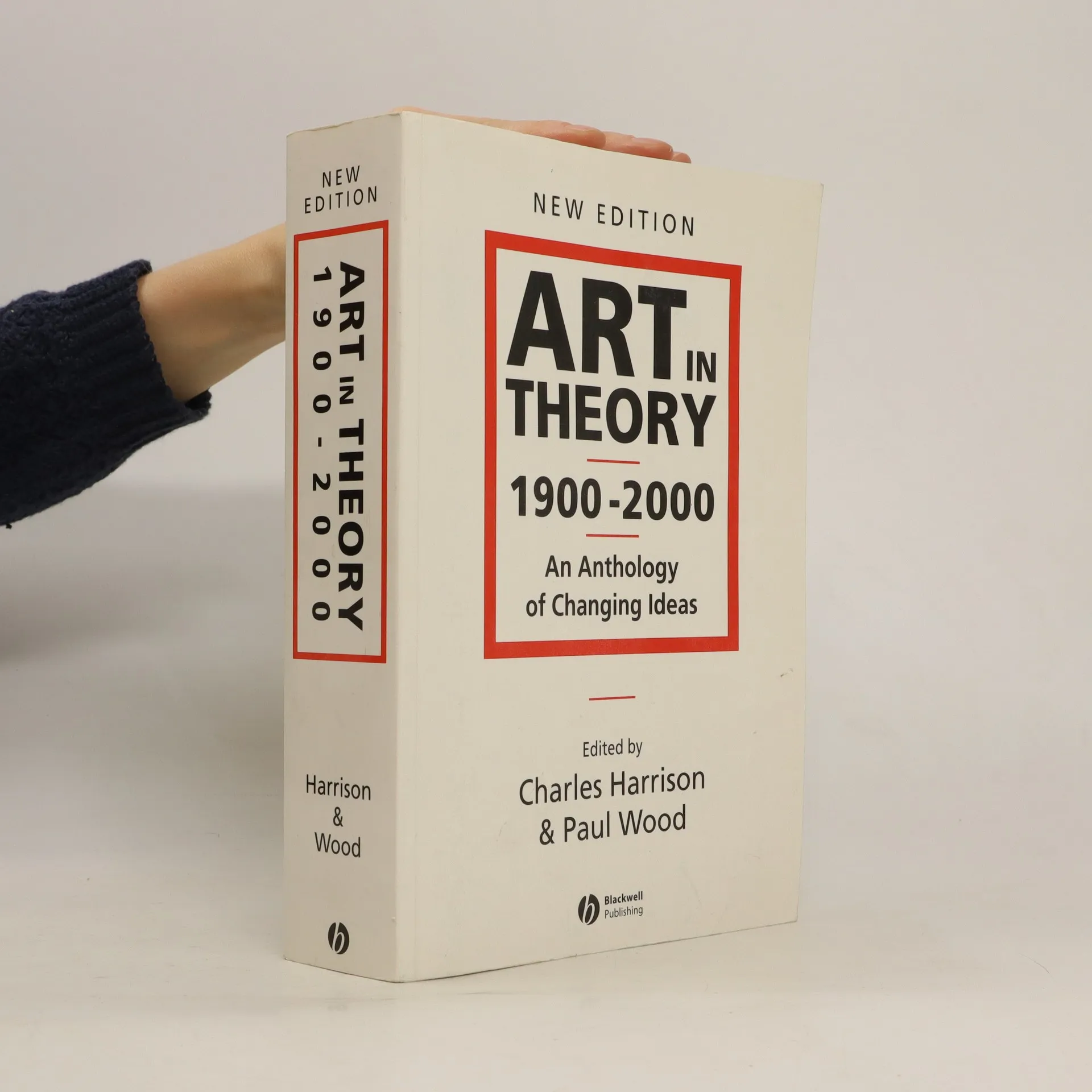
This popular anthology of twentieth-century art theoretical texts has now been expanded to take account of new research, and to include significant contributions to art theory from the 1990s.New edition of this popular anthology of twentieth-century art-theoretical texts. Now updated to include the results of new research, together with significant contributions from the 1990s. Includes writings by critics, philosophers, politicians and literary figures. The editors provide contextual introductions to 340 texts. Complements Art in Theory, 1648–1815 and Art in Theory, 1815–1900 to create a complete survey of the theories underpinning the development of art in the modern period.
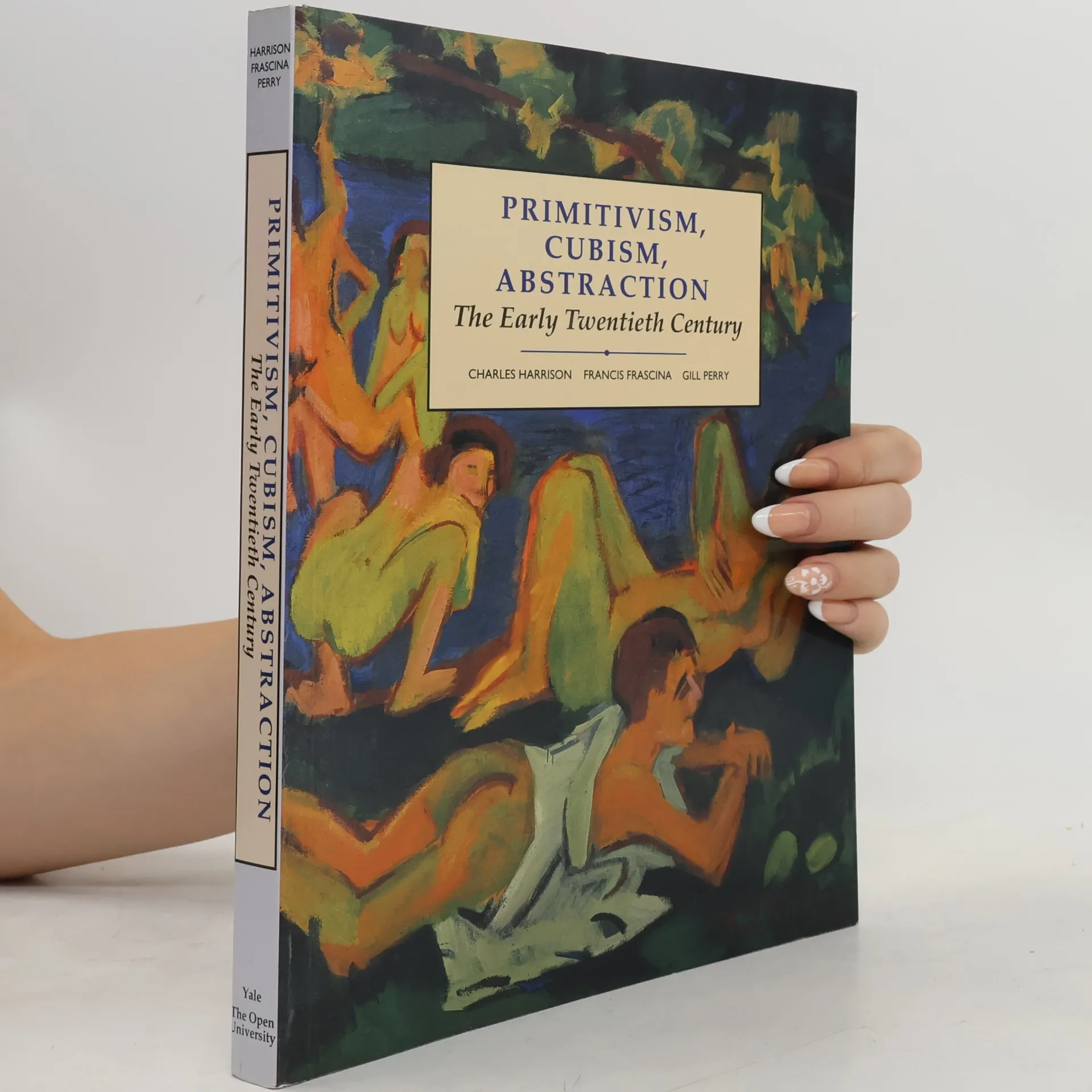
This volume presents a survey of art from the first two decades of the twentieth century. The authors begin by exploring how aspects of the primitive were invoked by the rural artists' colonies formed in France and Germany at the end of the nineteenth century and by the work of the Fauves and the German Expressionists a few years later. The book then develops an analysis of Cubist works based on semiotic theory, considering the social and cultural values encoded in such signifying systems, and investigating the relationship between representation and ideology. The final chapter considers some problems of interpretation and evolution posed by specific examples of abstract art ranging from Malevich to Mondrian.
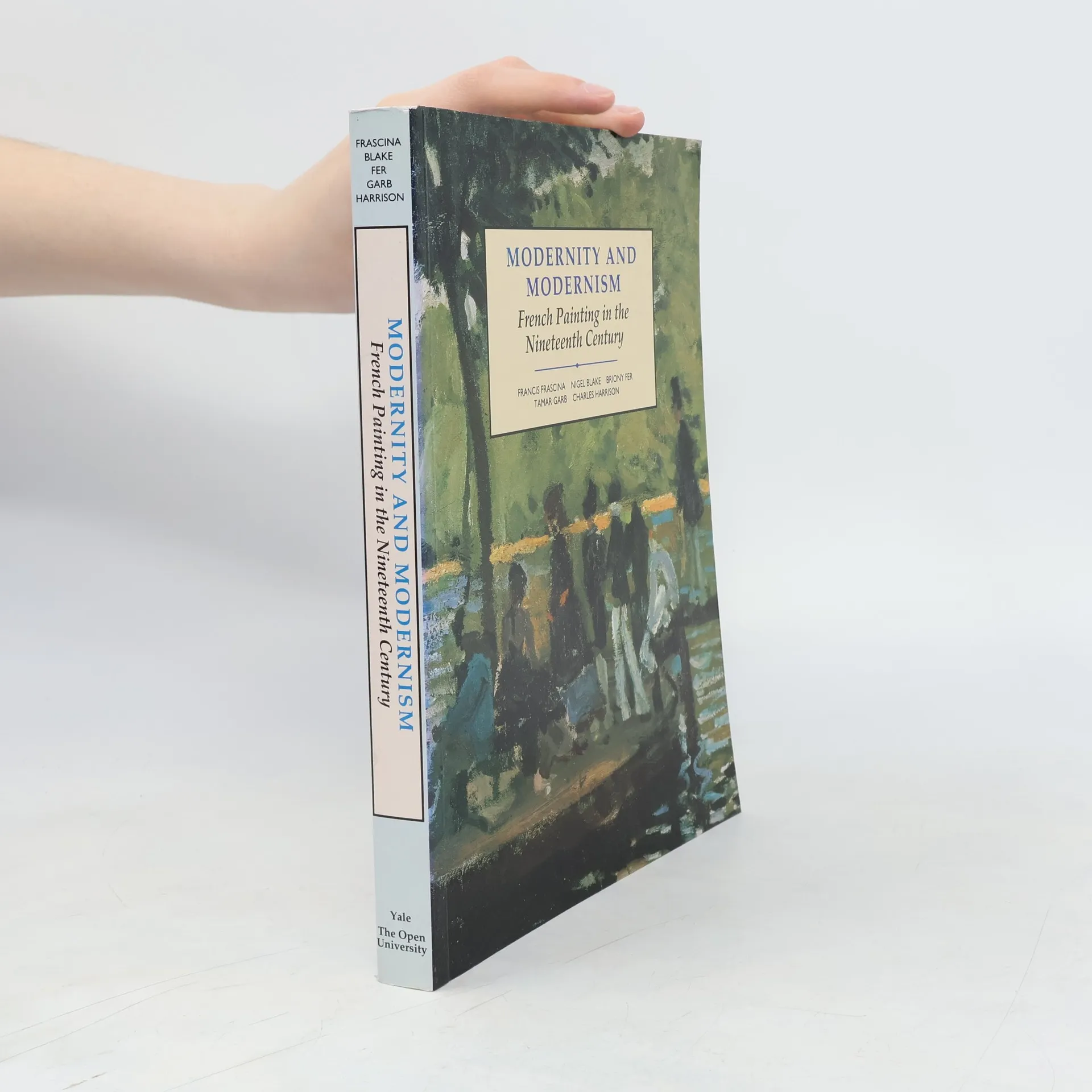
The first volume in this series focuses on aspects of Realism, Impressionism and Post-Impressionism in Paris between 1848 and 1900. The book demonstrates how some historians view this art as representative of the social, historical and economic circumstances in which it was produced.
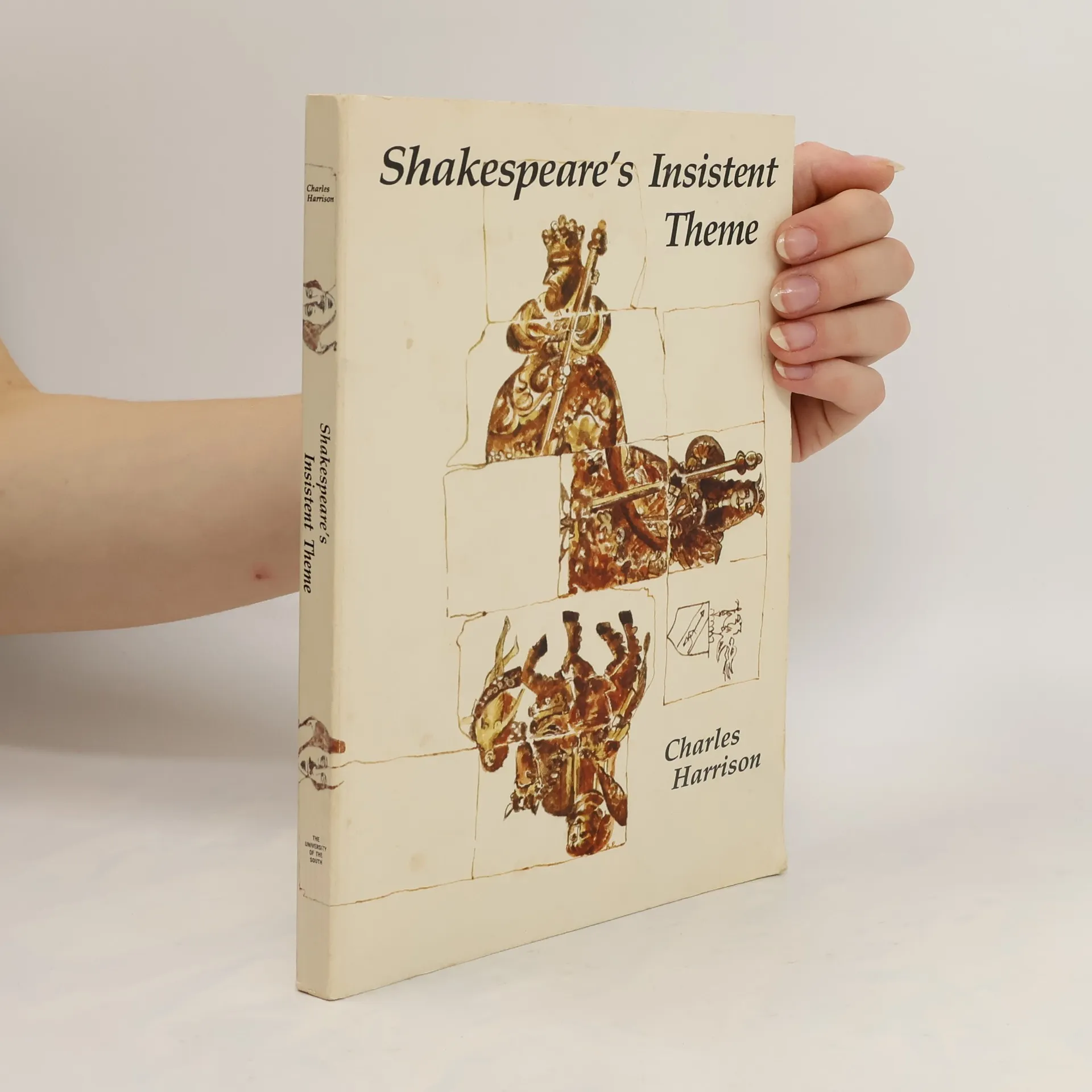
Book by Charles Harrison
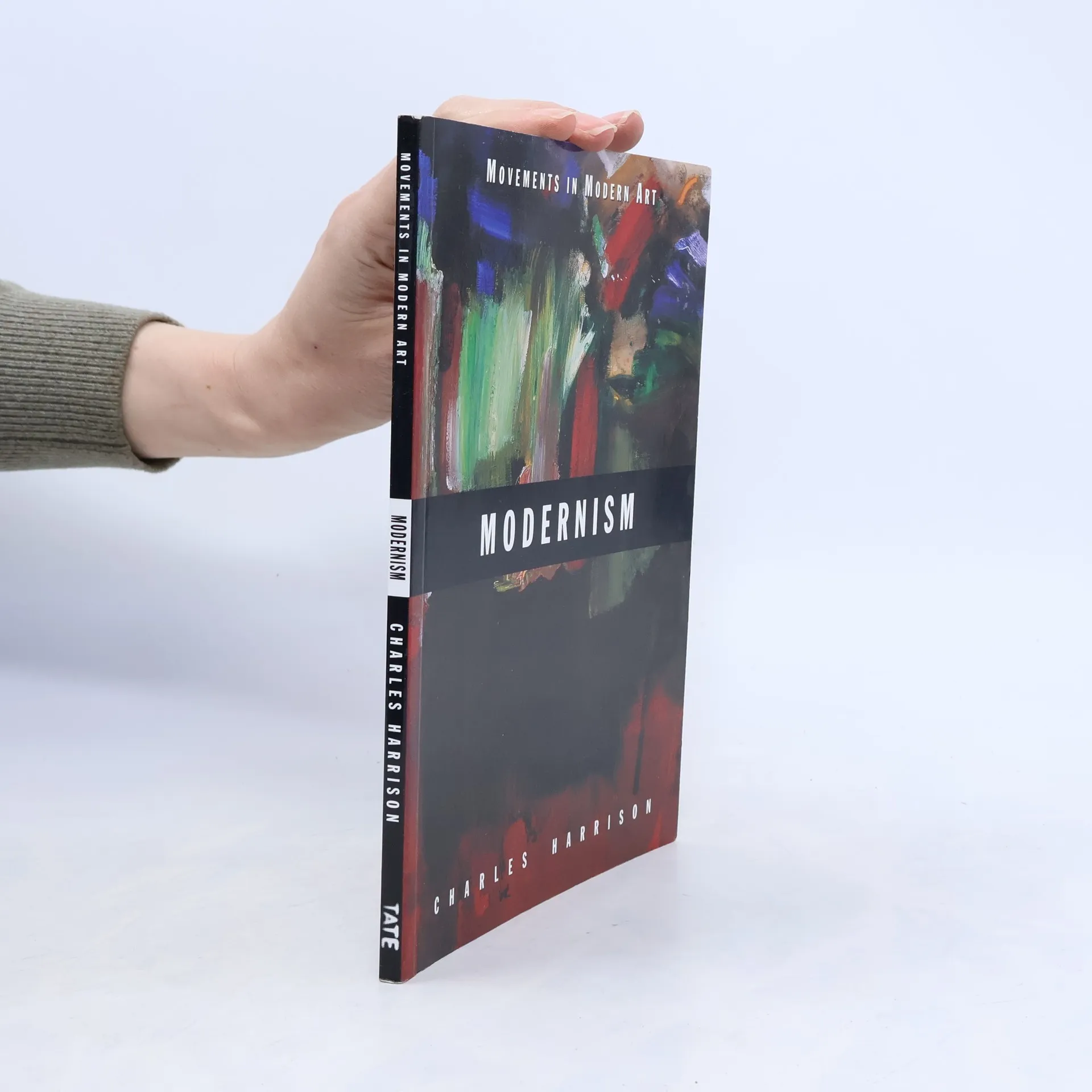
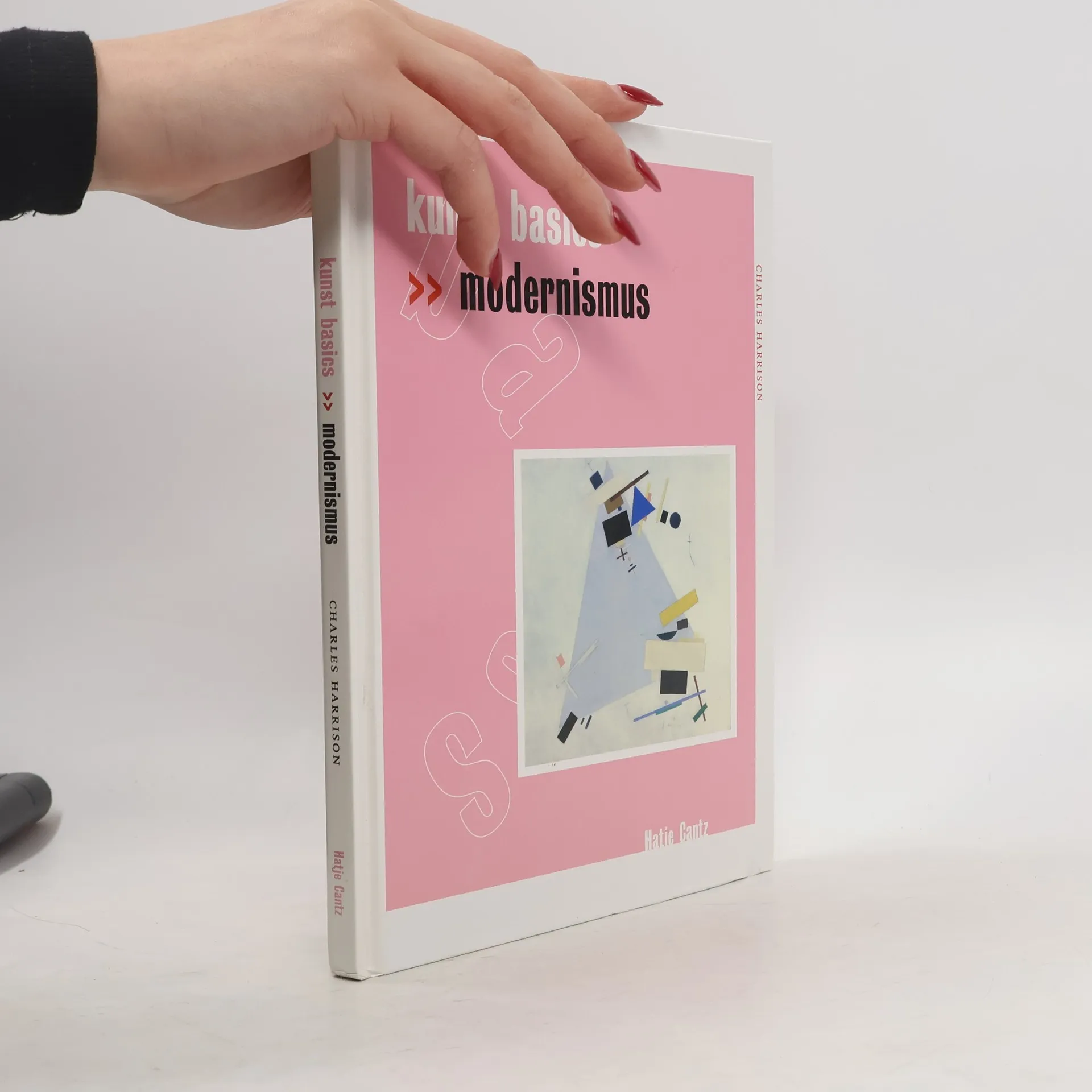
Modernism is a broad term, used generally to convey a faith in progress and a healthy scepticism for received ideas and traditional values. More specifically, the Modernist tendency has often been associated with the main developments in art over the past 150 years, and with the art's highest achievements. However, those concerned to maintain traditional values in one form or another see Modernist art as merely one alternative among many, and perhaps en empty or misguided one. This work looks at Modernist art of the 20th century, in order to show exactly what are the defining characteristics of modernism, and also looks at the critical reaction, both positive and negative, to such work.
Une anthologie / par Charles Harrison et Paul Wood ; traductions Annick Baudoin... [et al.]
Cette anthologie couvre tous les aspects des débats sur l'art moderne depuis le début du XXe siècle : écrits d'artistes sur eux-mêmes, textes de critiques, philosophes, écrivains et hommes politiques. Présentée en huit sections avec, pour chacune, 300 textes replacés dans leurs contexte historique et intellectuel.