Sprache, Musik und Notation – Spuren, Fäden und Oberflächen – Hoch, quer und entlang – Die genealogische Linie – Zeichnen, Schreiben und Kalligrafie – Wie die Linie gerade wurde.

4,3


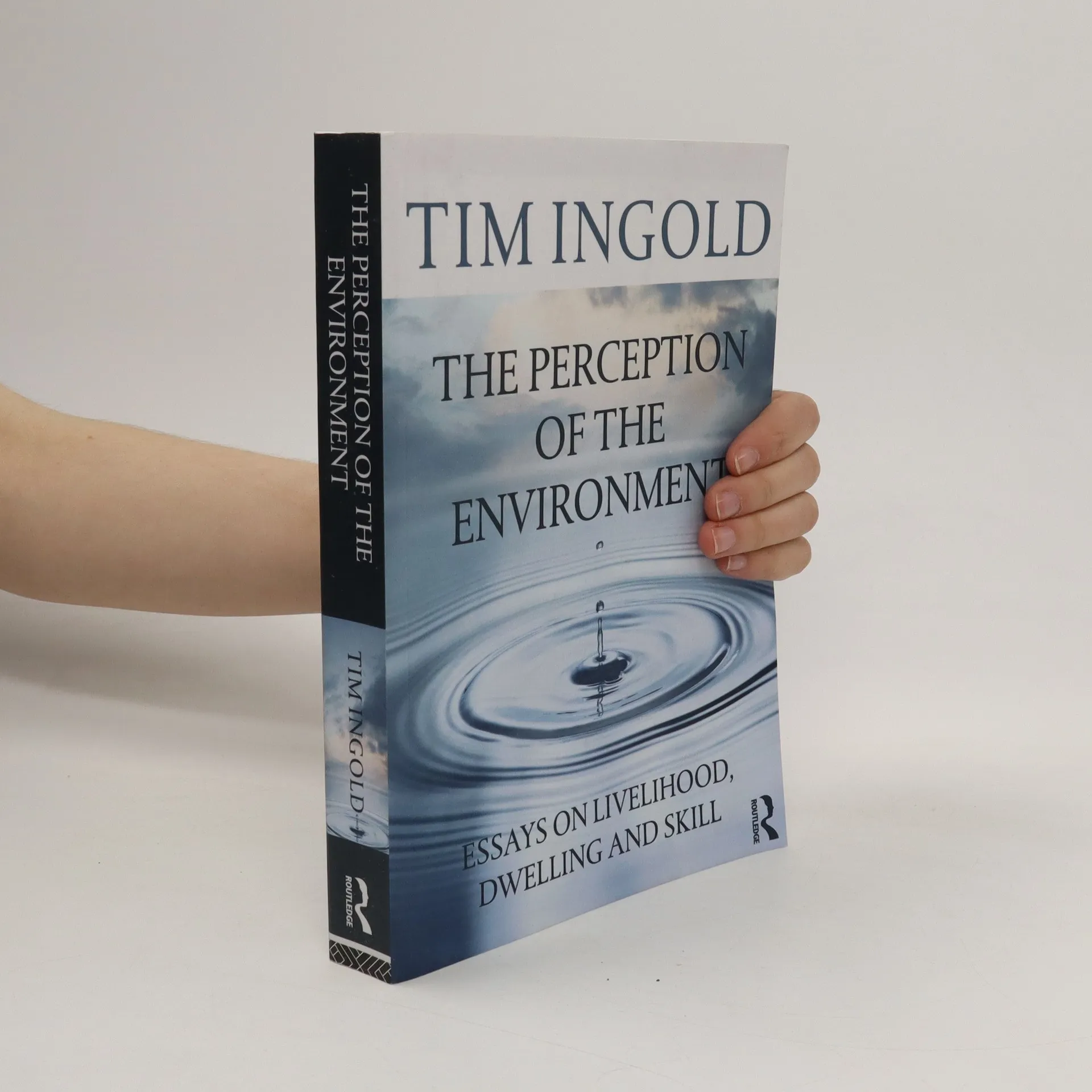
Tim Ingold ist ein britischer Sozialanthropologe, dessen Werk sich tiefgehend mit der Beziehung zwischen Mensch und Umwelt auseinandersetzt. Er untersucht, wie Menschen die Welt um sich herum durch alltägliche Aktivitäten und Fertigkeiten wahrnehmen und wie diese Erfahrungen ihre Seins- und Lebensweisen prägen. Seine Essays verbinden oft theoretische Reflexion mit Beobachtungen menschlicher Praxis und untersuchen, wie die Umwelt zu einem integralen Bestandteil unserer Existenz wird. Ingold's Anthropologie bietet Einblicke, wie wir lernen, in Verbindung mit der Natur zu leben, und wie diese Verbindung unser Weltverständnis beeinflusst.
Sprache, Musik und Notation – Spuren, Fäden und Oberflächen – Hoch, quer und entlang – Die genealogische Linie – Zeichnen, Schreiben und Kalligrafie – Wie die Linie gerade wurde.
Nur wenn wir uns wieder in die Welt verlieben, kann es für die künftigen Generationen Hoffnung auf Erneuerung geben. Diese Prophezeiung von Hannah Arendt nach dem Ende des Zweiten Weltkriegs ist für den Anthropologen Tim Ingold heute so wahr wie damals. Er sieht die Erde angesichts drohender Katastrophen auf Messers Schneide und fordert mit Nachdruck eine neue Art des Umgangs mit der Welt, die uns umgibt, der belebten wie der unbelebten. Korrespondieren nennt Ingold diese aufmerksame, sinnliche Auseinandersetzung mit der Welt, die die Dinge nicht als abgeschlossene Phänomene, sondern in ihrem beständigen Werden begreift und sich selbst in Beziehung zu ihnen setzt. In 27 klugen Essays begleiten die Leserinnen und Leser Ingolds Korrespondenz mit Bäumen, Felsen und Flüssen, Regen und Schnee, mit Kunstwerken und Denkmälern. In luzider und gleichzeitig lyrischer Sprache gelingt es ihm , das Gefühl der Verwandtschaft mit den Dingen und der Erde wiederzubeleben. Ein Buch für das 21. Jahrhundert,
A renowned anthropologist's profound and personal correspondences with the world we live in--
In "The Future," anthropologist Tim Ingold challenges the conventional view of generations as stacked layers, proposing instead that they intertwine like fibers in a rope. He suggests this perspective could alleviate anxieties about the future and foster coexistence, while urging a reevaluation of progress and reliance on technology. Hope remains for future generations.
Exploring the interconnectedness of anthropology, archaeology, art, and architecture, the book presents a transformative perspective on how these disciplines contribute to knowledge creation and environmental shaping. Tim Ingold delves into the processes of making that underpin these fields, emphasizing their roles in altering human experiences and lives. This innovative approach encourages a deeper understanding of how these areas influence one another and the world around us.
Exploring the relationship between imagination and perception, Tim Ingold argues for the reintegration of reality and imagination, challenging the modern separation between the two. Through a series of essays, he examines how this division has shaped contemporary thought and science, advocating for a more holistic understanding of our experiences and the world around us. Ingold's work invites readers to reconsider the role of imagination in shaping reality and to embrace a more interconnected worldview.
Exploring the concept of interconnectedness, this book delves into the metaphor of lines as representations of life and relationships. Building on Tim Ingold's previous work, it presents unique reflections on various themes such as environment, movement, creativity, and the essence of humanity. Through these meditations, it invites readers to consider how lives intertwine and the significance of these connections in understanding our existence.
Originally published: 2000. With new preface.
Reindeer Economies and Their Transformations
Exploring the evolution of subsistence practices, this book delves into the transitions from hunting to pastoralism and ranching. Tim Ingold analyzes the underlying causes and mechanisms driving these transformations, providing insights into how human societies adapt to their environments and the implications for cultural and social structures. Through a detailed examination, the author sheds light on the interconnectedness of these practices and their impact on human development.
Humanity is at a crossroads. We face mounting inequality, escalating political violence, warring fundamentalisms and an environmental crisis of planetary proportions. How can we fashion a world that has room for everyone, for generations to come? What are the possibilities, in such a world, of collective human life? These are urgent questions, and no discipline is better placed to address them than anthropology. It does so by bringing to bear the wisdom and experience of people everywhere, whatever their backgrounds and walks of life. In this passionately argued book, Tim Ingold relates how a field of study once committed to ideals of progress collapsed amidst the ruins of war and colonialism, only to be reborn as a discipline of hope, destined to take centre stage in debating the most pressing intellectual, ethical and political issues of our time. He shows why anthropology matters to us all. Introducing Polity’s Why It Matters series: In these short and lively books, world-leading thinkers make the case for the importance of their subjects and aim to inspire a new generation of students.
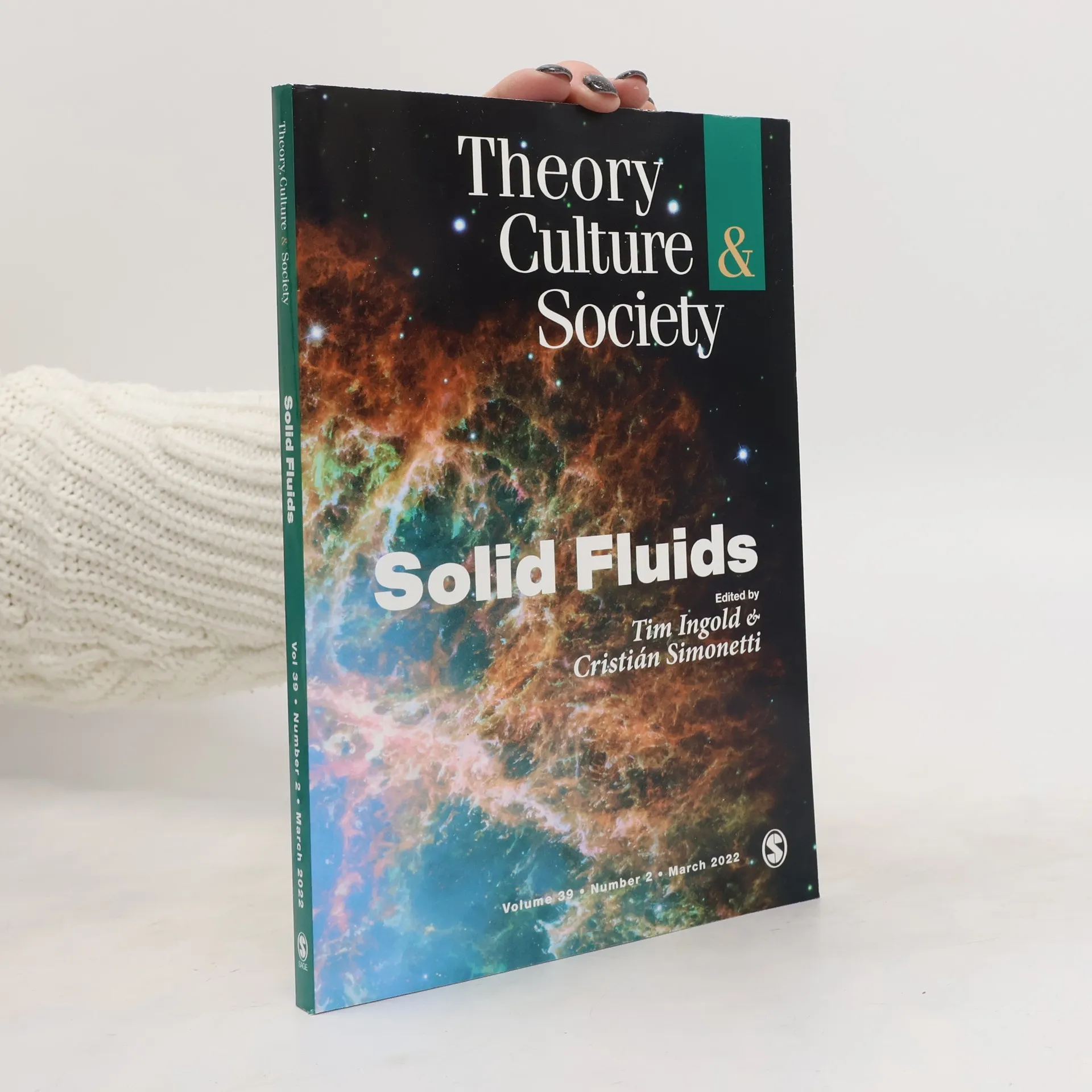
Solid Fluids
Focusing on the intersection of evolution and anthropology, the book explores how these concepts have evolved since the mid-nineteenth century. Ingold revisits his original work nearly thirty years later, adding a new preface that reflects on its historical context and recent advancements in the field. With a unique approach that bridges natural sciences and the humanities, it significantly contributes to the understanding of anthropological and social thought, as well as ongoing discussions about human nature, culture, and social dynamics.
What do walking, weaving, observing, storytelling, singing, drawing and writing have in common? The answer is that they all proceed along lines. In this extraordinary book Tim Ingold imagines a world in which everyone and everything consists of interwoven or interconnected lines and lays the foundations for a completely new discipline: the anthropological archaeology of the line. Ingold’s argument leads us through the music of Ancient Greece and contemporary Japan, Siberian labyrinths and Roman roads, Chinese calligraphy and the printed alphabet, weaving a path between antiquity and the present. Setting out from a puzzle about the relation between speech and song, Ingold considers how two kinds of line – threads and traces – can turn into one another as surfaces form or dissolve. He reveals how our perception of lines has changed over time, with modernity converting to point-to-point connectors before becoming straight, only to be ruptured and fragmented by the postmodern world. Drawing on a multitude of disciplines including archaeology, classical studies, art history, linguistics, psychology, musicology, philosophy and many others, and including more than seventy illustrations, this book takes us on an exhilarating intellectual journey that will change the way we look at the world and how we go about in it.
Anthropology is a disciplined inquiry into the conditions and potentials of human life. Generations of theorists, however, have expunged life from their accounts, treating it as the mere output of patterns, codes, structures or systems variously defined as genetic or cultural, natural or social. Building on his classic work <em>The Perception of the Environment</em>, Tim Ingold sets out to restore life to where it should belong, at the heart of anthropological concern. <em>Being Alive</em> ranges over such themes as the vitality of materials, what it means to make things, the perception and formation of the ground, the mingling of earth and sky in the weather-world, the experiences of light, sound and feeling, the role of storytelling in the integration of knowledge, and the potential of drawing to unite observation and description. Our humanity, Ingold argues, does not come ready-made but is continually fashioned in our movements along ways of life. Starting from the idea of life as a process of wayfaring, Ingold presents a radically new understanding of movement, knowledge and description as dimensions not just of being in the world, but of being alive to what is going on there.