
Carnage on the Committee
- 246 Seiten
- 9 Lesestunden
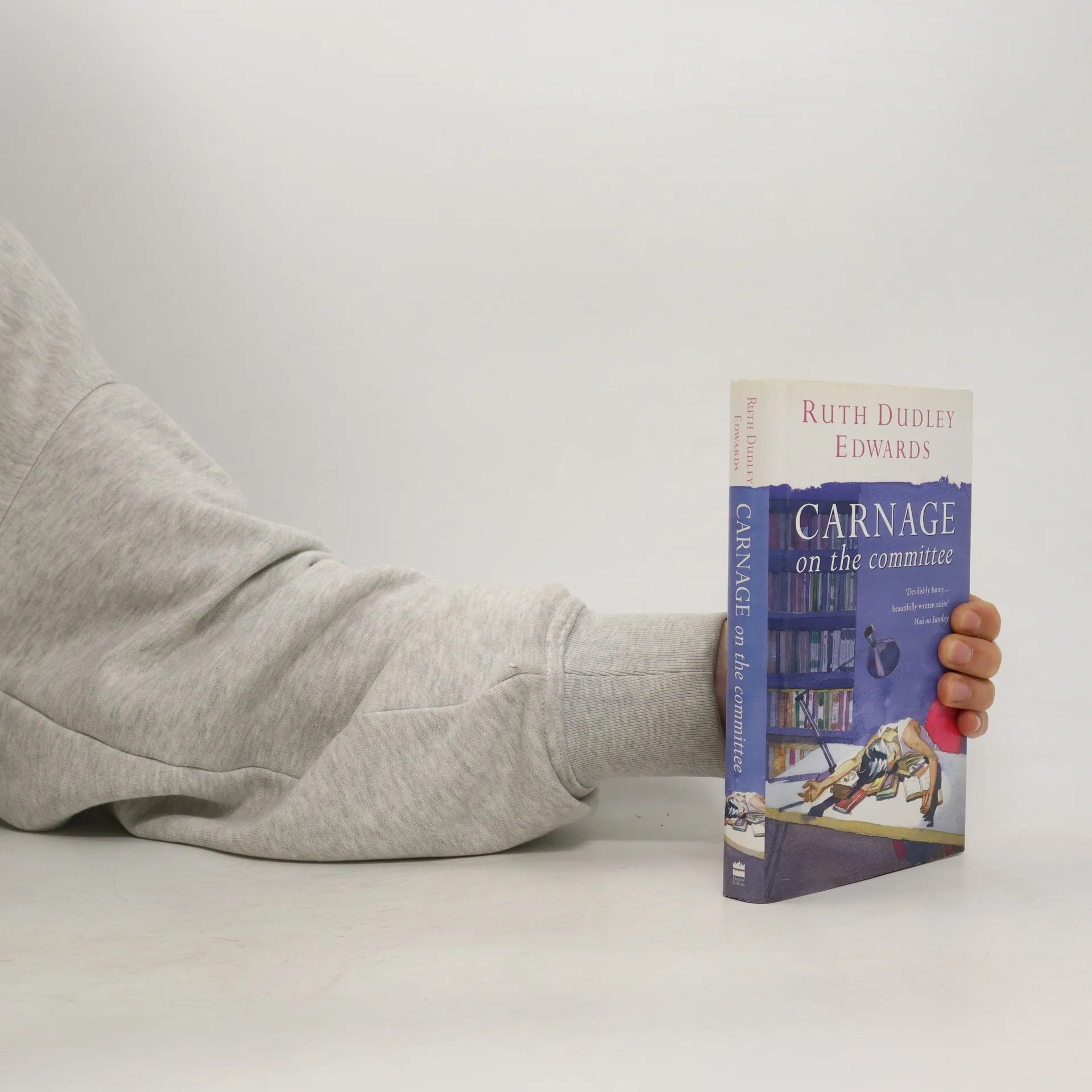
Amiss asks a baroness to fill the gap when a member of the Literary Prize committee dies in suspicious circumstances
Ruth Dudley Edwards wurde nach ihrem Aufbaustudium in Cambridge und Karrieren in Lehre, Marketing und im öffentlichen Dienst zur freiberuflichen Schriftstellerin. Als Journalistin, Rundfunksprecherin, Historikerin und preisgekrönte Biografin, die in London lebt, ist sie für ihre satirischen Kriminalromane bekannt. Ihre Werke untersuchen gekonnt gesellschaftliche und politische Themen mit Witz und Ironie. Edwards verbindet meisterhaft Spannung mit sozialem Kommentar und schafft so fesselnde und zum Nachdenken anregende Erzählungen.


Amiss asks a baroness to fill the gap when a member of the Literary Prize committee dies in suspicious circumstances
In St. Martha's College, Cambridge, rival factions battle over a bequest. One lot wants it spent on fellowships, another on redecoration, a third on a politically-correct ethnics study center. When people start dying, the college calls in Scotland Yard's Jim Milton
Battered to death with a piece of abstract sculpture titled 'Reconciliation, ' Whitehall departmental head Sir Nicholas Clark is claimed by his colleagues to have been a fine and respected public servant cut off in his prime. Bewildered by the labyrinthine bureaucracy of Whitehall, Scotland Yard's Superintendent Jim Milton recognizes a potential ally in Clark's young Private Secretary, Robert Amiss. Milton soon learns from Amiss how Whitehall works: that it can be Machiavellian and potentially homicidal, that Sir Nicholas was obnoxious and widely loathed, that he had spent the weeks before his murder upsetting and antagonizing family and associates, and that his last morning on earth had been spent gleefully observing the success of his plan to embarrass his minister and his department publicly. And they still need to discover who wielded the blunt instrument. This is the first of Ruth Dudley Edwards' witty, iconoclastic but warm-hearted satires about the British Establishment. Dr. Ruth Dudley Edwards was born and brought up in Dublin, Ireland. An historian and prize-winning biographer, she uses her knowledge of the British establishment in her satirical crime novels. She has three times been short-listed for awards from the Crime Writers' Association. www.ruthdudleyedwards.com
The Lives and Legacies of the Founding Fathers of the Irish Republic
On Easter Sunday, 23 April 1916, the seven members of the Irish Republican Brotherhood’s military council met to proclaim an Irish Republic with themselves as the provisional government. After a week of fighting with the British army on the streets of Dublin, the Seven were arrested, court-martialled and executed.Cutting through the layers of veneration that have seen them regarded unquestioningly as heroes and martyrs by many, Ruth Dudley Edwards provides shrewd yet sensitive portraits of Ireland’s founding fathers. She explores how an incongruous group, which included a communist, visionary Catholic poets and a tobacconist, joined together to initiate an armed rebellion that changed the course of Irish history. Brilliant, thought-provoking and captivatingly told, The Seven challenges us to see past the myths and consider the true character and legacy of the Easter Rising.
For many years Westonbury Cathedral has been dominated by a clique of High Church gays, so when Norman Cooper, an austere, intolerant, happy-clappy evangelist, is appointed dean, there is shock, outrage and fear. David Elworthy, the gentle and politically innocent new bishop, is distraught at the prospect of warfare between the factions; contentious issues include the camp lady chapel and the gay memorial under construction in the deanery garden. Desperate for help, Elworthy cries on the shoulder of his old friend, the redoubtable Baroness Troutbeck, who forces her unofficial troubleshooter, Robert Amiss, to move into the bishop's palace. Amiss, Troutbeck and the cat Plutarch address themselves in their various ways to the bishop's problems, which very soon include a clerical corpse in the cathedral. Is it suicide? Or is it murder? And who is likely to be next?