Die Buchreihe Konzepte der Sprach- und Literaturwissenschaft gibt Aufschluss uber Prinzipien, Probleme und Verfahrensweisen philologischer Forschung im weitesten Sinne und dient einer Bestimmung des Standorts der Linguistik und Literaturwissenschaft. Die Reihe ubergreift Einzelsprachen und Einzelliteraturen. Sie stellt sich in den Dienst der Reflexion und Grundlegung einer allgemeinen Sprach- und Literaturwissenschaft. Die Bande sind zum Teil informierende Einfuhrungen, zum Teil wissenschaftliche Diskussionsbeitrage. "
Pfister bietet erstmals ein systematisches Beschreibungsverfahren für dramatische Texte, das die in der bisherigen Literatur verbreitete Einseitigkeit und Konzentration auf Spezialprobleme überwindet. Seine Dramentheorie basiert auf den jüngsten Ergebnissen der Kommunikationsforschung und erschließt anhand eines breit gestreuten Textkorpus, das vom antiken Drama bis zum Theater der Avantgarde reicht, alle sprachlichen und außersprachlichen Textschichten des Dramas.
Ein ideales Arbeits- und Einführungsbuch: jede Strukturbeschreibung wird textnah anhand konkreter Beispiele veranschaulicht; klare Begriffsbildung, übersichtliche Gliederung sowie exakte bibliographische Erschließung der vorliegenden Literatur ersparen dem Anfänger den „Initialschock“ angesichts seines Lektürepensums.
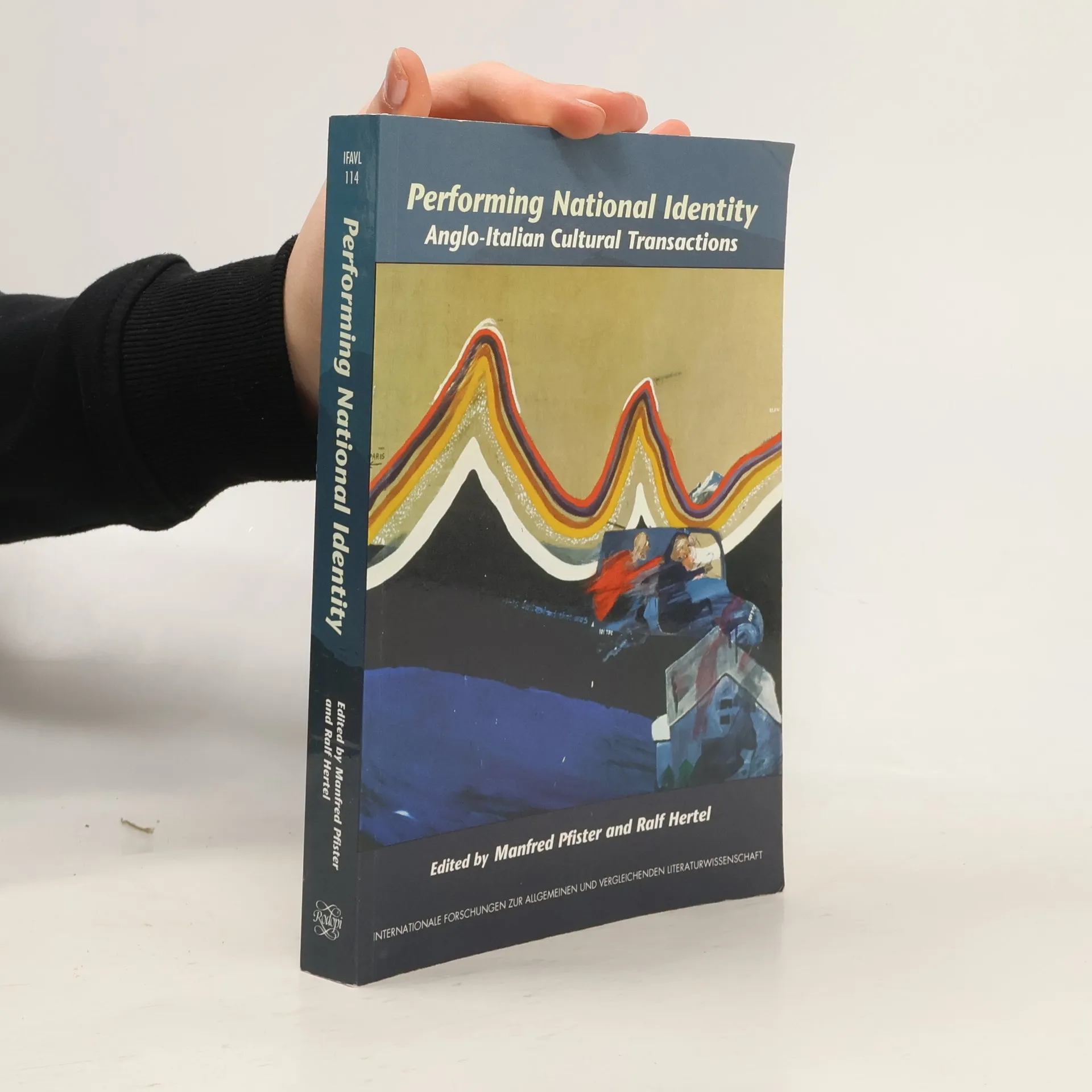
National identity is not some naturally given or metaphysically sanctioned racial or territorial essence that only needs to be conceptualised or spelt out in discursive texts; it emerges from, takes shape in, and is constantly defined and redefined in individual and collective performances. It is in performances—ranging from the scenarios of everyday interactions to ‘cultural performances’ such as pageants, festivals, political manifestations or sports, to the artistic performances of music, dance, theatre, literature, the visual and culinary arts and more recent media—that cultural identity and a sense of nationhood are fashioned. National identity is not an essence one is born with but something acquired in and through performances.Particularly important here are intercultural performances and transactions, and that not only in a colonial and postcolonial dimension, where such performative aspects have already been considered, but also in inner-European transactions. ‘Englishness’ or ‘Britishness’ and Italianità, the subject of this anthology, are staged both within each culture and, more importantly, in joint performances of difference across cultural borders. Performing difference highlights differences that ‘make a difference’; it ‘draws a line’ between self and other—boundary lines that are, however, constantly being redrawn and renegotiated, and remain instable and shifting.