

More than "another biography of Bismarck," this is a political history of Germany during the crucial years between 1815 and 1871, assessing Bismarck's role in the events which the author feels paved the way for the catastrophes of the twentieth century. Most contemporary German scholars have exculpated Bismarck from all responsibility for later disasters, while his foreign critics have erred equally in their censures. Professor Pflanze seeks to measure more accurately the impact of the Junker statesman upon German historical development. Professor Pflanze provides a wide-ranging study of the interaction between the will of a political genius and the social, political, intellectual, and institutional forces with which he dealt. He analyzes Bismarck's political aims, the techniques of political strategy he employed, and the impact of both on Germany's political growth. The author views Bismarck as a conservative who employed revolutionary means to gain his ends. By stealing the cause of German nationalism from the liberals he converted it to conservative purposes. Through him the association was first established between German nationalism, Prussian militarism, and Hohenzollern authoritarianism.
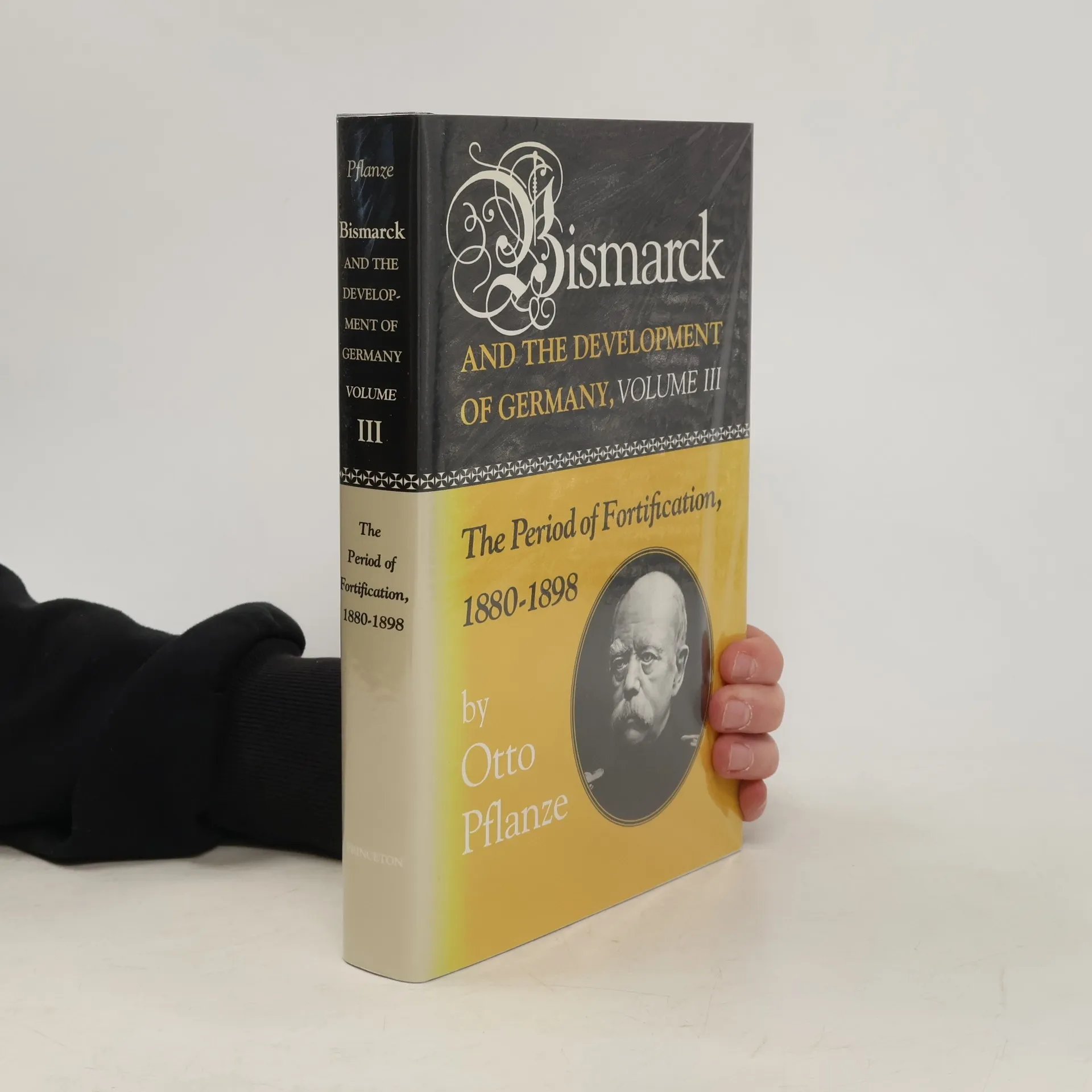
Otto Pflanze zeichnet in seiner zweibändigen Biographie ein vielschichtiges Bild von Bismarck und verknüpft dessen Leben mit der deutschen Geschichte des 19. Jahrhunderts. Die Darstellung umfasst ökonomische, soziale und politische Aspekte und zeigt Bismarck als komplexen Charakter mit Genie und Schwächen.
In seiner zweibändigen Bismarck-Biographie zeichnet Otto Pflanze nicht nur ein eindringliches und oft überraschendes Bild des Reichsgründers, sein Werk ist auch eine mit imponierender Kenntnis geschriebene Geschichte Deutschlands im 19. Jahrhundert. Pflanzes Darstellung, die Summe eines Forscherlebens, vereinigt in sich ökonomische, soziale, politische intellektuelle sowie institutionelle Aspekte der deutschen Geschichte und setzt sie in Beziehung zu Bismarck und seiner Karriere. Damit greift sie weit über den Rahmen einer traditionellen Biographie hinaus und rückt Bismarck in den „Strom der Zeit“. „Ein opus magnum über das Leben und Werk Otto von Bismarcks.“ Klaus Hildebrand, Die Zeit „Sein Werk, eine wahre Summa der Bismarck-Forschung, dürfte sich für eine Reihe von Jahren als maßgebliche Biographie durchsetzen.“ Hans-Peter Schwarz, Frankfurter Allgemeine Zeitung „ Pflanzes Werk besticht nicht nur durch eine profunde Kenntnis der Literatur und - besonders für die Zeit nach 1871 - durch manche Archivfunde, sondern auch durch die Offenheit, mit der er sein eigenes zwiespältiges Verhältnis zu Bismarck zum Ausdruck bringt.“ Volker Ullrich, Die Zeit
Focusing on the political landscape of late 19th-century Germany, this volume explores Bismarck's challenges following the economic crash of 1873 and his attempts to forge a national consensus amidst social unrest. It delves into his increasing frustrations, the psychological impacts of his political struggles, and the efforts of his physicians to improve his health. The narrative culminates in Bismarck's contentious relationship with Wilhelm II and reflects on the enduring legacy of Bismarck, which continues to shape Germany's aspirations for reunification.
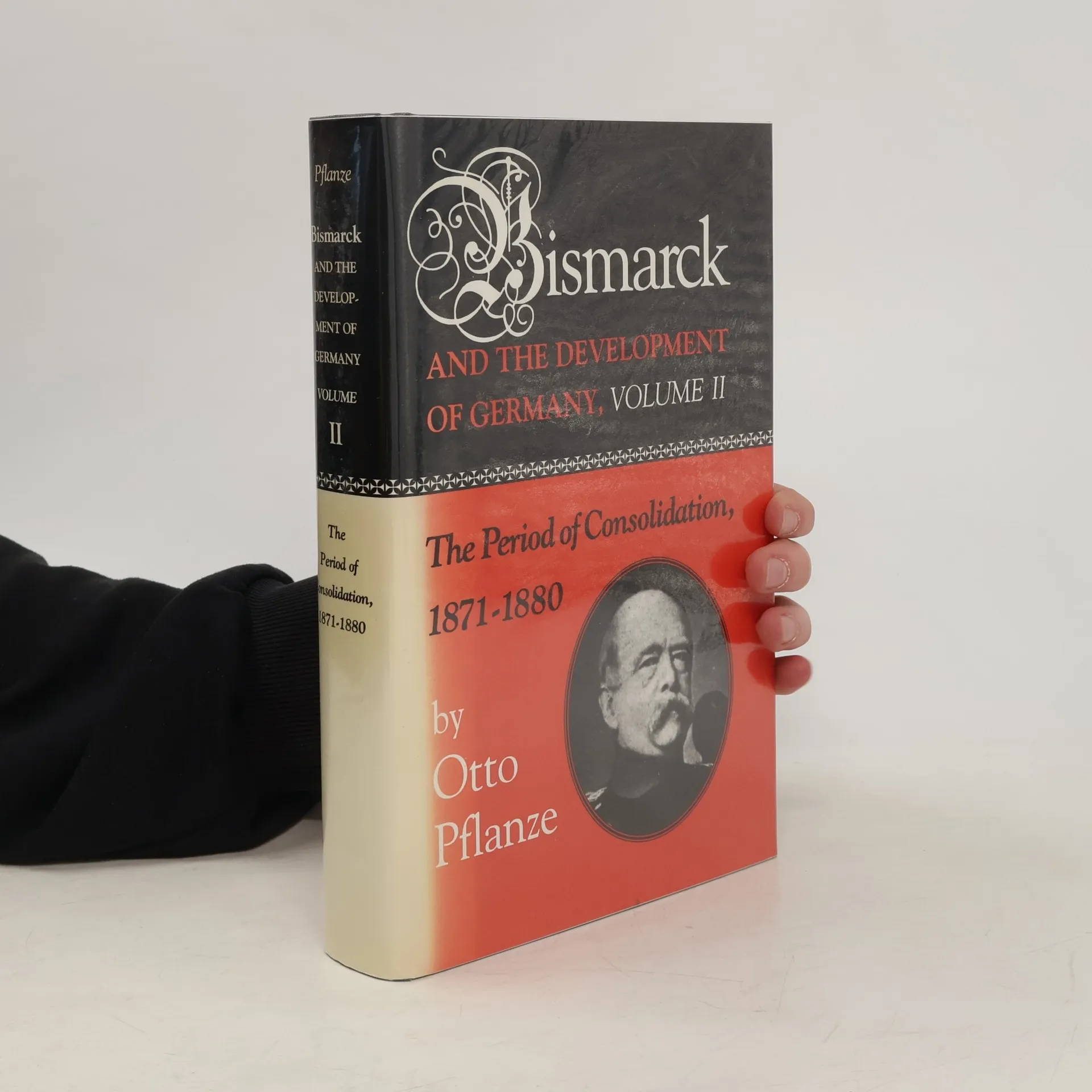
Focusing on the period of 1871-1880, this volume examines Bismarck's pivotal role in shaping German and European politics as the new German Reich emerged as a dominant power. It explores the questions surrounding Bismarck's ambitions and the potential for further conquests, contrasting these with the reality of a relatively stable international order that followed unification. Pflanze provides an in-depth analysis of how this era, often perceived as one of conflict, actually fostered a prolonged period of peace despite various crises.
The three volumes of this monumental work on Bismarck and his times constitute not only a finely honed analysis of a perplexing and enduringly fascinating human being but also a masterful study of nineteenth-century Germany. The product of a lifetime of scholarship, Otto Pflanze's trilogy blends into a single synthesis all aspects of the German historical experience, from the economic and social to the political and intellectual, in their relationship to Bismarck and his career. The purpose is to describe the interaction between a man of genius and the forces that both molded him and were reshaped by him--an objective that cannot be achieved within the limits of the customary biographical form.The author emphasizes the need to reassess the German past in view of the terrible tragedy of the twentieth century. Addressing this task in the most comprehensive way possible, Pflanze offers fresh insights into the functioning of both the internal and international political systems of the Bismarck era. At the same time Bismarck, the man, has not been neglected. The three volumes of the work combine to produce a vivid picture of this narcissistic personality, demonstrating the connections among health, neurosis, and political judgment. For the first time we can see the entire person and how his strengths and weaknesses became the key to modern German history.Volume I: The Period of Unification, 1815-1871"The stream of time flows inexorably along. By plunging my hand into it, I am merely doing my duty. I do not expect thereby to change its course." This was the thought with which Otto von Bismarck began his career in the Prussian foreign service in 1851. Yet the will to power was the central characteristic of his personality. Describing the interaction between the "stream of time"--or social, political, intellectual, and institutional forces--and the character of one of history's greatest political talents, the author probes Bismarck's role in the unification of Germany and assesses his influence on the subsequent course of German history. Volume I of Pflanze's work was first published in 1963, to wide acclaim. Presented here is a revised edition that incorporates the most recent research and appears simultaneously with the first publication of Volumes II and III.Volume II: The Period of Consolidation, 1871-1880Volume II opens at a time when Bismarck had become the dominant figure in German and European politics and the new German Reich the most formidable power on the continent. Questions arose. What new goals would the "man of blood and iron" now pursue? What new conquests might be necessary to satiate a people steeped in the history and legends of medieval empire? Pflanze offers a comprehensive treatment of the years of consolidation, when, in reality, German unification introduced not a new era of conquest and bloodshed but a period of international order that lasted, despite many crises, for more than forty years.Volume III: The Period of Fortification, 1880-1898The burst of capitalistic expansion that accompanied German unification came to an abrupt end with the crash of 1873, which opened a period of economic depression. Volume III describes the continuation of Bismarck's efforts to cope with the resulting economic and social problems that hindered his quest for a new national consensus in support of the Prussian-German "establishment." It also brings to a climax the author's account of Bismarck's mounting political frustrations, their psychopathological consequences, and the struggle of his doctors to convert him to a healthier life-style. The final chapters deal with the fascinating story of Bismarck's conflict with Wilhelm II. The work ends with an account of the Bismarck legend that endures to this day and may yet influence Germany's current quest for reunification.