Vom roten Wien zum Bürgerkrieg
- 257 Seiten
- 9 Lesestunden


Anson Rabinbach ist ein herausragender Historiker, dessen Werk sich mit der komplexen Beziehung zwischen Intellektuellengeschichte und den politischen Umwälzungen des 20. Jahrhunderts auseinandersetzt. Er untersucht, wie europäische Denker mit Katastrophen rangen und nach Wegen zur Aufklärung in turbulenten Zeiten suchten. Seine Analysen bieten tiefe Einblicke in die Gedankenströmungen, die die moderne Welt prägten. Seine Schriften werden für ihre analytische Strenge und historische Tiefe geschätzt.

Die solidarische Leistungsgesellschaft
German
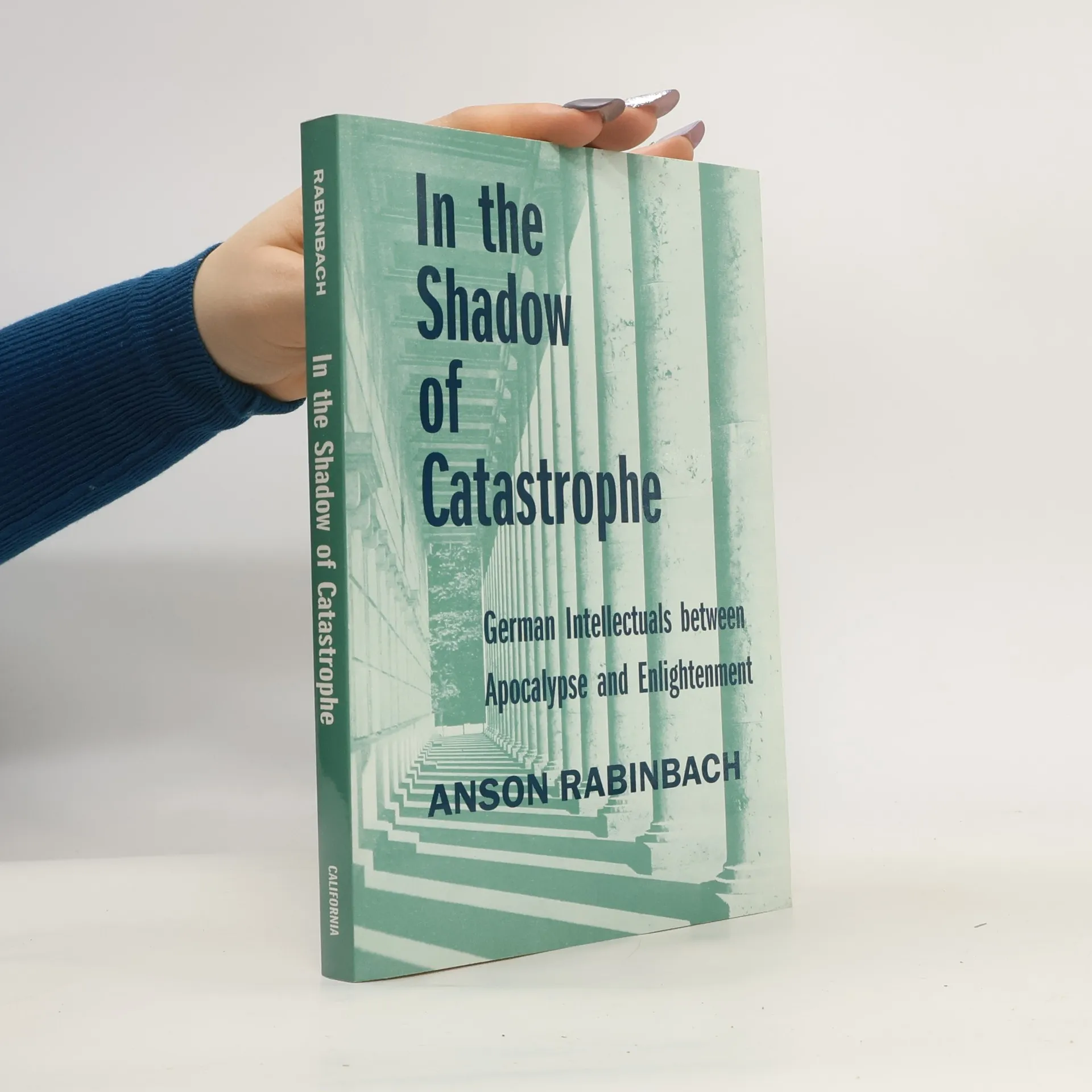
Includes essays that address the writings of key figures in twentieth-century German philosophy. This title explores their ideas in relation to the two world wars and the horrors facing Europe at that time. Analyzing the work of Benjamin and Bloch, it suggests their indebtedness to the traditions of Jewish messianism. schovat popis
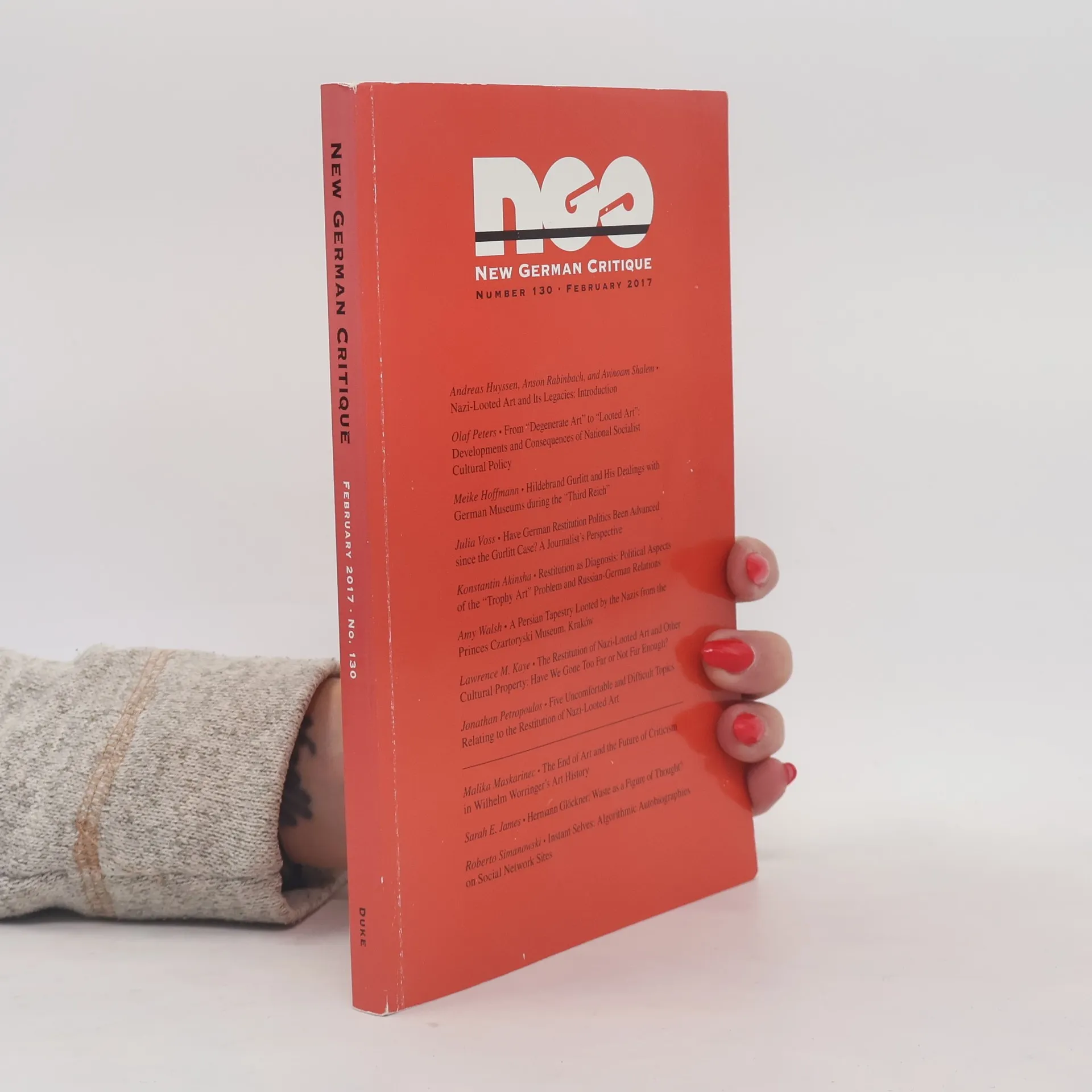
This issue examines the legacy of Nazi-looted art in light of the 2012 discovery of the famous Hildebrand Gurlitt collection of stolen artwork in Germany. When the German government declassified the case almost two years later, the resulting scandal raised fundamental questions about the role of art dealers in the Third Reich, the mechanics of the Nazi black market for artwork, the shortcomings of postwar denazification, the failure of courts and governments to adjudicate stolen artwork claims, and the unwillingness of museums to determine the provenance of thousands of looted pieces of art. The contributors to this issue explore the continuities of art dealerships and auction houses from the Nazi period to the Federal Republic and take stock of the present political and cultural debate over the handling of this artwork. Special topic contributors. Konstantin Akinsha, Meike Hoffmann, Andreas Huyssen, Lawrence M. Kaye, Olaf Peters, Jonathan Petropoulos, Anson Rabinbach, Avinoam Shalem, Julia Voss, Amy Walsh
Examines how developments in physics, biology, medicine, psychology, politics, and art employed the metaphor of the working body as a human motor. This title demonstrates how the utopian obsession with energy and fatigue shaped social thought across the ideological spectrum.
"The subject of how German scholars responded to the Nazi regime has seen a resurgence of interest in recent years. In this collection, Rabinbach and Bialas bring some of the most important and original scholarly contributions together in one cohesive volume, to deliver a surprising conclusion: whatever diverse motives German intellectuals may have had in 1933, the image of Nazism as an alien power imposed on German universities from without was a convenient fiction."--BOOK JACKET.