Programming the ESP32 in MicroPython
- 356 Seiten
- 13 Lesestunden


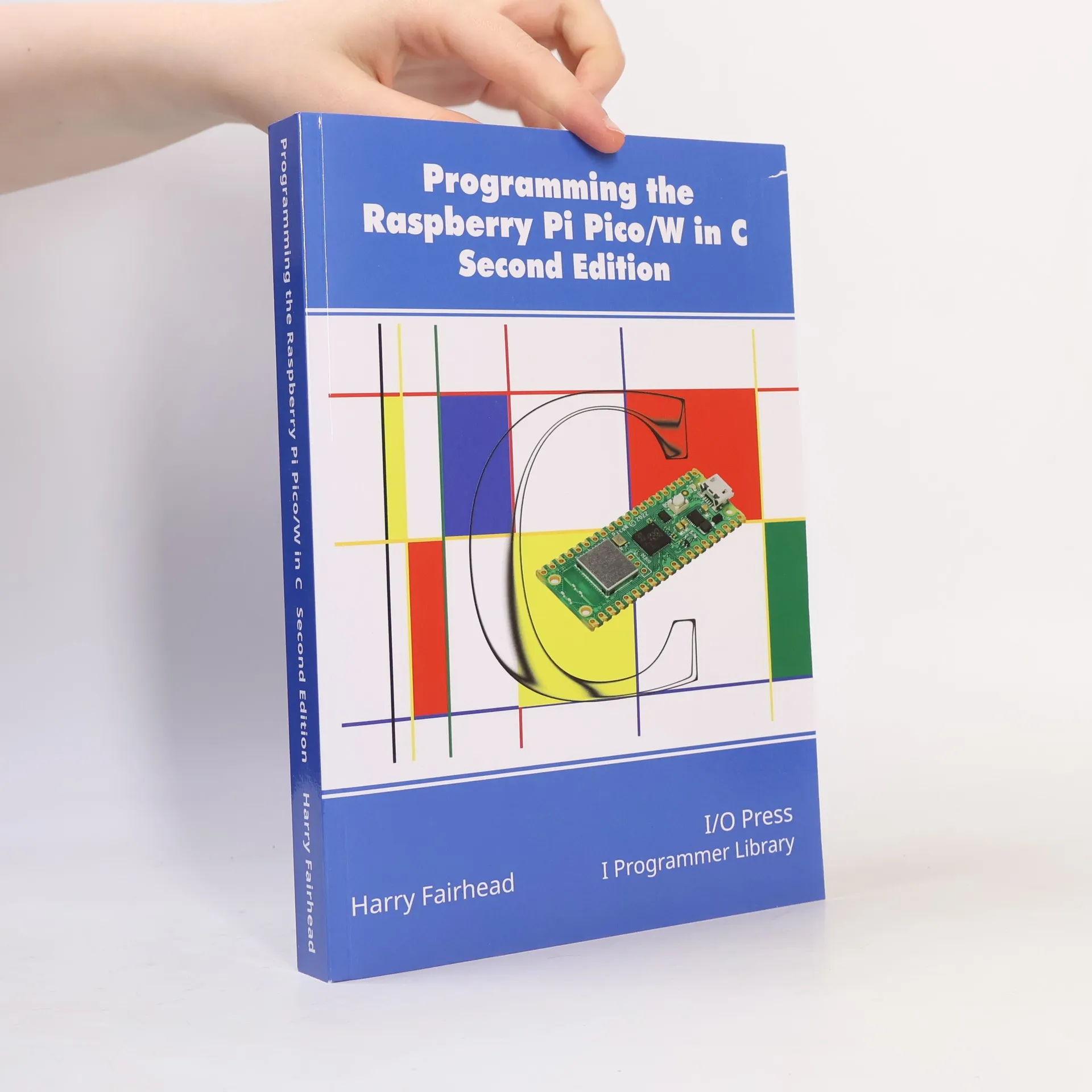
"Programming the Raspberry Pi Pico in C uses the highly popular VS Code as its development environment and shows how to use a Raspberry Pi or a desktop PC running Windows as your development machine. The purpose of the book is to reveal what you can do with the Pico's GPIO lines together with widely used sensors, servos and motors and ADCs. After covering the GPIO, outputs and inputs, events and interrupts, it gives you hands-on experience of PWM (Pulse Width Modulation), the SPI bus, the I2C bus and the 1-Wire bus."--Page 4 of cover.
"Programming the Raspberry Pi Pico in C uses the highly popular VS Code as its development environment and shows how to use a Raspberry Pi or a desktop PC running Windows as your development machine. The purpose of the book is to reveal what you can do with the Pico's GPIO lines together with widely used sensors, servos and motors and ADCs. After covering the GPIO, outputs and inputs, events and interrupts, it gives you hands-on experience of PWM (Pulse Width Modulation), the SPI bus, the I2C bus and the 1-Wire bus."--Page 4 of cover
The book has been released in a new edition, featuring updated content and possibly revised insights. This edition aims to enhance the reader's experience with fresh perspectives or additional information.
Amazon Reviews highlight the value of this resource for developers looking to maximize the potential of BBC computers. It serves as an essential guide for low-level developers, particularly those working with hardware registers. The BBC can function as a powerful IoT device, but utilizing its features requires proficiency in C, which is crucial for efficient communication with external devices. The second edition thoroughly covers the new V2 version, utilizing VS Code for offline development and offering downloadable templates for both V1 and V2. It begins with the traditional "Blinky" program, progressing to control the device's I/O lines and exploring GPIO fundamentals. The book emphasizes direct hardware interaction, memory mapping, and pulse width modulation, leading to the integration of sensors via I2C and custom one-wire protocols. It also addresses the SPI bus for A-to-D conversion and delves into serial connections, enhancing connectivity despite the device's lack of built-in WiFi. Additionally, the versatile 5x5 LED display is explored, demonstrating brightness control through pulse width modulation in a classic game. The resource concludes with a new chapter on the device's radio and sound capabilities. Author Harry Fairhead brings extensive experience in microprocessors and IoT, having written multiple books on related topics, with a strong preference for C programming.