

Computation is revolutionizing our world, even the inner world of the "pure" mathematician. Mathematical methods - especially the notion of proof - that have their roots in classical antiquity have seen a radical transformation since the 1970s, as successive advances have challenged the priority of reason over computation. Like many revolutions, this one comes from within. Computation, calculation, algorithms - all have played an important role in mathematical progress from the beginning - but behind the scenes, their contribution was obscured in the enduring mathematical literature. To understand the future of mathematics, this fascinating book returns to its past, tracing the hidden history that follows the thread of computation. Along the way it invites us to reconsider the dialog between mathematics and the natural sciences, as well as the relationship between mathematics and computer science. It also sheds new light on philosophical concepts, such as the notions of analytic and synthetic judgment. Finally, it brings us to the brink of the new age, in which machine intelligence offers new ways of solving mathematical problems previously inaccessible. This book is the 2007 Winner of the Grand Prix de Philosophie de l'Académie Française.
Gilles Dowek Reihenfolge der Bücher (Chronologisch)

Principles of Programming Languages
- 159 Seiten
- 6 Lesestunden
This introduction to the principles and concepts of programming language uses Java as a main language then systematically compares it to other languages, thereby providing the tools that allow students to adapt to new programming languages.
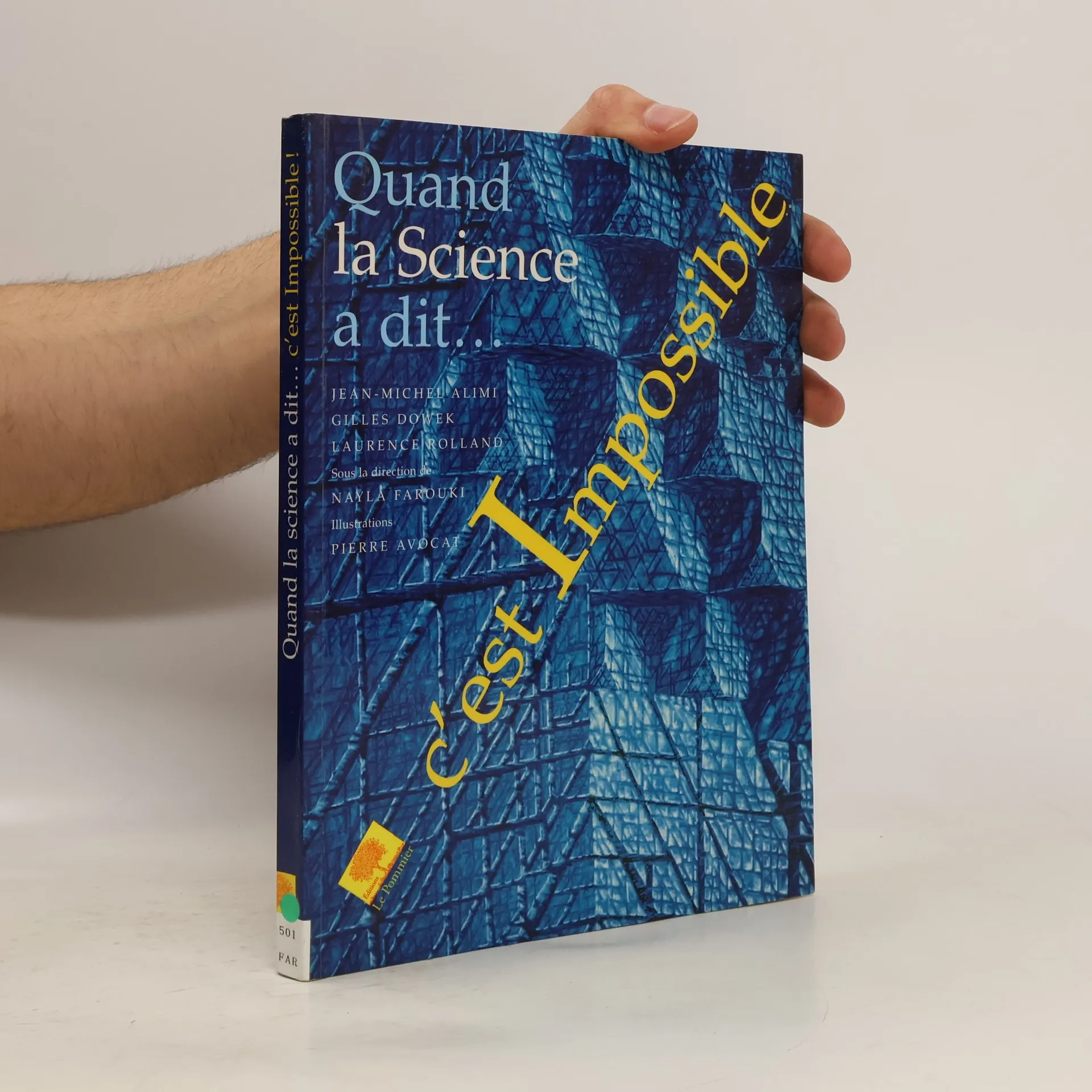
Quand la science a dit c'est impossible
- 159 Seiten
- 6 Lesestunden
Une philosophe, trois scientifiques et un illustrateur proposent une introduction originale à la science, tout en ouvrant une réflexion sur sa nature et ses limites à travers des interrogations philosophiques. L'histoire de la science est marquée par des moments d'ignorance, de changement d'avis et d'oscillation entre scepticisme et certitude. Un des moments les plus riches est celui où la science déclare : "C'EST IMPOSSIBLE !" Cela soulève des questions : est-ce un aveu d'impuissance, une constatation d'ignorance, ou une limite imposée par la nature ou notre intelligence ? Certains "impossibles" ont fermé des portes à la recherche, tandis que d'autres en ont ouvert ; parfois, il suffit de considérer l'impossible comme "possible" pour transformer un domaine scientifique. À travers 12 chapitres, les auteurs illustrent comment des scientifiques ont été amenés à dire "c'est impossible !" dans divers contextes, comme la vitesse de la lumière, les parallèles à une droite, ou la configuration des protéines. Un illustrateur passionné de sciences met en scène ces "impossibilités", rendant ces concepts plus clairs et séduisants.