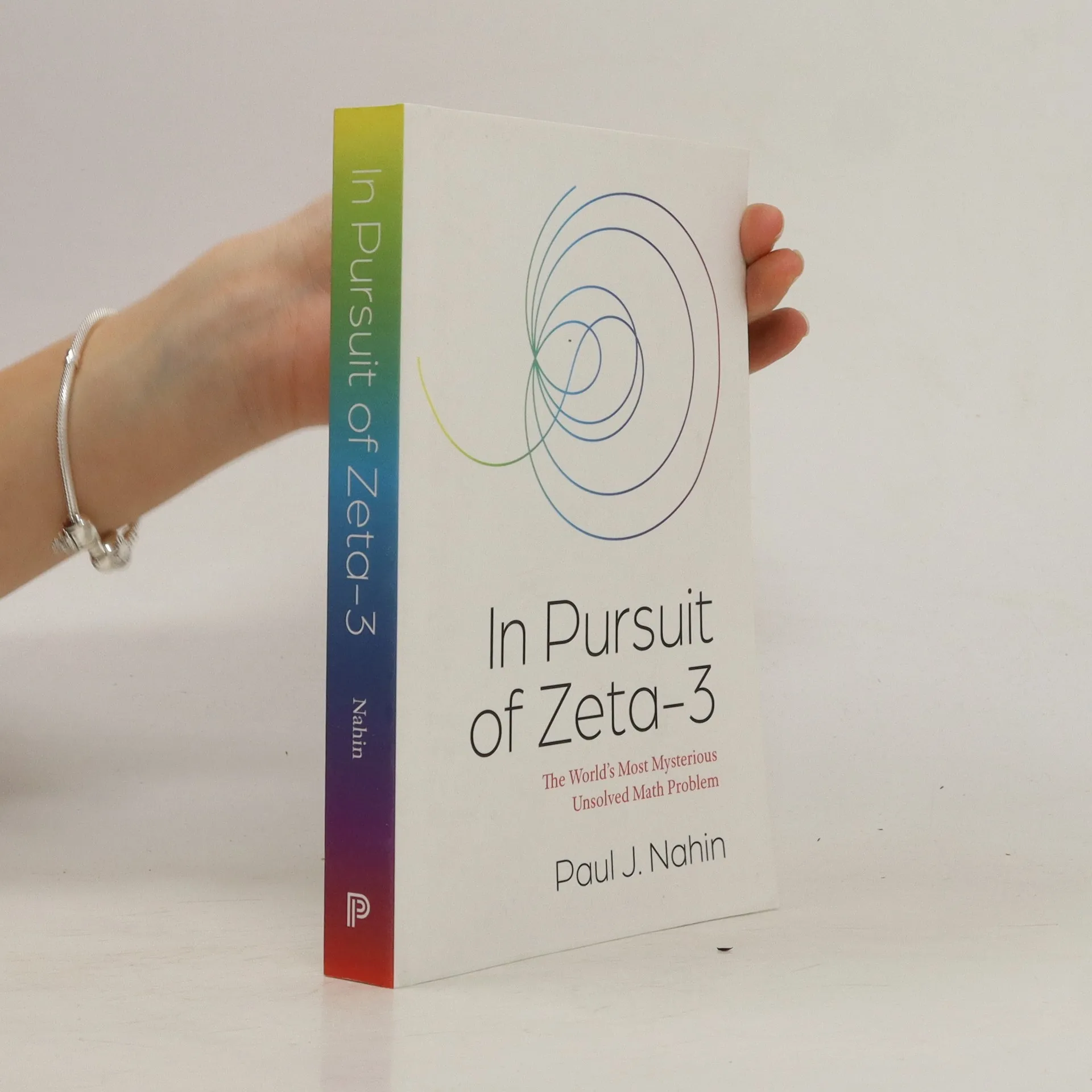
"For centuries, mathematicians have tried, and failed, to solve the zeta-3 problem. This problem is simple in its formulation, but remains unsolved to this day, despite the attempts of some of the world's greatest mathematicians to solve it. The problem can be stated as follows: is there a simple symbolic formula for the following sum: 1+(1/2)^3+(1/3)^3+(1/4)^3+...? Although it is possible to calculate the approximate numerical value of the sum (for those interested, it's 1.20205...), there is no known symbolic expression. A symbolic formula would not only provide an exact value for the sum, but would allow for greater insight into its characteristics and properties. The answers to these questions are not of purely academic interest; the zeta-3 problem has close connections to physics, engineering, and other areas of mathematics. Zeta-3 arises in quantum electrodynamics and in number theory, for instance, and it is closely connected to the Riemann hypothesis. In In Pursuit of zeta-3, Paul Nahin turns his sharp, witty eye on the zeta-3 problem. He describes the problem's history, and provides numerous "challenge questions" to engage readers, along with Matlab code. Unlike other, similarly challenging problems, anyone with a basic mathematical background can understand the problem-making it an ideal choice for a pop math book"--
Paul Nahin Reihenfolge der Bücher (Chronologisch)
Trotz seines Hintergrunds in der Elektrotechnik hat sich Paul J. Nahin als angesehener Popularisator der Mathematik etabliert. Seine Bücher, die oft Elemente der Logik und des Ingenieurwesens enthalten, haben eine breite Leserschaft gefunden. Nahin macht komplexe mathematische Konzepte für ein allgemeines Publikum zugänglich und ansprechend. Seine Arbeit zeigt, dass Mathematik sowohl faszinierend als auch zugänglich sein kann.


"An entertaining mathematical exploration of the heat equation and its role in the triumphant development of the trans-Atlantic telegraph cable."--Inside cover
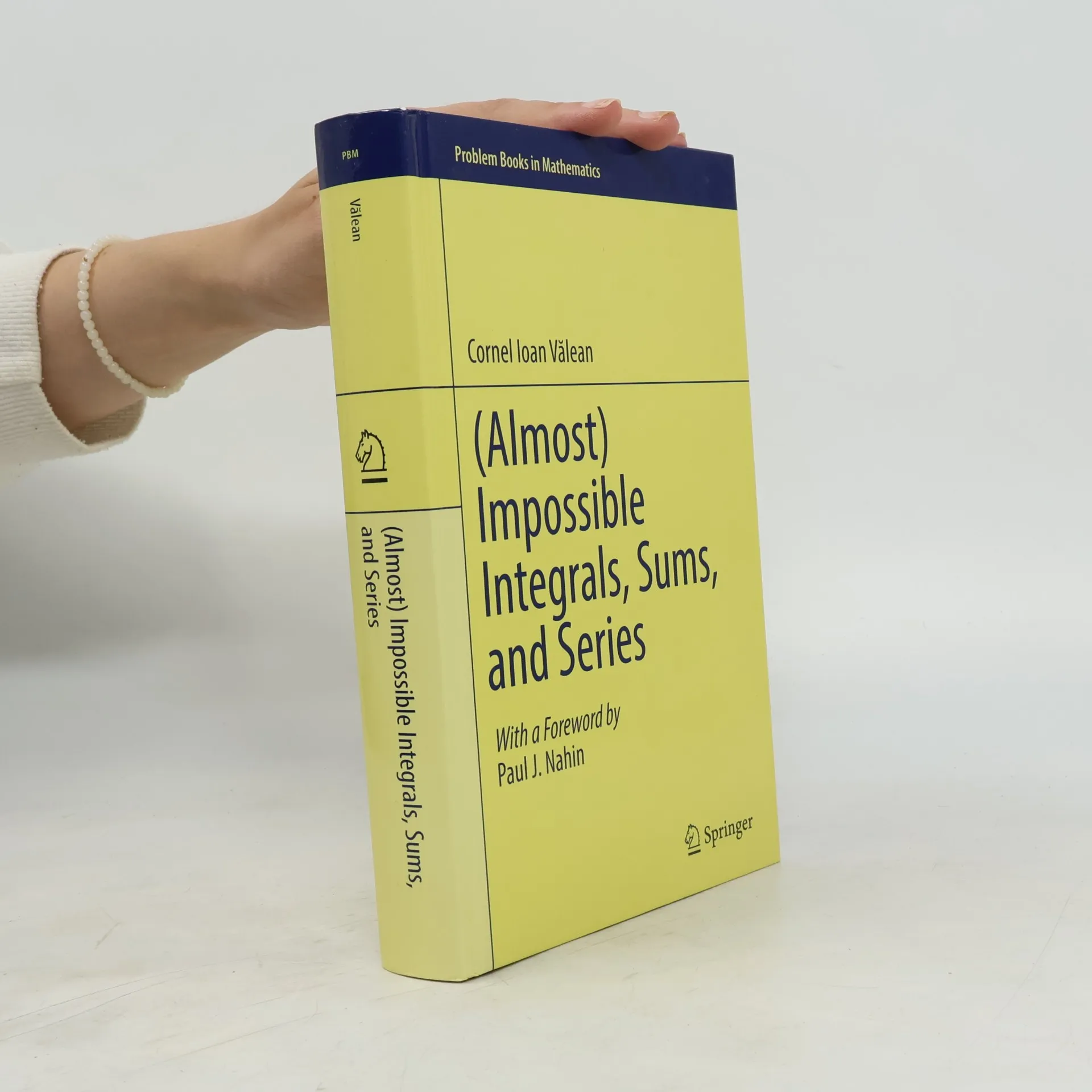
(Almost) Impossible Integrals, Sums, and Series
- 539 Seiten
- 19 Lesestunden
This book contains a multitude of challenging problems and solutions that are not commonly found in classical textbooks. One goal of the book is to present these fascinating mathematical problems in a new and engaging way and illustrate the connections between integrals, sums, and series, many of which involve zeta functions, harmonic series, polylogarithms, and various other special functions and constants. Throughout the book, the reader will find both classical and new problems, with numerous original problems and solutions coming from the personal research of the author. Where classical problems are concerned, such as those given in Olympiads or proposed by famous mathematicians like Ramanujan, the author has come up with new, surprising or unconventional ways of obtaining the desired results. The book begins with a lively foreword by renowned author Paul Nahin and is accessible to those with a good knowledge of calculus from undergraduate students to researchers, and will appeal to all mathematical puzzlers who love a good integral or series.
Physics can explain many of the things that we commonly encounter. It can tell us why the night is dark, what causes the tides, and even how best to catch a baseball. With "In Praise of Simple Physics", Paul Nahin presents a plethora of situations that explore the science and maths behind the wonders of everyday life. Roaming through a diverse range of puzzles, he illustrates how physics shows us ways to wring more energy from renewable sources, to measure the gravity in our car garages, to figure out which of three light switches in the basement controls the light bulb in the attic, and much, much more. How fast can you travel from London to Paris? How do scientists calculate the energy of an atomic bomb explosion? How do you kick a football so it stays in the air and goes a long way downfield?
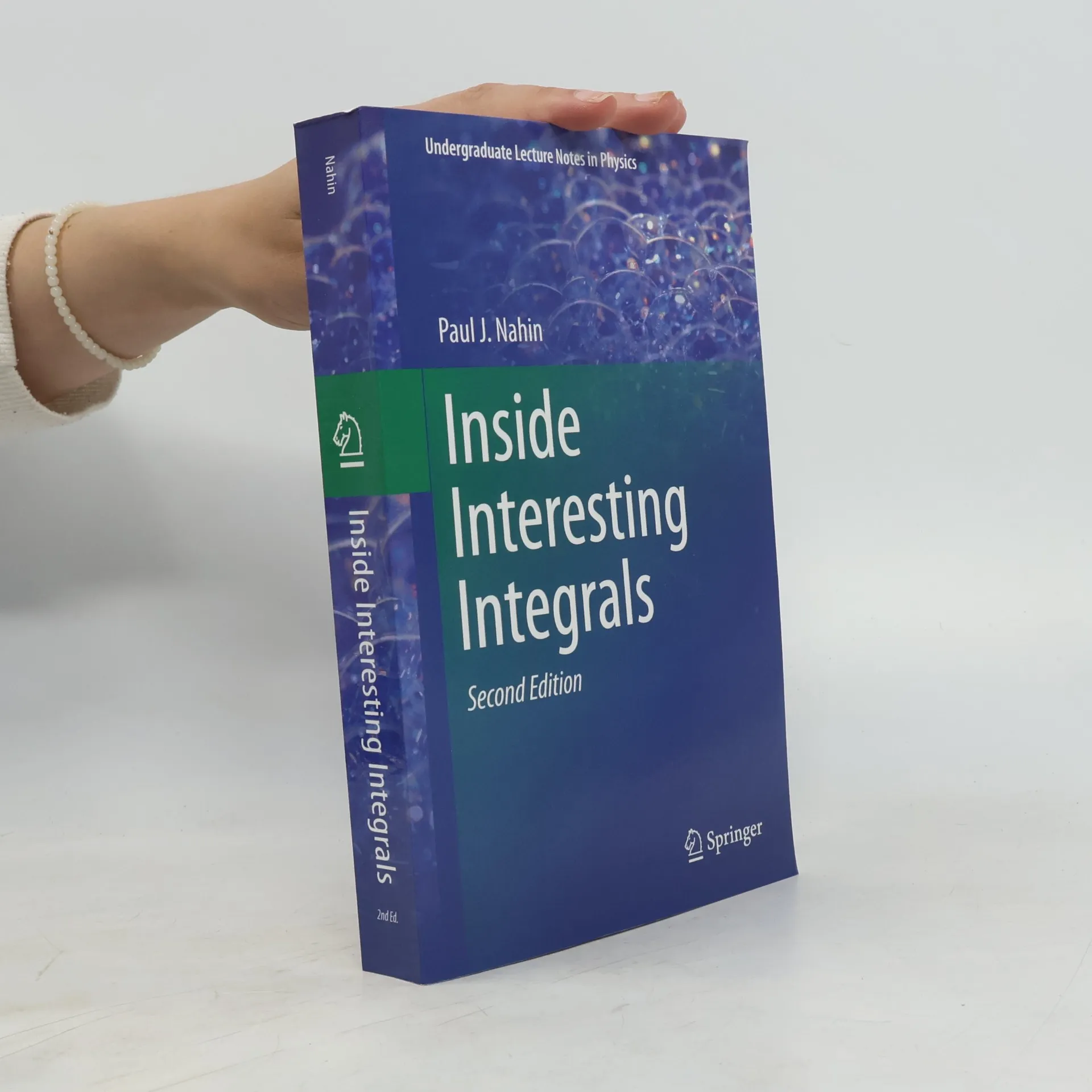
Inside Interesting Integrals
A Collection of Sneaky Tricks, Sly Substitutions, and Numerous Other Stupendously Clever, Awesomely Wicked, and Devilishly Seductive Maneuvers for Computing Hundreds of Perplexing Definite Integrals From Physics, Engineering, and Mathematics (Plus Numerous Challenge Problems with Complete, Detailed Solutions)
- 552 Seiten
- 20 Lesestunden
What’s the point of calculating definite integrals since you can’t possibly do them all? What makes doing the specific integrals in this book of value aren’t the specific answers we’ll obtain, but rather the methods we’ll use in obtaining those answers; methods you can use for evaluating the integrals you will encounter in the future. This book, now in its second edition, is written in a light-hearted manner for students who have completed the first year of college or high school AP calculus and have just a bit of exposure to the concept of a differential equation. Every result is fully derived. If you are fascinated by definite integrals, then this is a book for you. New material in the second edition includes 25 new challenge problems and solutions, 25 new worked examples, simplified derivations, and additional historical discussion.
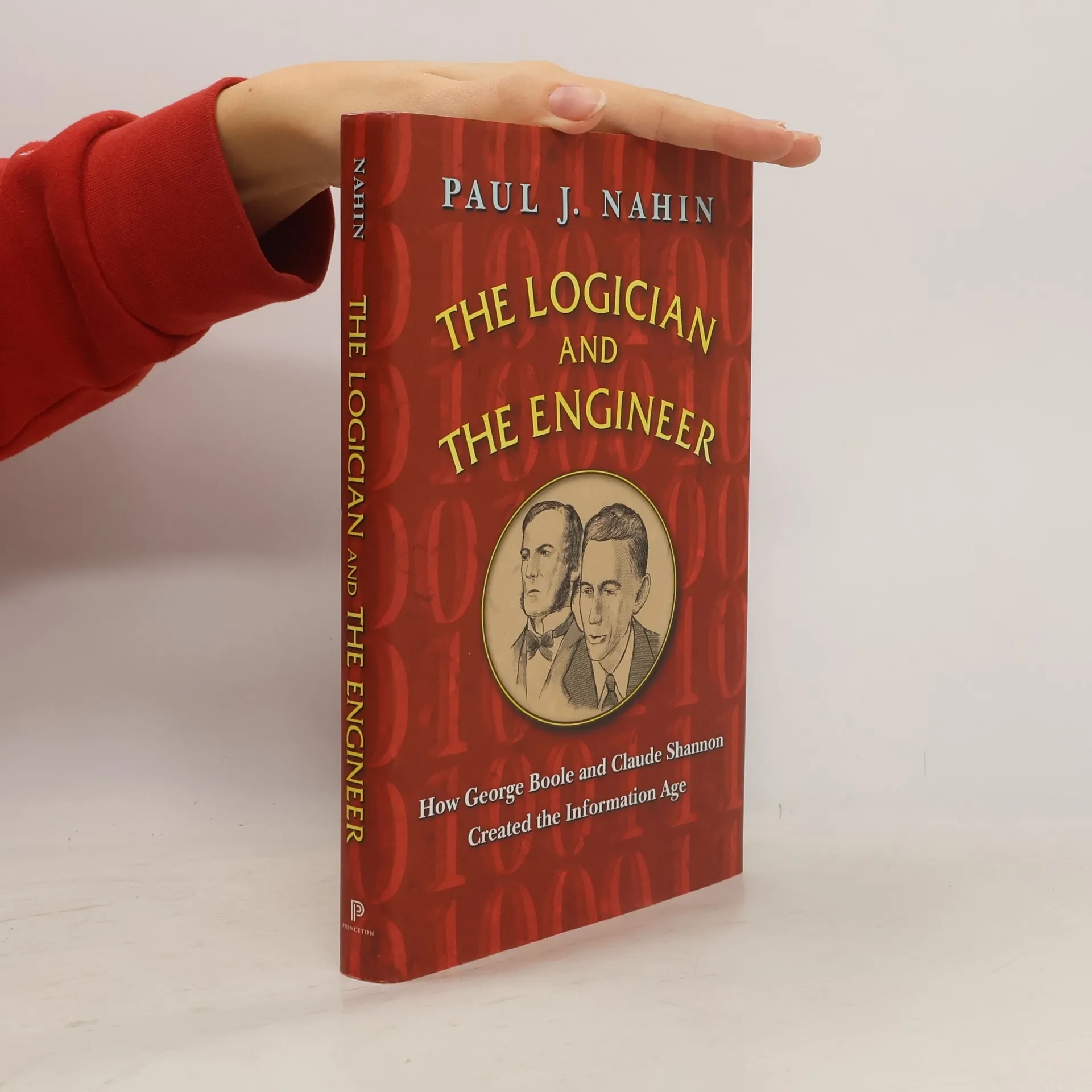
The Logician and the Engineer
How George Boole and Claude Shannon Created the Information Age
- 228 Seiten
- 8 Lesestunden
How two pioneers of math and technology ushered in the computer revolution Boolean algebra, also called Boolean logic, is at the heart of the electronic circuitry in everything we use--from our computers and cars, to home appliances. How did a system of mathematics established in the Victorian era become the basis for such incredible technological achievements a century later? In The Logician and the Engineer , Paul Nahin combines engaging problems and a colorful historical narrative to tell the remarkable story of how two men in different eras--mathematician and philosopher George Boole and electrical engineer and pioneering information theorist Claude Shannon--advanced Boolean logic and became founding fathers of the electronic communications age. Nahin takes readers from fundamental concepts to a deeper and more sophisticated understanding of modern digital machines, in order to explore computing and its possible limitations in the twenty-first century and beyond. -- "Scientific American"
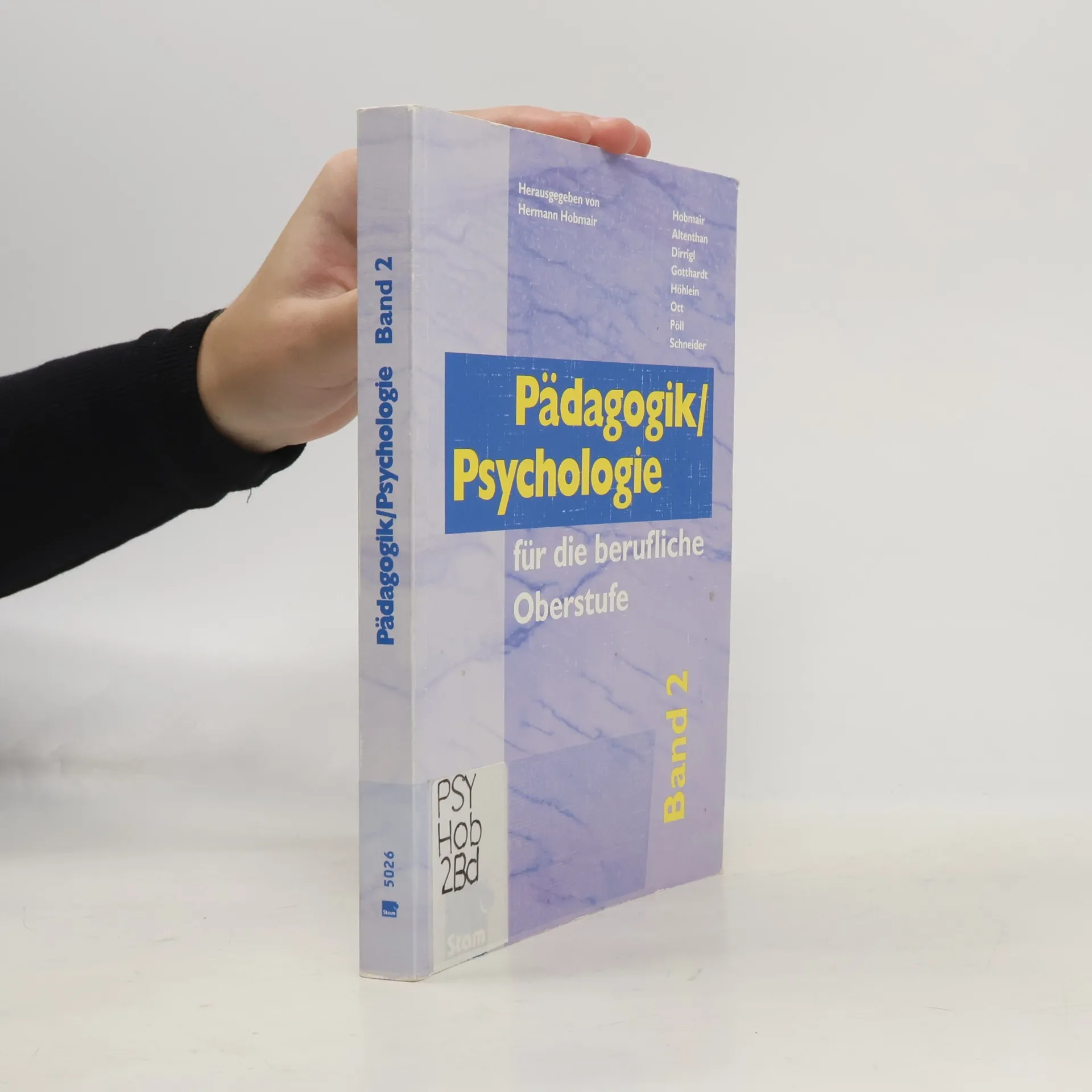
Grundlagen der Entwicklungspsychologie; Soziale Kommunikation und Interaktion; Theorien der sozialen Kommunikation; Soziale Einstellungen; Persönlichkeitspsychologie; Soziale Arbeit; Handlungsformen sozialer Arbeit; Psychische Störungen; Die Prüfungsarbeit in Pädagogik/Psychologie§Ein Lehrerhandbuch ist separat erhältlich (Bestell-Nr. 05128, 1. Auflage).§
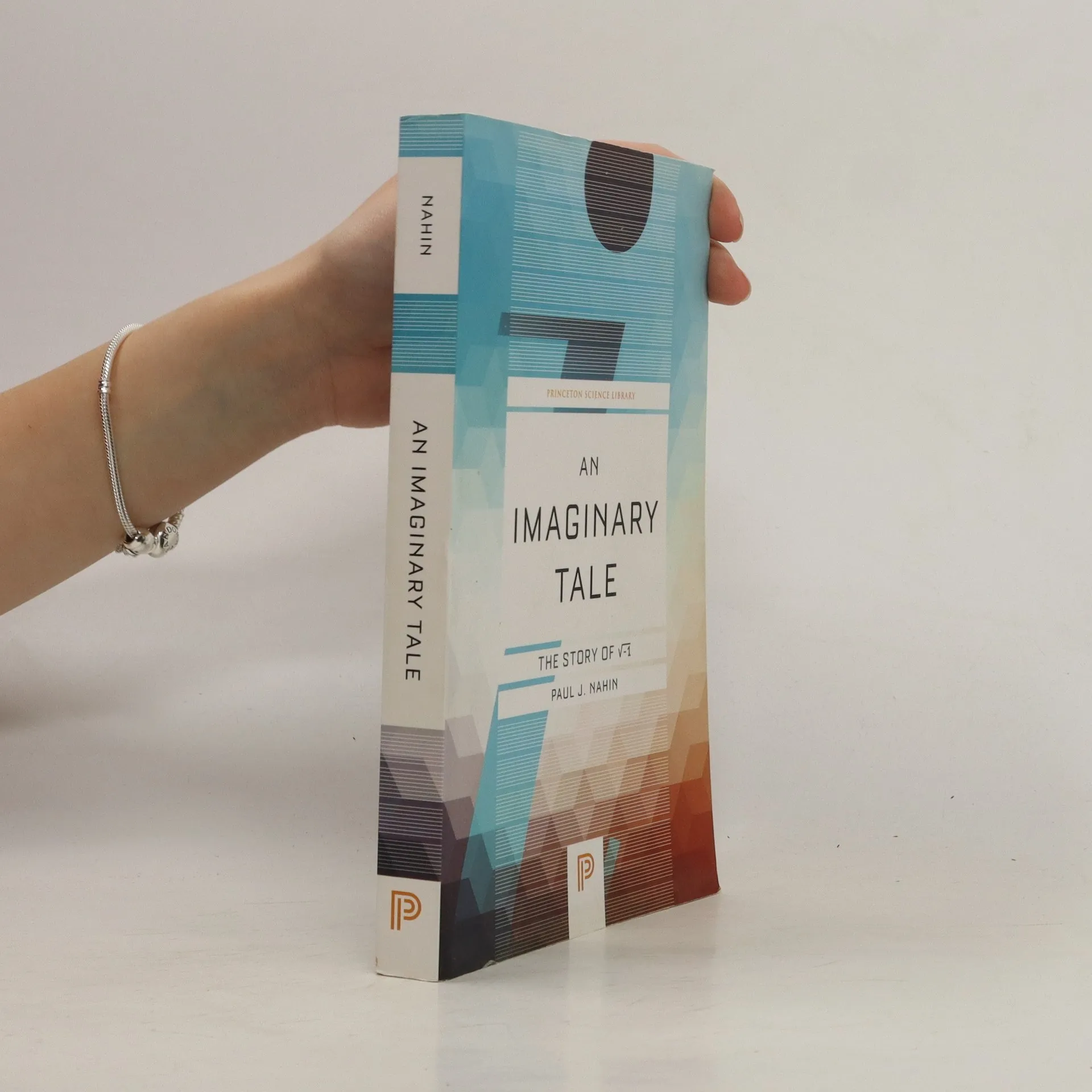
An Imaginary Tale
- 296 Seiten
- 11 Lesestunden
In the title, "[the square root of minus one]" appears as a radical over "-1."
We all played tag as kids, but few realize this simple game embodies pursuit theory, applicable in military strategy, Coast Guard chases, and even romantic pursuits. Paul Nahin presents a complete history of this intriguing area of mathematics, tracing its evolution from classical analytical roots to modern applications. His accessible writing style engages popular-math enthusiasts as he discusses various approaches to solving chase-and-escape problems. Nahin incorporates game theory, geometry, linear algebra, and target-tracking algorithms, enriching mathematical discussions with fun facts and captivating stories. The book features a range of challenging puzzles suitable for all skill levels, complete with historical context and broader applications. Solutions to all problems are included, along with computer programs for readers to conduct their own analyses. This comprehensive treatment of pursuit theory is sure to captivate anyone interested in the mathematics behind the universal themes of pursuit and evasion.
When Least Is Best
- 400 Seiten
- 14 Lesestunden
By combining the mathematical history of extrema with contemporary examples, Paul J. Nahin answers some intriguing questions such as: what is the best way to photograph a speeding bullet?; And why does light move through glass in the least possible amount of time?