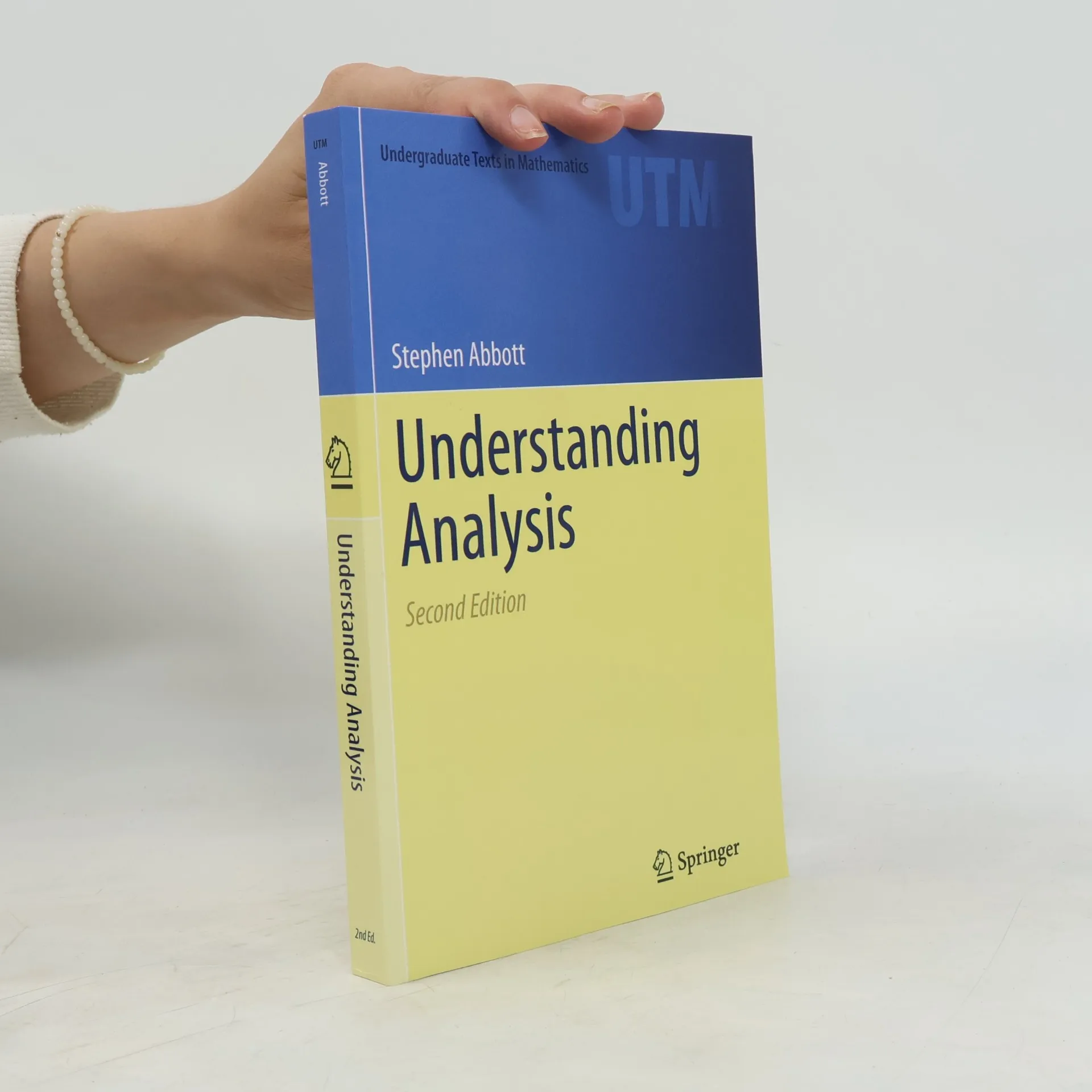
This book presents a one-semester course designed to engage students with the rigorous and rewarding axiomatic study of functions of a real variable. The course aims to challenge and enhance mathematical intuition rather than merely confirm it. The focus is on intriguing questions that highlight the fascination of analysis. The revised edition features an updated layout, additional exercises, and improved quality to better motivate readers. New topics include discussions on infinite products, expanded sections on metric spaces, the Baire category theorem, multi-variable functions, and the Gamma function. Reviews from the first edition praise its clarity and motivation, noting that it sets a high standard for textbooks. One reviewer remarked on its potential to raise students' expectations for quality in their learning materials. Each chapter begins with a discussion to motivate its content and concludes with an epilogue that hints at more advanced topics. The engaging and challenging presentation makes complex subjects accessible to beginners, emphasizing the elements of analysis that captivate interest. This book is positioned as an essential resource for introductory analysis courses, appealing to both instructors and students alike.
Stephen Abbott Bücher