

Parameter
- 288 Seiten
- 11 Lesestunden
Mehr zum Buch
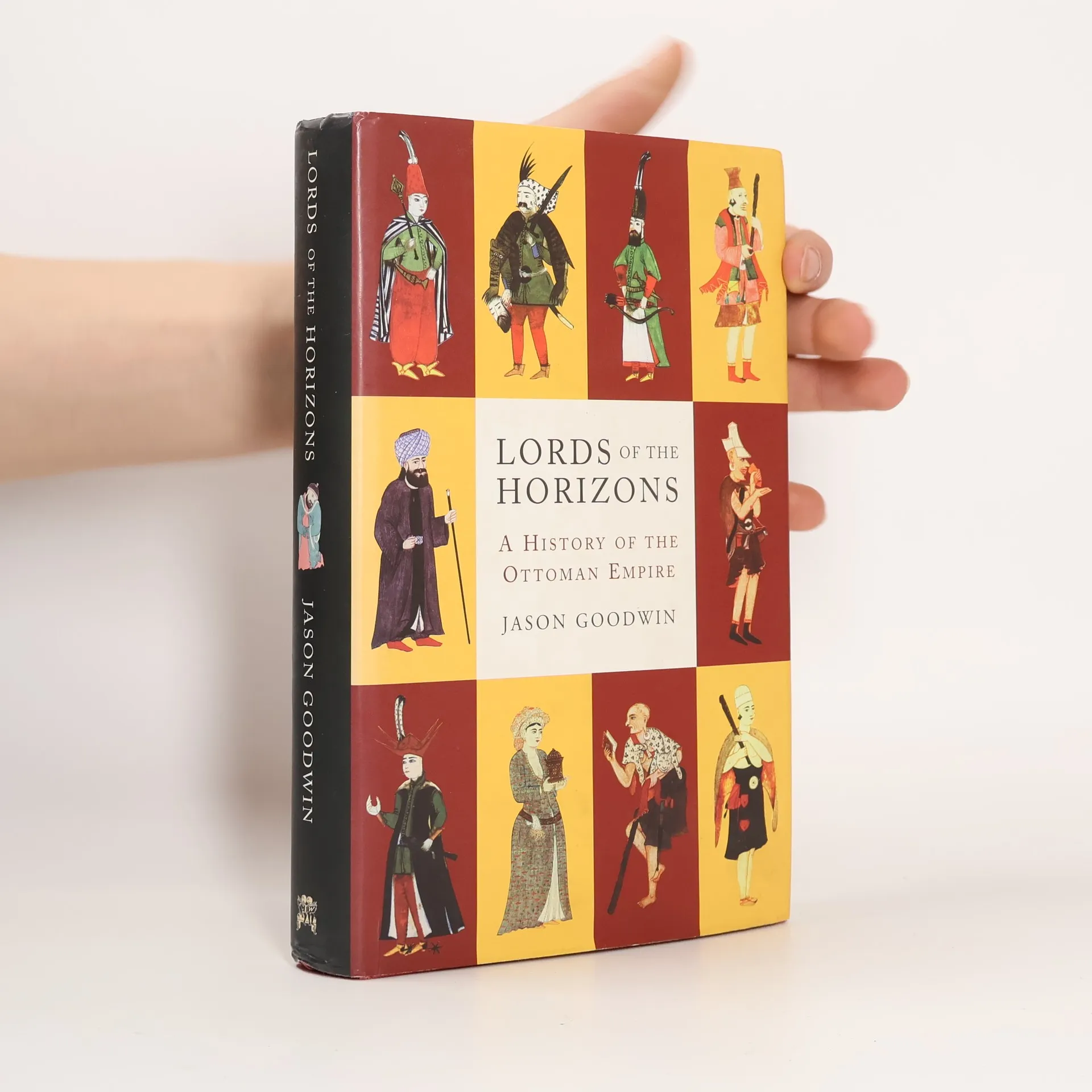
In its heyday, the Ottoman Empire reached from Iran to Turkey, encompassing a multitude of ethnicities and more than three dozen nations. Islamic, though many of its subjects were not Muslim, Turkish, though it was mostly Balkan Slavs who served as shock troops, the Ottoman Empire was Byzantine in ceremony, Persian in dignity, Egyptian in wealth, and Arabic in letters. The long survival of the empire, Jason Goodwin claims in <i>Lords of the Horizons</i>, his beautifully written account of the period, was due to tolerance and flexibility and to practicing meritocracy instead of forcing cultural assimilation. Yet for all that tolerance, the Ottoman Empire was run by the army. Every road had a military destination. The common language was that of the gert and bow. Horses were revered, sometimes over men themselves. Peace divided men; They lost sight of a common goal, stirring trouble at home. Where there was war, the Ottomans excelled; where there were the trappings of battle, the Ottomans proved superior. Power came from motion. With an army bivouacked for five months of the year, tents were a significant part of life. At the last siege of Vienna, a canvas city was erected next to the capital that was not only larger than Vienna itself, but better ordered. "Western camps were Babels of disorder, drunkenness and debauchery. The Ottoman camp was a tea party disturbed by nothing louder than the sound of a mallet on a tent peg." Tea parties aside, battles fought to expand the Empire were anything but demure. Goodwin captures 15th-century battles with a contemporary zest.Hisdescriptions of war evoke the balletic montages of a film director like John Woo. "By mid-afternoon the stricken ships had collected a positive infestation of Turkish vessels, clinging to their sides with grappling irons and hooks, aiming to carry them by assault or fire.... Baltoghlu himself ran his ship into the prow of the big transport and around her the fighting seemed fiercest, wave after wave of boarders steadily repulsed, the Byzantine weapon of Greek fire; the equivalent of napalm; used to deadly effect, the Turkish galleys forever entangling their oars, or losing them to missiles dropped from overhead by the much higher Christian vessels." The sword united the Ottoman empire; the pen divided it. Though the empire was one still based on meritocracy, the agrarians began losing to a world which was becoming increasingly busy and bossy. The martial strengths of the Empire became useless in the face of burgeoning industrialism in Western Europe. A shamming took place, one impossible to fathom in a martial society. Although thousands came to work in the palace every day, only about 20 people performed significant tasks. Early in the book, Goodwin describes Sultan Suleyman in his twilight years as "a sort of metaphor of empire, rotting and majestic, fat, made-up, and suffering from an ulcerous leg." The cancer was nationalism. Inflation and a price revolution made for uncertain futures, causing nations to huddle together for security. Tolerance was usurped by factionalism, petty rivalries, and disloyalty. Quarantine systems were soon fixed around the Empire, making a mockery of the policy of acceptance which had enabled it to flourish for so many years. <i>Lords of the Horisons</i> offers a trove of delightful images as it provides a popular history. Only a scholar with a somewhat odd yet poetic sensibility would conclude a study of the Ottoman Empire with the detailed history of Turkish dogs; how they were accepted, cherished, and protected, how they suffered, and why in the end they left, never to return.
Buchkauf
Lords of the Horizons, Jason Goodwin
- Sprache

- Erscheinungsdatum
- 1998
- product-detail.submit-box.info.binding
- (Hardcover),
- Buchzustand
- Beschädigt
- Preis
- € 9,09
Keiner hat bisher bewertet.