Diese Reihe taucht tief in die Kernbereiche des Software Engineering ein und erforscht seine grundlegenden Prinzipien, Methodologien und fortgeschrittenen Techniken. Sie richtet sich an Studenten, Forscher und Fachleute, die ein umfassendes Verständnis der Softwareentwicklung suchen. Von grundlegenden Konzepten bis hin zu den neuesten Trends deckt diese Sammlung ein breites Themenspektrum ab, das für moderne Softwareingenieure unerlässlich ist.
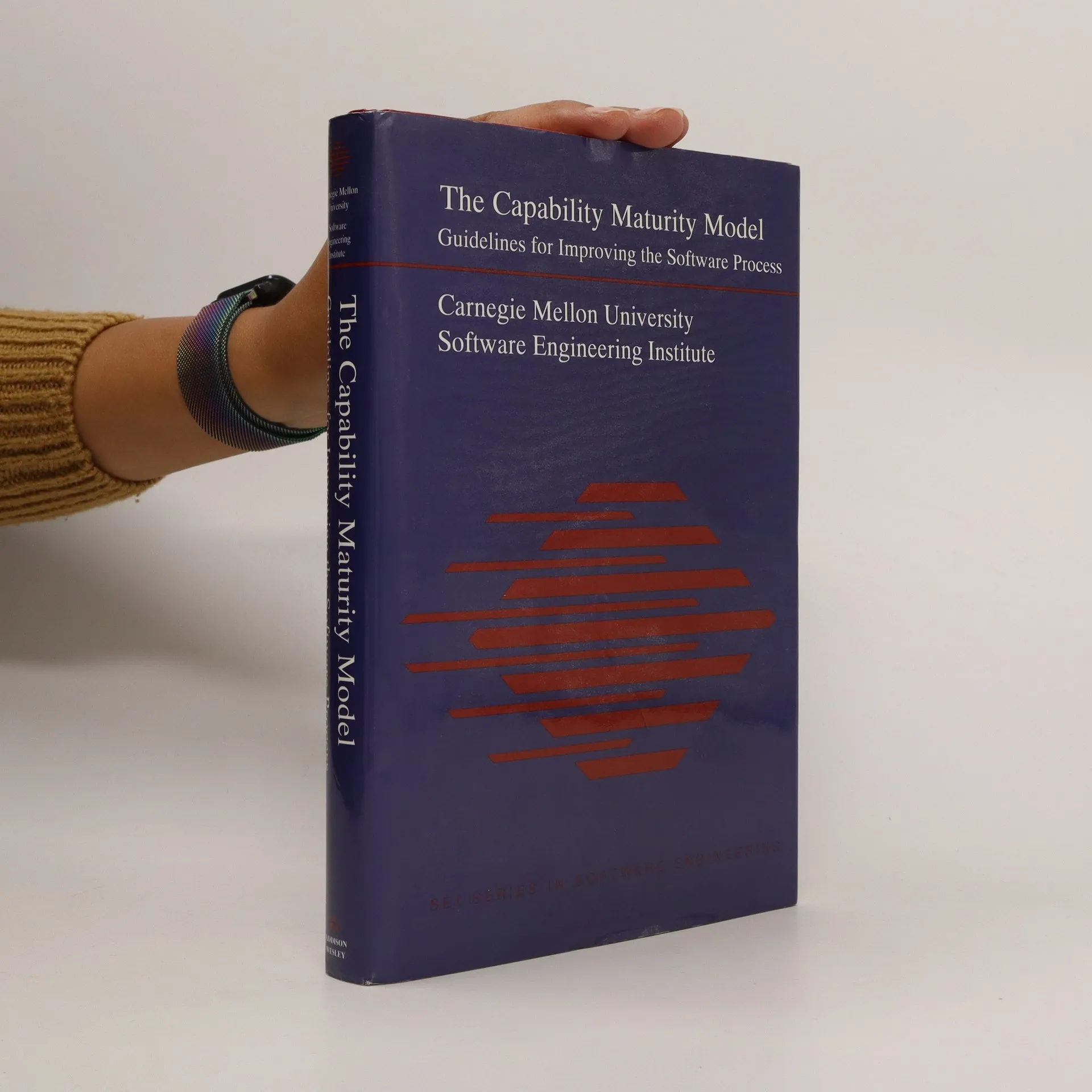
Presenting the key processes of the SEI Capability Maturity software process management, this book is a sequel and successor to Watts Humphrey's Managing the Software Process. Adopting an accessible style, this work also provides an overview of the SPICE project being undertaken by the ISO in order to develop international standards for software process improvement and capability determination.
When the first edition of this book was published in 2001, CMMI (Capability Maturity Model Integration) was largely viewed as a standard that was "on the horizon." In the past two years, CMMI has -- pardon the pun -- matured greatly. CMMI is now a recognized and widely-adopted model. This new edition reflects CMMI version 1.1 (the first edition was based on version 1.0). The book contains expanded coverage on the realized return on investment that can be attained through process improvement with CMMI, and the pioneer case studies have been replaced with broader CMMI-specific experience that will enable the reader to more easily adopt this model. The authors also share their understanding of how the CMMI will continue to adapt and remain relevant for years to come. The result is a handy book that is informative, useful, and appropriate to the reader's needs.
Struktur dieses Buches: Dieses Buch dient als Anleitung zur Verbesserung von organisationsweiten Prozessen. Es ist in drei Hauptteile gegliedert:* Teil 1 - Übersicht zu CMMI für Entwicklung* Teil 2 - Generische Ziele, generische Praktiken und Prozessgebiete* Teil 3 - Anhänge und GlossarZur Zielgruppe dieses Buches gehören alle, die an einer Prozessverbesserung im Entwicklungs- und Pflegeumfeld interessiert sind. Dieses Buch wird für Sie nützlich sein, wenn Sie bereits mit dem Konzept des Capability Maturity Model vertraut sind oder wenn Sie Informationen suchen, um mit Ihren Verbesserungsaktivitäten zu beginnen. Dieses Buch eignet sich auch für diejenigen, die ein Appraisal durchführen möchten, um zu sehen, wo sie stehen, für diejenigen, die bereits wissen, was sie verbessern möchten, und für diejenigen, die gerade anfangen und ein allgemeines Verständnis für die Konstellation „CMMI für Entwicklung“ entwickeln wollen. Die Zielgruppe umfasst daher Prozess-Appraisalteams, Mitglieder von Prozessverbesserungsgruppen, Projektleiter, Produkt- oder Dienstleistungsentwickler, Software- und Systementwickler sowie Trainer für Projektmanagement, Informatik, Entwicklung und Geschäftswesen.
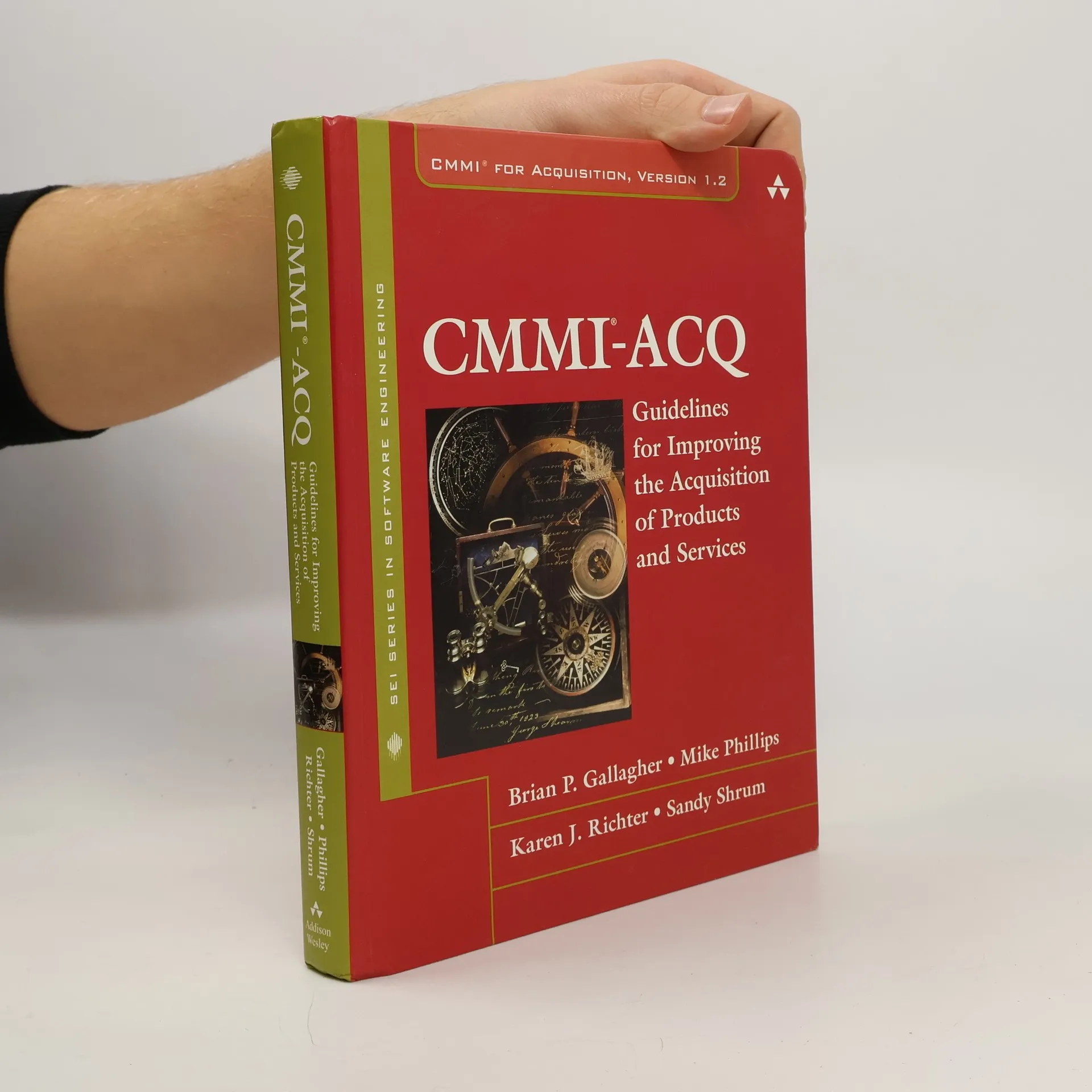
CMMI-ACQ ® (Capability Maturity Model ® Integration for Acquisition) outlines best practices for effectively acquiring products and services. It offers a practical framework aimed at enhancing acquisition processes, addressing the increasing trend among businesses and governments to outsource rather than develop in-house. This definitive reference for the current CMMI for Acquisition (version 1.2) is modeled after CMMI ®, Second Edition, which focused on development. The book includes the complete CMMI-ACQ model along with tips, hints, cross-references, and author notes to aid in understanding and applying the acquisition process areas. Additionally, it features two chapters that illustrate the application of CMMI-ACQ in both industry (with a case study from General Motors) and government contexts.
The book is structured into three parts. Part One introduces CMMI-ACQ within the broader CMMI context, covering essential concepts and relationships among process areas, as well as paths for adoption and use. It also addresses unique acquisition needs in government and shares industry experiences. Part Two details generic goals and practices, followed by twenty-two sections that explore each CMMI-ACQ process area, organized alphabetically for quick reference. Part Three offers valuable references, including additional resources on CMMI and CMMI-ACQ, acronym definitions, a glossary, and an index.
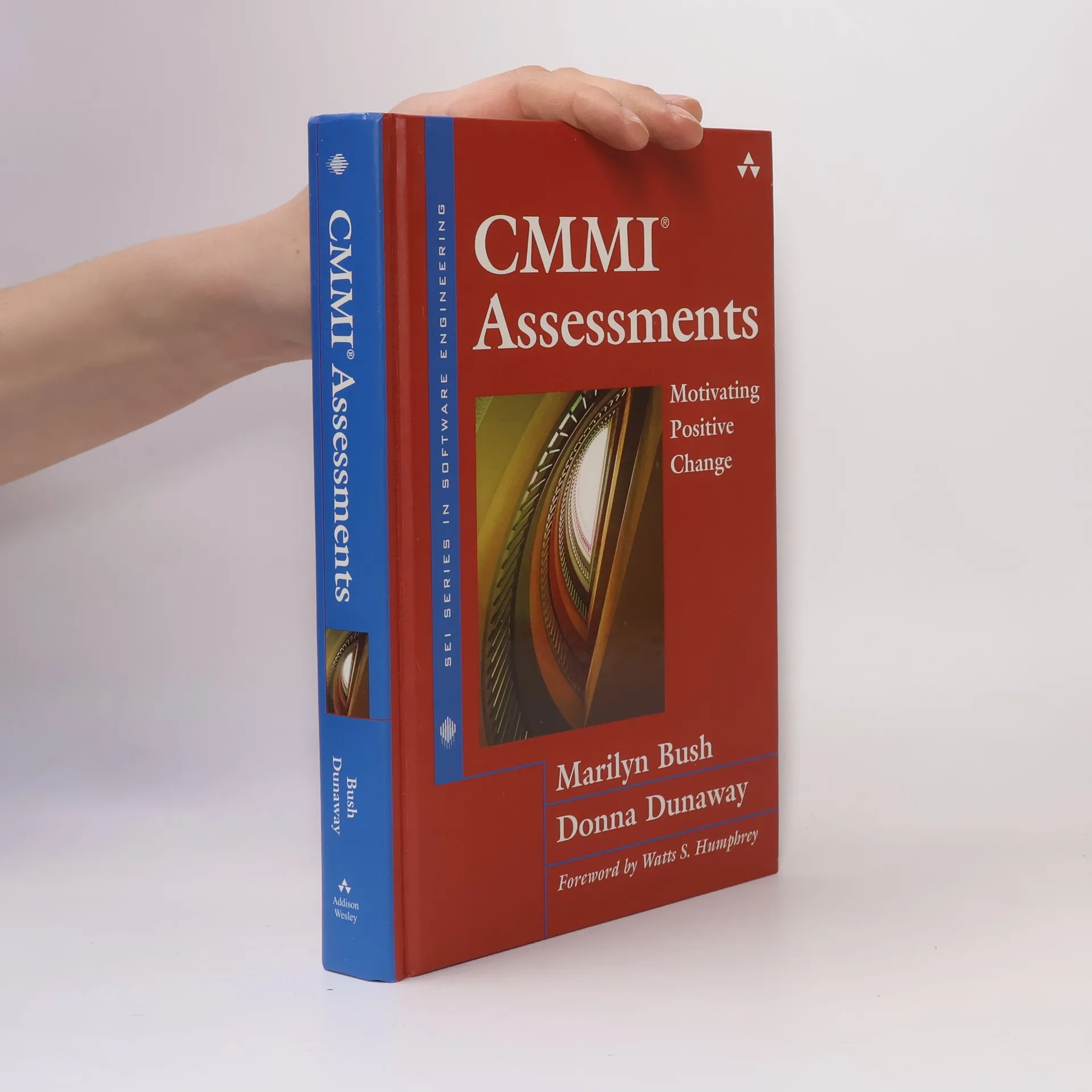
Assessments are internal reviews aimed at making an organization better from the inside, and they are critical tools for process improvement. The CMMI (Capability Maturity Model Integration) is a U.S. government-sponsored model to help organizations improve their processes, and perhaps more importantly, demonstrate their level of process quality to vendors. Many organizations adopt the CMMI because it is required in many government contracts. In order to improve process, these organizations must first know their level of CMMI maturity, but these organizations struggle in this assessment. This book spells out the specific steps an organization must take to gather an accurate CMMI assessment. The resulting assessment will help the organization improve their processes and advance their level of CMMI maturity. The authors, noted CMMI experts, use anecdotal histories of incidents they have encountered on actual assessments to illustrate key teaching points.