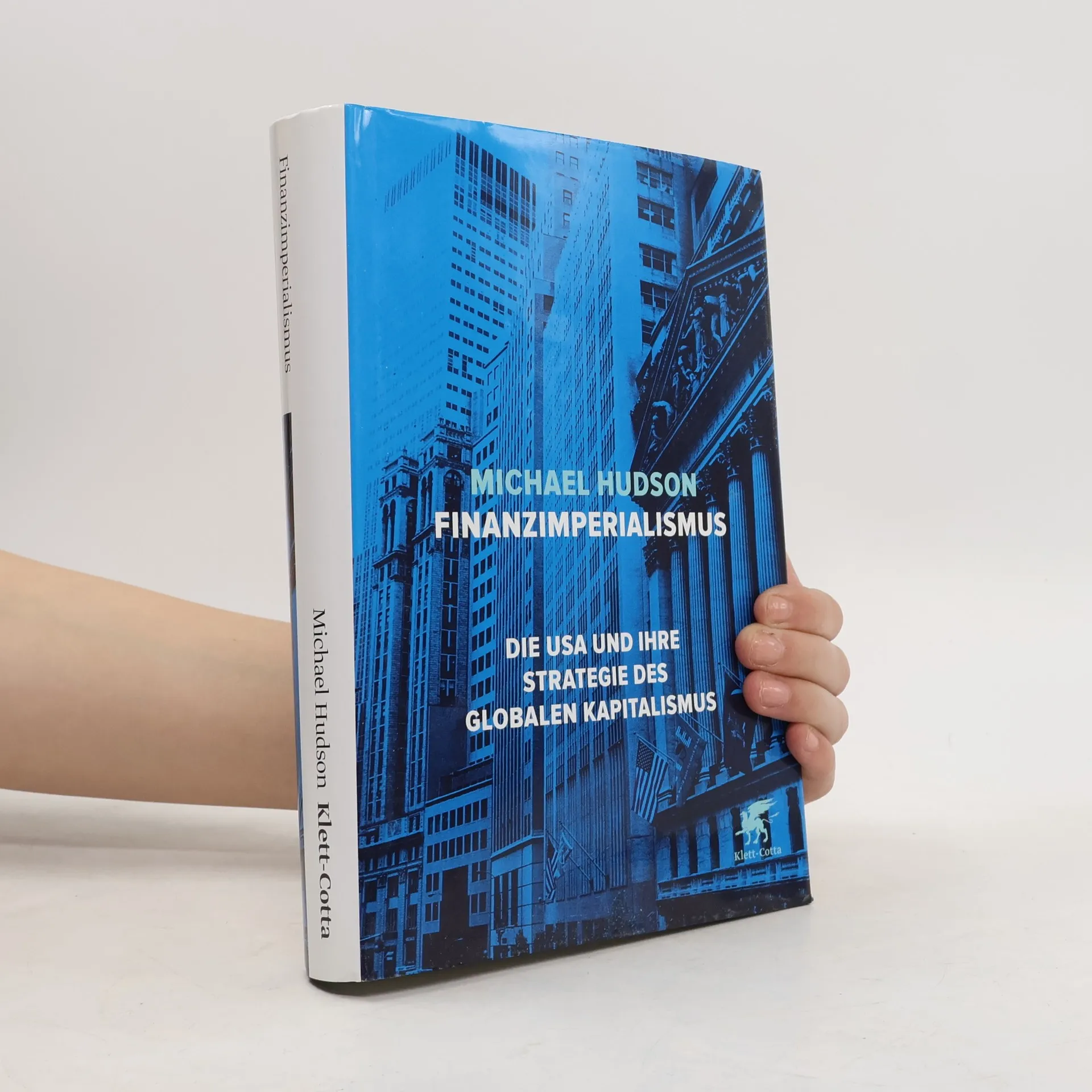
Seit über 100 Jahren beherrscht der amerikanische Finanzimperialismus das weltweite Finanzsystem. Dieses Buch erzählt die Vorgeschichte der dramatischen Ereignisse, die Michael Hudson in »Der Sektor« geschildert hat. Bis 1917 hielten sich die USA aus der Weltpolitik heraus. Bevor der Erste Weltkrieg ausbrach, hatten die USA die US-Zentralbank Federal Reserve (FED) gegründet. Sie und die Wall Street, meist gelenkt von superreichen Amerikanern, verlagerten Entscheidungen mit weltweiter Wirkung von der Politik auf die Finanzen. Eingängig und überzeugend schildert Michael Hudson die Geschichte des amerikanischen Finanzimperialismus seit 1917 und zeigt, wie gefährlich die Lage weltweit geworden ist – für die USA und die gesamte Weltwirtschaft. Die verheerende Entfesselung des Finanzkapitalismus, die Kontrolle der globalen Finanzströme durch die Wall Street und die FED schildert er als eigentliche Vorgeschichte der dramatischen Weltfinanzkrise von 2008, die keineswegs überwunden ist.
Michael Hudson Bücher
Mehrere Personen schreiben unter diesen Autorennamen. Weitere Informationen zu den Autoren und ihren Werken finden Sie in den jeweiligen Profilen.


Der Sektor
- 670 Seiten
- 24 Lesestunden
Michael Hudson übt eine fundamentale Kritik am kapitalistischen Finanzsystem, die unser Denken herausfordert. Er zeigt, dass Banken einen neuartigen Krieg gegen die Demokratie führen. Seine Prognosen, darunter der genaue Zeitpunkt des Platzen der Immobilienblase, haben weltweit Aufmerksamkeit erregt. Hudson analysiert eindringlich, wie die internationale Finanzwelt die Errungenschaften der klassischen Ökonomie gefährdet. An historischen Beispielen erläutert er das Konzept von „Schulden“ und bietet neue Perspektiven auf dieses Menschheitsproblem. Er entlarvt die Vorstellung, dass Verschuldung durch die Bürger gemanagt werden kann. Das Bankensystem sollte der Wirtschaft dienen, nicht umgekehrt. Hudson beschreibt, wie die Finanzwelt eine neue Art der Kriegsführung gegen das Volk betreibt, was zu gesellschaftlicher Polarisierung führt. Seine historisch fundierte Analyse legt nahe, dass weltweit Bürger revoltieren werden, da die Interessen von Gläubigern nicht mit denen der Demokratie übereinstimmen. Für Hudson ist die gegenwärtige Krise eine Frage des politischen Wollens und keine unvermeidliche Notwendigkeit. Die Wall Street hat eine Finanzmacht erlangt, die Wahlen und Schlüsselpositionen in Regulierungs- und Strafverfolgungsbehörden erheblich beeinflusst.
Trade, development and foreign debt
- 440 Seiten
- 16 Lesestunden
In this survey of international economic thought, Michael Hudson rewrites the history of trade, development and debt theorizing. He shows that mainstream free-trade surveys are censorial in excluding the protectionist logic that has guided the trade policy of Europe and the United States, especially by leaving out discussion of the transfer problem and payment of international debts. He points out that most economists throughout history have focused as much on war financing as on trade and development. Free-trade ideology and IMF-style financial austerity under today's rules, rather than benefiting all parties and maximizing welfare, leave "client" nations severely indebted. By excluding dynamics that used to be central to trade theory such as emigration and technology transfer, today's global production and financial policies tend to concentrate economic and political power in the hands of dominant nations. Prof. Michael Hudson (Economics Department, University of Missouri, Kansas City) is a frequent contributor to The Financial Times, Counterpunch, and Global Research.
Finance capitalism and its discontents 1
- 286 Seiten
- 11 Lesestunden
This book contains the most important interviews and speeches that Prof. Hudson has given over the past decade (2003-2012). They span the political spectrum from COUNTERPUNCH.COM and KPFK radio's GUNS AND BUTTER to to iTULIP.COM and SANKT GEORGE in Berlin. It also includes his now-famous Rlmini, Italy, speeches that were given at a packed sports arena in early 2012 on the topic of how finance capitalism is pushing the world, starting with Europe, into austerity and neo-feudalism.
Focusing on the origins of Western economic structures, this collection of twelve articles explores the development of money, markets, land tenure, and enterprise in the ancient Near East, specifically within temples and palaces. Drawing from insights gained during five international colloquia, the volume challenges modern economic orthodoxy by highlighting the stark differences in archaic social values and policies during the Bronze Age economic expansion from 3500-1200 BC. It sheds light on the complexities of early economic organization and its implications for contemporary understanding.
...and Forgive Them Their Debts
- 340 Seiten
- 12 Lesestunden
In ...and forgive them their debts, renowned economist Michael Hudson - one of the few who could see the 2008 financial crisis coming - takes us on an epic journey through the economies of ancient civilizations and reveals their relevance for us today. For the past 40 years, in conjunction with Harvard's Peabody Museum, he and his colleagues have documented how interest-bearing debt was invented in Bronze Age Mesopotamia, and then disseminated to the ancient world. What the Bronze Age rulers understood was that avoiding economic instability required regular royal debt cancellations. Professor Hudson documents dozens of these these royal edicts and traces the archeological record and history of debt, and how societies have dealt with (or failed to deal with) the proliferation of debts that cannot be paid - and their consequences. In the pages of ...and forgive them their debts, readers will discover how debt played a central role in shaping ancient societies, and how it continues to shape our world - often destructively.
A Philosophy for a Fair Society
- 169 Seiten
- 6 Lesestunden
THE BUBBLE AND BEYOND
- 558 Seiten
- 20 Lesestunden
Focusing on the impact of predatory finance capitalism, the book critiques the influence of the wealthy elite and government policies that favor them. Professor Michael Hudson explores how the achievements of industrial capitalism have been undermined, leading to a global financial crisis. He addresses complex geo-political issues often overlooked in education and media, presenting solutions through 20 accessible topics that guide readers out of this economic labyrinth.
J is for junk economics
- 406 Seiten
- 15 Lesestunden
A companion and follow-up to KILLING THE HOST: HOW FINANCIAL PARASITES AND DEBT DESTROY THE GLOBAL ECONOMY. J IS FOR JUNK ECONOMICS pulls back the curtain on the vocabulary and terms of today's tunnel-visioned, overly-mathematized economic lexicon.
Exploring the intricacies of the global economy, this A-to-Z guide offers over 400 sharp entries and essays that dissect contemporary economic terms and concepts often misunderstood or overlooked. Building on the themes of "Killing the Host," the author reveals the dynamics of financial systems, highlighting the disparities between economic winners and losers. With a comprehensive index, the book aims to clarify the often convoluted language of economics and restore vital historical insights to the discussion.
The Collapse of Antiquity
- 512 Seiten
- 18 Lesestunden
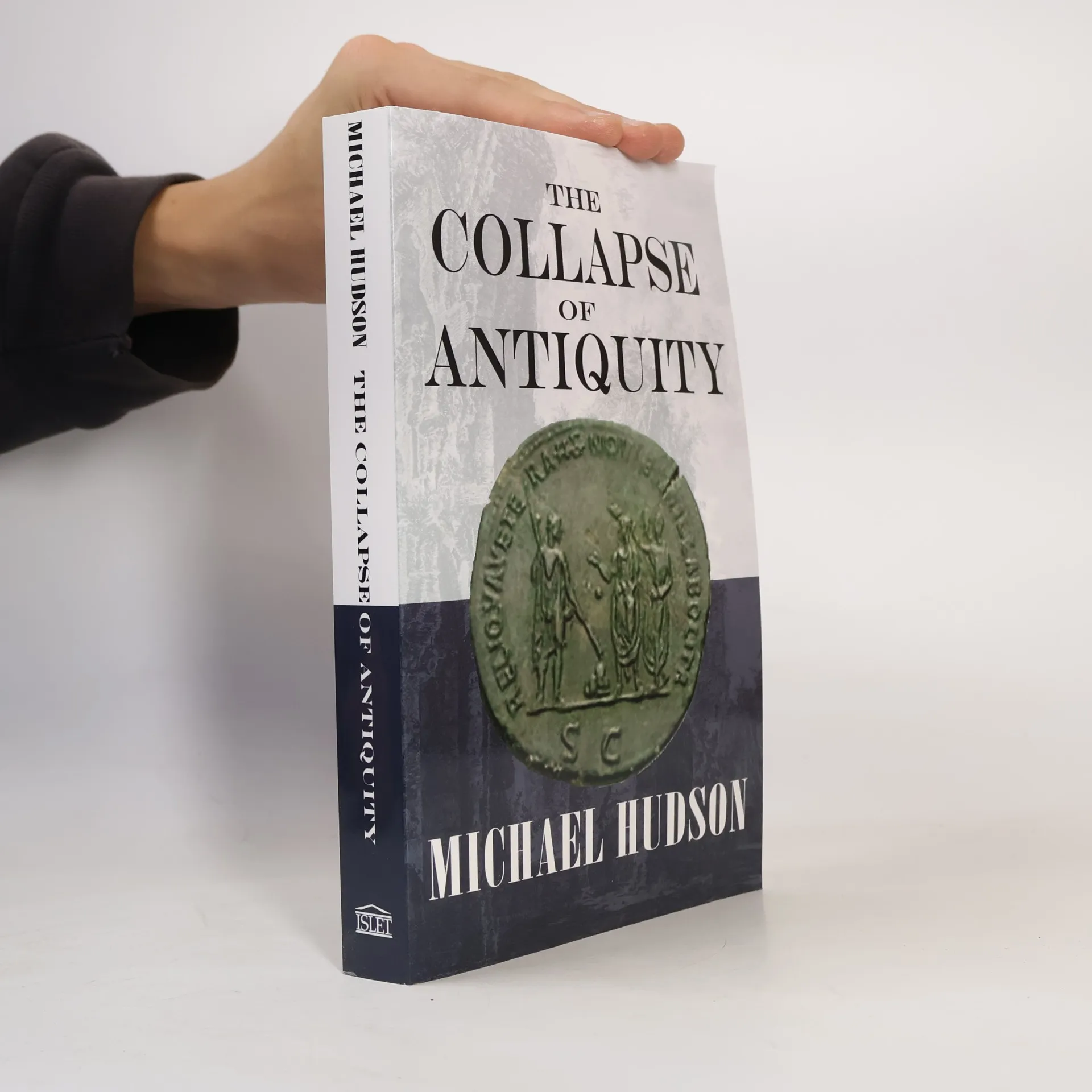
Rome's collapse was the forerunner of the debt crises, economic polarization and austerity caused by subsequent Western oligarchies. Hudson reveals the eerie parallels between Rome and today's debt-burdened Western economies.
Superimperializmus
- 514 Seiten
- 18 Lesestunden
Kniha skúma genézu americkej politickej a finančnej nadvlády a odhaľuje zákulisie jej finančnej diplomacie. Michael Hudson v dôkladnej štúdii analyzuje chyby, ktoré boli zakódované do Svetovej banky a Medzinárodného menového fondu už pri ich vzniku. Tieto chyby, podľa Hudsona, tvoria jadro týchto inštitúcií a boli navrhnuté na zachovanie finančnej hegemónie Spojených štátov. Hoci boli tieto inštitúcie pôvodne zriadené na pomoc rozvojovým krajinám, mnohé z najchudobnejších krajín sa ocitli v neprekonateľných dlhoch a finančných krízach. Odhalenie systémových chýb bolo zložitým procesom, avšak postupné zlyhávanie medzinárodného hospodárskeho systému ich učinilo neprehliadnuteľnými. Hudsonova kritika deštruktívneho smerovania medzinárodného ekonomického systému ponúka dôležitý pohľad na skutočné zámery týchto inštitúcií a na rastúci odpor, ktorému čelí na celom svete. Kniha vás vtiahne do zákulisia finančnej diplomacie a prekvapí vás novými pohľadmi na staré témy. Alvin Toffler, autor bestsellerov, označuje Hudsona za jedného z mála ekonómov, ktorí nútia čitateľov pozrieť sa na tieto otázky novým spôsobom.