The book explores the long-standing Israeli-Palestinian conflict, particularly in light of recent violent escalations. Shlomo Sand, an Israeli historian, critiques the viability of the two-state solution, arguing it has become a hollow promise amid ongoing settlement expansions and systemic inequalities faced by Palestinians. He delves into historical perspectives within Zionism that advocate for a bi-national federation, proposing that an egalitarian state where Israelis and Palestinians coexist as equals may be the only feasible path towards lasting peace.
Shlomo Sand Reihenfolge der Bücher (Chronologisch)
10. September 1946
Shlomo Sand ist ein Geschichtsprofessor, dessen Werk die Konzepte von Nationalismus und kollektivem Gedächtnis kritisch untersucht. Er stellt etablierte historische Narrative in Frage und konzentriert sich auf die konstruierte Natur nationaler Identitäten und die Rolle der Geschichtsinterpretation. Sands Schreibstil zeichnet sich durch einen strengen intellektuellen Ansatz aus, der die Leser ermutigt, grundlegende Annahmen über Nationen und ihre Vergangenheit zu hinterfragen. Seine wissenschaftliche Arbeit ist bedeutsam für ihren Beitrag zu laufenden Debatten über Identität, Geschichte und Zugehörigkeit.




A Brief Global History of the Left
- 271 Seiten
- 10 Lesestunden
The book explores the current state of the Left, highlighting its apparent decline despite historical resilience. It examines the disconnect between ongoing social struggles and the lack of support for traditional left parties, suggesting that while citizens continue to challenge dominant political regimes, these efforts fail to coalesce into robust movements. The analysis delves into the reasons behind this global decline and considers the implications for future political dynamics and activism on the Left.
Shlomo Sand was born in 1946, in a displaced person’s camp in Austria, to Jewish parents; the family later migrated to Palestine. As a young man, Sand came to question his Jewish identity, even that of a “secular Jew.” With this meditative and thoughtful mixture of essay and personal recollection, he articulates the problems at the center of modern Jewish identity. How I Stopped Being a Jew discusses the negative effects of the Israeli exploitation of the “chosen people” myth and its “holocaust industry.” Sand criticizes the fact that, in the current context, what “Jewish” means is, above all, not being Arab and reflects on the possibility of a secular, non-exclusive Israeli identity, beyond the legends of Zionism.
"Le présent livre dépasse l'interminable débat sur l'antisémitisme et l'antisionisme, et lui donne de nouvelles et stimulantes dimensions. Il remonte aux débuts de l'histoire de la judéophobie, et remet en cause l'idée selon laquelle le christianisme se serait édifié après et en opposition au judaïsme. Au contraire, estime-t-il, et malgré le présupposé chronologique, c'est bien le judaïsme qui s'est constitué sous la pression du christianisme, s'accommodant du même coup des termes du procès que lui ont fait, des siècles durant, ses ennemis. Ce renversement est riche de bénéfices intellectuels et politiques. Il rend caduque la mauvaise querelle assimilant l'antisionisme à l'antisémitisme (celle-là même qui fut relancée par Emmanuel Macron), et nourrit des questionnements parfaitement contemporains : « Jusqu'à quel point, écrit Shlomo Sand, le sionisme, né comme une réponse de détresse à la judéophobie moderne, n'en a-t-il pas été le miroir ? Dans quelle mesure, par un processus dialectique complexe, le sionisme a-t-il hérité des fondements idéologiques qui ont, de tout temps, caractérisé les persécuteurs des juifs ?" -- [édition]
" Comprendre une partie de l'Histoire des Juifs avec une intrigue bien ficelée ! "EUROPE 1Tout commence par la découverte du cadavre d'Yitzhak Litvak, un célèbre historien enseignant à l'université de Tel-Aviv. L'enquête, confiée à un commissaire arabe israélien, Émile Morkus, piétine, d'autant que ce meurtre n'est bientôt que le premier d'une série. Vingt ans plus tard, à la suite d'un nouvel assassinat, Morkus va enfin pouvoir démêler le vrai du faux, les passions et les raisons, la justice des hommes et celle de l'État.Dans ce polar riche en rebondissements, Shlomo Sand a l'art de mettre en relief les problématiques qui déchirent la société israélienne.Professeur émérite à l'université de Tel-Aviv, Shlomo Sand est l'auteur de plusieurs essais, dont Comment le peuple juif fut inventé (Fayard, 2008), livre qui a suscité de nombreuses controverses, et Une race imaginaire – Courte histoire de la judéophobie (Le Seuil, 2020). La Mort du Khazar rouge est son premier roman.Traduit de l'hébreu par Michel Bilis
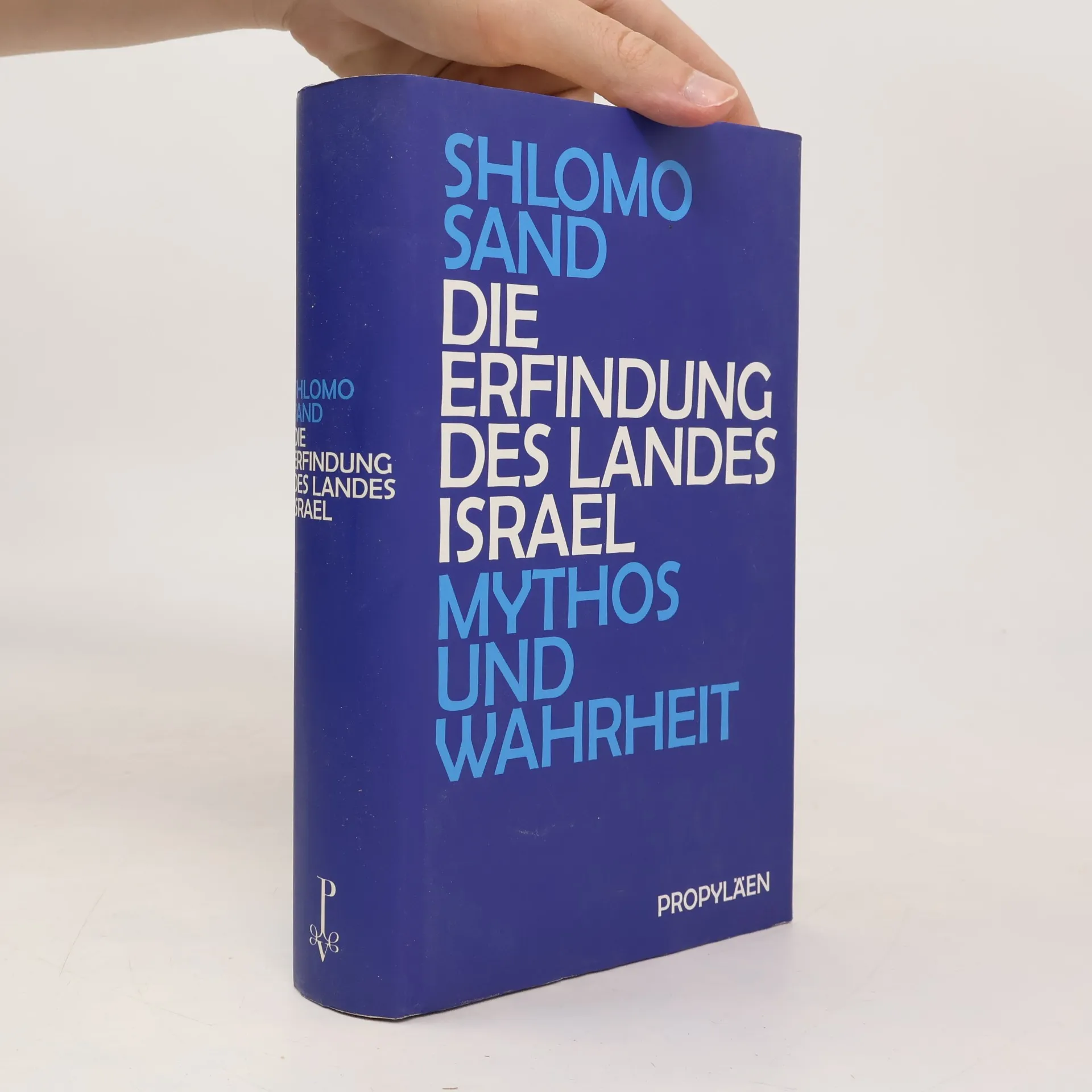
Die Erfindung des Landes Israel
- 396 Seiten
- 14 Lesestunden
Gehört Israel den Juden? Was bedeutet überhaupt Israel? Wer hat dort gelebt, wer erhebt Ansprüche auf das Land, wie kam es zur Staatsgründung Israels? Shlomo Sand, einer der schärfsten Kritiker der israelischen Politik gegenüber den Palästinensern, stellt den Gründungsmythos seines Landes radikal in Frage. Überzeugend weist er nach, dass entgegen der israelischen Unabhängigkeitserklärung und heutiger Regierungspropaganda die Juden nie danach gestrebt haben, in ihr „angestammtes Land“ zurückzukehren, und dass auch heute ihre Mehrheit nicht in Israel lebt oder leben will. Es gibt kein „historisches Anrecht“ der Juden auf das Land Israel, so Sand. Diese Idee sei ein Erbe des unseligen Nationalismus des 19. Jahrhunderts, begierig aufgegriffen von den Zionisten jener Zeit. In kolonialistischer Manier hätten sie die Juden zur Landnahme in Palästina und zur Vertreibung der palästinensischen Bevölkerung aufgerufen, die dann nach der Staatsgründung 1948 konsequent umgesetzt wurde. Nachdrücklich fordert Sand die israelische Gesellschaft auf, sich von den Mythen des Zionismus zu verabschieden und die historischen Tatsachen anzuerkennen.
The author of the bestselling The Invention of the Jewish People introduces two classic texts by a founding figure in the study of nationalism.
Die Erfindung des Jüdischen Volkes. Israels Gründungs-Mythos auf dem Prüfstand
- 505 Seiten
- 18 Lesestunden
Gibt es ein jüdisches Volk? Nein, sagt der israelische Historiker Shlomo Sand und stellt damit den Gründungsmythos Israels radikal in Frage. Vertreibung durch die Römer? Exodus? Rückkehr nach 2000 Jahren ins Land der Väter? Alles Erfindungen europäischer Zionisten im 19. Jahrhundert, schreibt Sand in seinem aufsehenerregenden Buch, das in Israel und Frankreich zum Bestseller wurde und heftige Kontroversen ausgelöst hat. Sand gehört einer Gruppe israelischer Historiker an, die sich kritisch mit der Geschichte Israels und des Zionismus befassen. Nicht das Existenzrecht Israels stellen sie in Frage, sondern den auf Legenden beruhenden Alleinanspruch auf das Gelobte Land. Das Judentum, so Sand, ist eine religiöse, keine ethnische Gemeinschaft. Wenn überhaupt, sind eher die Palästinenser als die aus Europa eingewanderten Juden ethnische Nachkommen der biblischen Israeliten. Bei aller Provokation stellt Sands Buch eine fundierte Auseinandersetzung mit der 3000-jährigen Geschichte des Judentums dar. Doch weil der Autor als engagierter Vorkämpfer für eine offenere Politik Israels gegenüber seinen arabischen Nachbarn auftritt, ist es vor allem als Streitschrift wahrgenommen worden. Gerade in Deutschland wird das Buch für Aufsehen und breite Diskussionen sorgen.