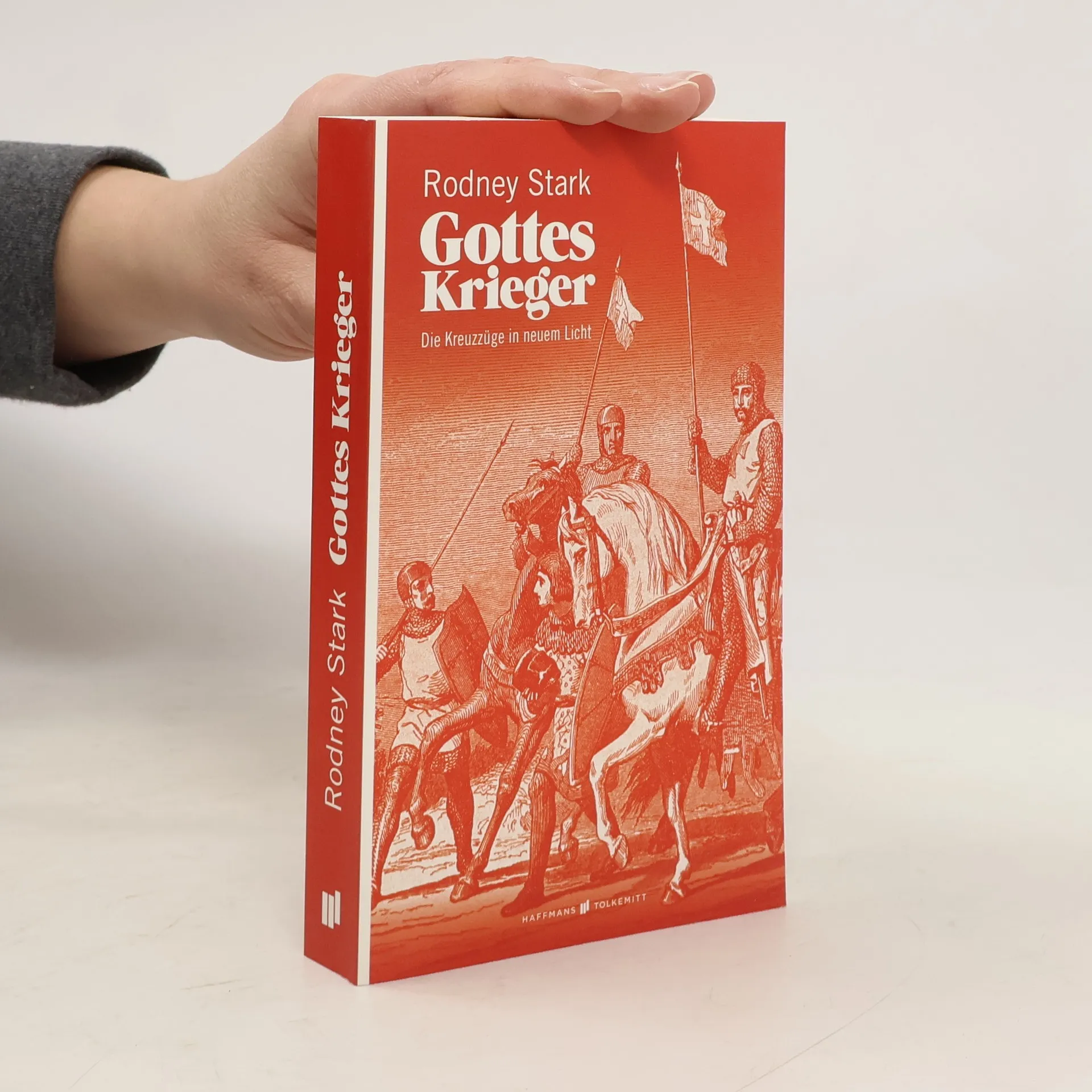
Dieses Buch hinterfragt die verbreitete Ansicht, dass die Kreuzzüge brutale, imperialistische und räuberische Feldzüge des christlichen Abendlandes gegen einen toleranten Islam waren, die aus Gier und dem Wunsch, das Christentum zu verbreiten, geführt wurden. Stark bietet einen detaillierten Überblick über die Eroberungen durch Mohammed und seine Nachfolger in Europa, dem Mittleren Osten und Nordafrika. Er beleuchtet die Behandlung von Juden und Christen in den eroberten Gebieten sowie die Massaker an Pilgern, die ins Heilige Land reisten, um sich von ihren Sünden zu befreien. Zudem wird die dringende Bitte Alexios I. an den Grafen von Flandern thematisiert, Byzanz vor der Invasion der zum Islam konvertierten Türken zu schützen. Der berühmte Aufruf von Papst Urban II. an die Ritter Europas zur Unterstützung der Byzantiner und zur Sicherung des Zugangs ins Heilige Land wird ebenfalls behandelt. Stark analysiert die blutigen Schlachten der Kreuzritter, ihre Siege und Niederlagen sowie die unterschiedlichen Strategien beider Seiten und die logistische Organisation der Truppenbewegungen. Mit diesem Werk präsentiert ein renommierter Religionssoziologe ein neues, realistischeres Bild der sieben großen Kreuzzüge und zeigt auf, was zwischen 1095 und 1291 in Europa und im Nahen Osten tatsächlich geschah.
Rodney Stark Bücher
Rodney Stark war ein produktiver Autor, dessen umfangreiches Werk sich hauptsächlich auf Religion konzentrierte, aber auch eine breite Palette soziologischer Themen abdeckte. Sein Schreibansatz war geprägt von rigoroser Forschung und tiefgründiger Analyse, was zur Veröffentlichung von über 140 Fachartikeln und 30 Büchern führte. Stark untersuchte Themen, die von Vorurteilen und Kriminalität bis hin zum Stadtleben im antiken Rom reichten, und kehrte stets zur Religionsforschung zurück. Seine Schriften wurden in zahlreiche Sprachen übersetzt, was die globale Reichweite seiner wissenschaftlichen Beiträge widerspiegelt.



Rodney Stark untersucht, wie der unbedeutende Kult der ersten Christen zur dominierenden Religion im Mittelmeerraum wurde. Er nutzt moderne Sozialwissenschaften und widerlegt gängige Ansichten über die Gläubigen. Besonders Juden und Frauen spielten eine zentrale Rolle. Stark verknüpft theologische und sozialwissenschaftliche Erklärungen für den Aufstieg des Christentums.
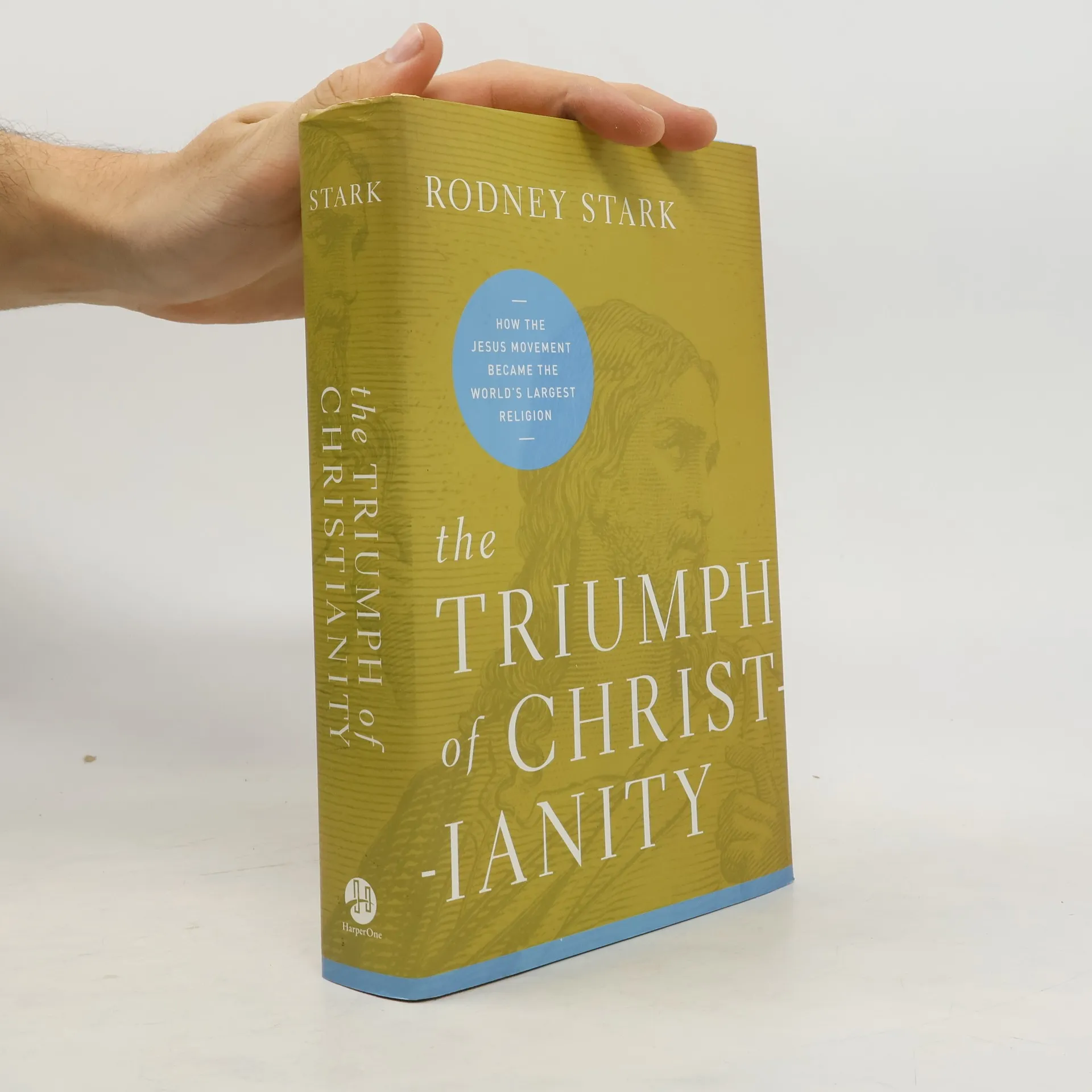
The Triumph of Christianity
How the Jesus Movement Became the World's Largest Religion
- 512 Seiten
- 18 Lesestunden
The book explores the remarkable transformation of an obscure Jewish sect into the world's largest religion, highlighting the growth of Christianity, which now encompasses over 40 percent of the global population. Rodney Stark, a distinguished historian, delves into the social and historical factors that contributed to this rapid expansion, offering insights into the dynamics that have allowed Christianity to thrive across cultures and eras.
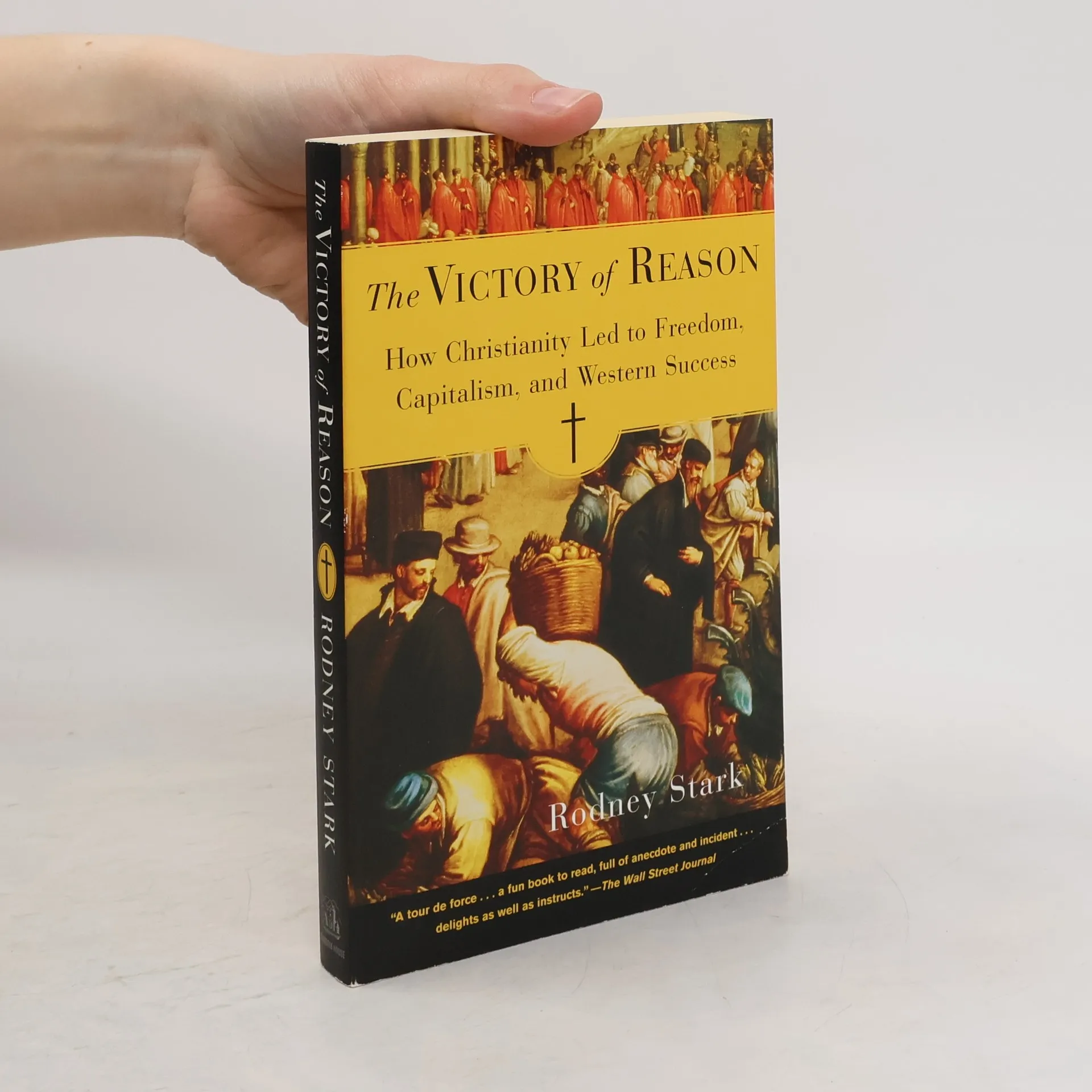
The Victory of Reason
- 304 Seiten
- 11 Lesestunden
In The victory of reason, sociologist Stark advances the idea that Christianity and its related institutions are directly responsible for the most significant intellectual, political, scientific, and economic breakthroughs of the past millennium. In Stark's view, what has propelled the West is not the tension between secular and nonsecular society, nor the pitting of science and the humanities against religious belief. Christian theology, Stark asserts, is the very font of reason. While the world's other great belief systems emphasized mystery, obedience, or introspection, Christianity alone embraced logic and reason as the path toward enlightenment, freedom, and progress.--From publisher description
The Churching of America, 1776-1990
Winners and Losers in Our Religious Economy
- 328 Seiten
- 12 Lesestunden
Winner of the "Distinguished Book Award" from the Society for the Scientific Study of Religion, this work challenges the conventional understanding of American religious history. Critics praise it as a "pugnacious" reevaluation that is essential reading for both laypersons and scholars alike. The authors present a revolutionary analysis of the social history of American religion, arguing that organized religion has thrived in American society, which contradicts widely held beliefs. Their findings dismantle many established theories and biases, particularly the "establishment" perspective that has obscured the true pluralistic trends among Christian denominations. This compelling narrative not only prompts a serious rewrite of American religious history but also positions itself as a significant contribution to the field. The authors, Roger Finke and Rodney Stark, are respected scholars in sociology and religious studies, lending credibility to their groundbreaking insights. Their work is recommended for anyone interested in a fresh perspective on the dynamics of religion in America.
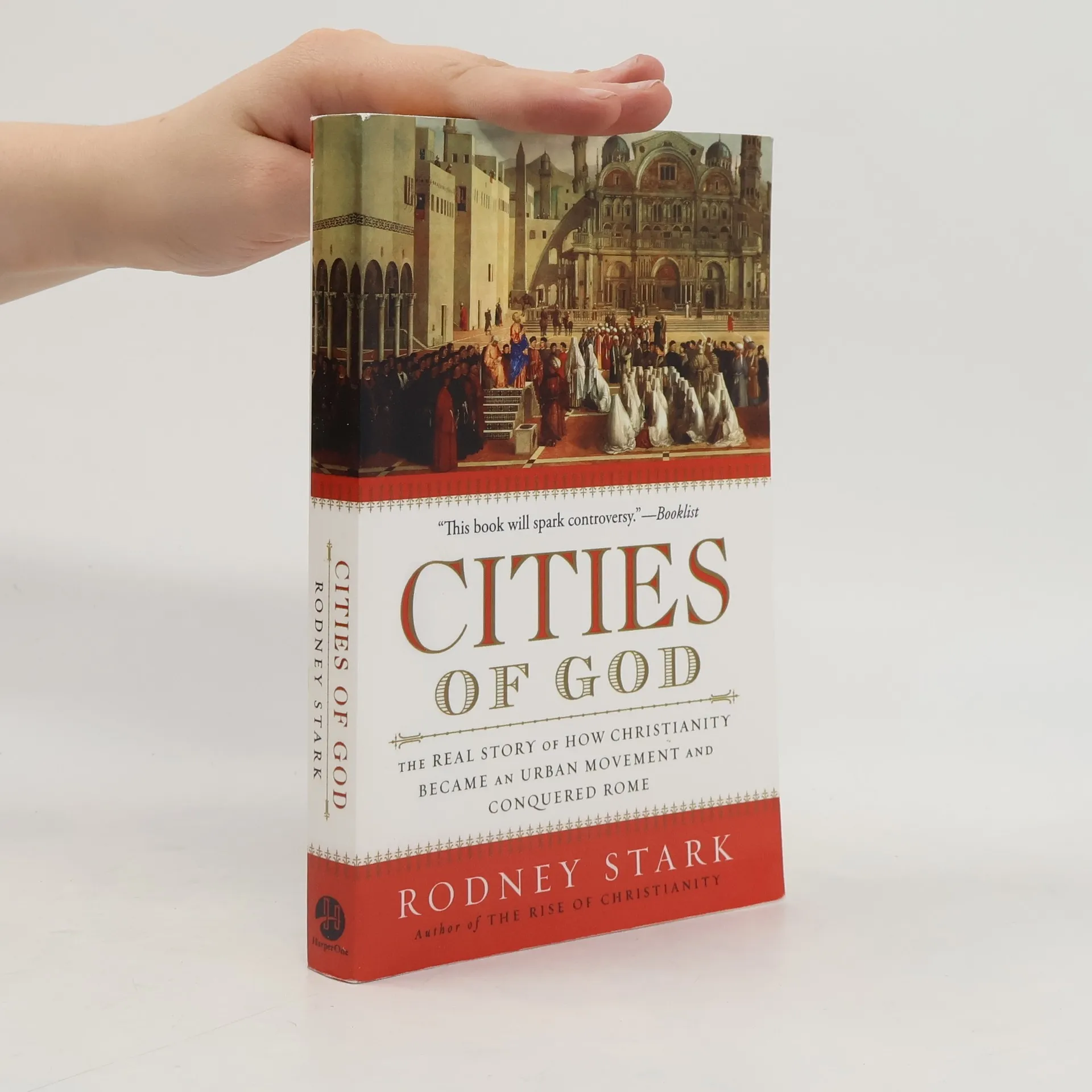
Cities of God
The Real Story of How Christianity Became an Urban Movement and Conquered Rome
- 288 Seiten
- 11 Lesestunden
The book explores the remarkable rise of Christianity from its humble beginnings, focusing on the influential preaching of a Galilean carpenter. It examines the demographics of early followers, the spread of the faith, and the factors that contributed to its growth into the world's largest religion. Utilizing quantitative data and contemporary scholarship, Rodney Stark challenges established narratives about the early church's expansion, revealing new insights into its historical impact and the dynamics of belief and conversion.
How the West Won
- 464 Seiten
- 17 Lesestunden
In this page-turning, myth-busting history, acclaimed author Rodney Stark shows exactly why Western civilization triumphed over other cultures. Taking readers on a thrilling journey from ancient Greece to the present, Stark challenges much of the received wisdom about Western history, and debunks some absurd fabrications that have flourished in the past few decades.
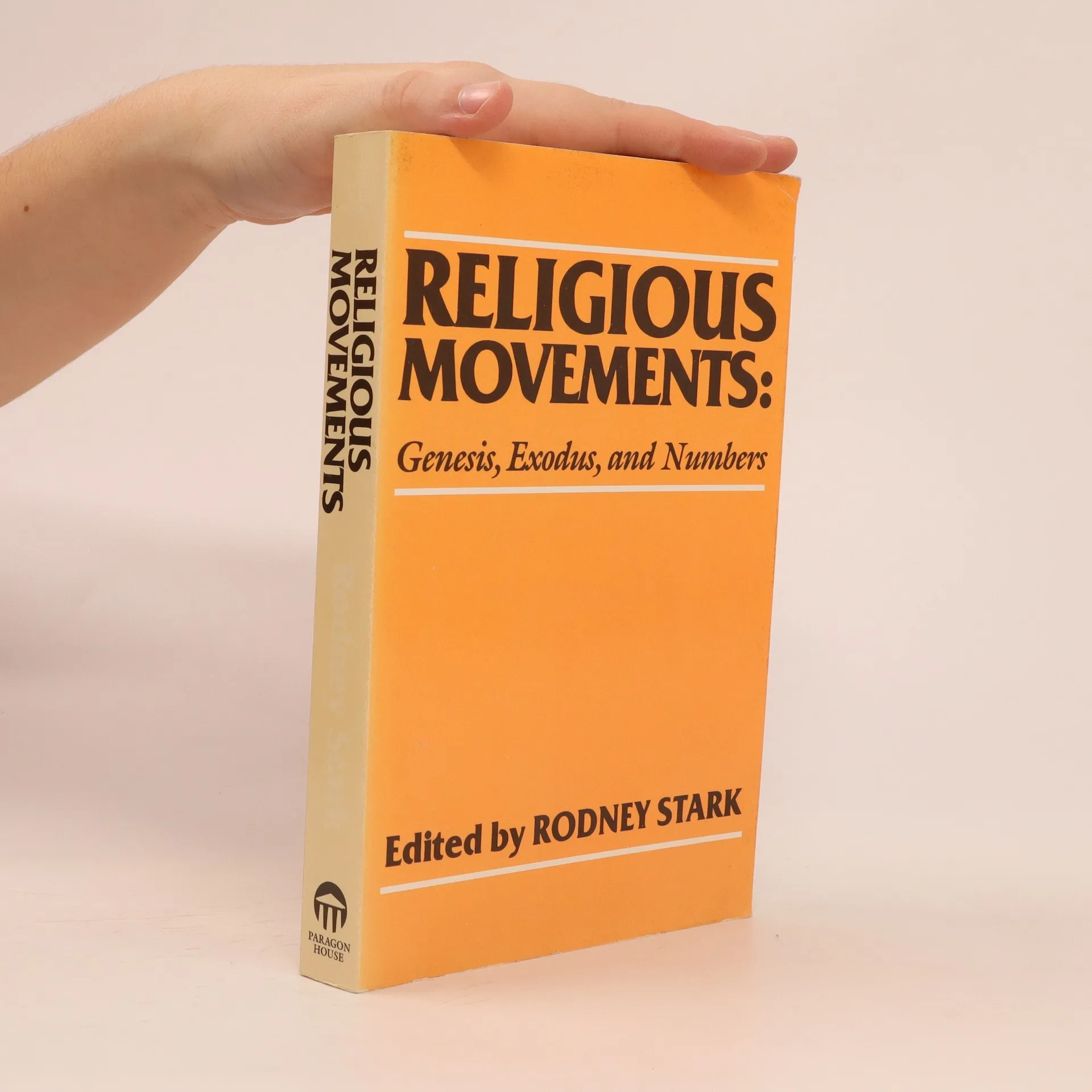
Religious Movements
- 320 Seiten
- 12 Lesestunden
Why do people join cults? Why do they leave? And how do they manage to stay in them, if that's what they've decided to do? What are cults, anyway? Moonies? Hare Krishnas? The Mormons? The Moral Majority? Manson? Rodney Stark, editor of Religious Genesis, Exodus, and Numbers, criticizes the media attention given to pseudo-experts on the cults. It seems odd, he says in his introduction, ôthat the media, usually so eager to reveal dirty secrets, fail to discover that some of their experts on religious movements are poorly regarded by others in the field, while most are held in no regard at all, since they have never participated in the field.ö His volume explores a broader range of issues and groups than is generally considered ôhotö by the press. Groups considered are-in addition to Rajneesh, the Unification Church and Hare Krishna, the Bo Peep UFO cult, the many faces of the ôhuman potentialö movement, the Moral Majority, Ian Paisley's Protestants in Northern Ireland, astrology and indigenous American groups such as the Mormons and Seventh Day Adventists. Instead of the tired ôbrainwashingö explanation of why people join fringe religious movements, this book provides clear-headed analyses of recruitment, disaffection and socialization in non-mainstream religious groups.
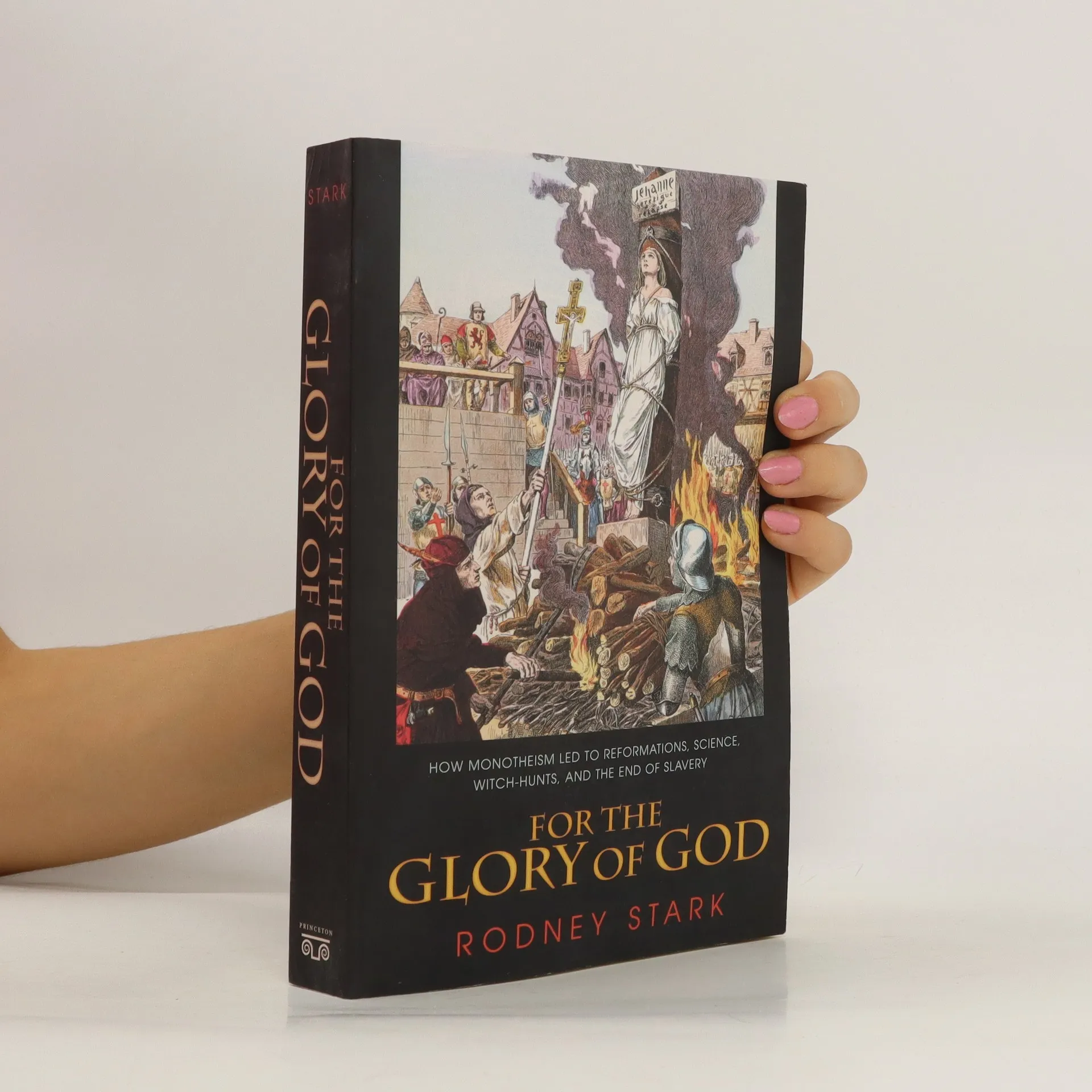
For the Glory of God
- 504 Seiten
- 18 Lesestunden
Rodney Stark's provocative work argues that our modern culture has been shaped by people acting for the glory of God. He explores the widespread consequences of monotheism, demonstrating how the Christian conception of God led to pivotal events such as the Protestant Reformation, the rise of modern science, the European witch-hunts, and the Western abolition of slavery. Stark explains the different cultural outcomes of Christian and Islamic images of God, highlighting why Christians fostered science, engaged in witch-hunts, and denounced slavery, while Muslims did not. He attributes these phenomena to the pressures within monotheistic organizations that maintain religious intensity, resulting in conflicts and schisms with significant social implications. Stark challenges commonly held beliefs, presenting the sixteenth-century scientific advancement not as a sudden break from religion but as a gradual evolution from medieval theology. He also links the same ideas about God that spurred scientific progress to the intense witch-hunting in Europe, even among notable scientists. Furthermore, he reveals that the Christian condemnation of slavery was intertwined with the fervor of some of the most zealous witch-hunters, who were also key figures in abolitionist movements. This narrative reshapes our understanding of religion's historical role and the forces behind what we consider secular progress.
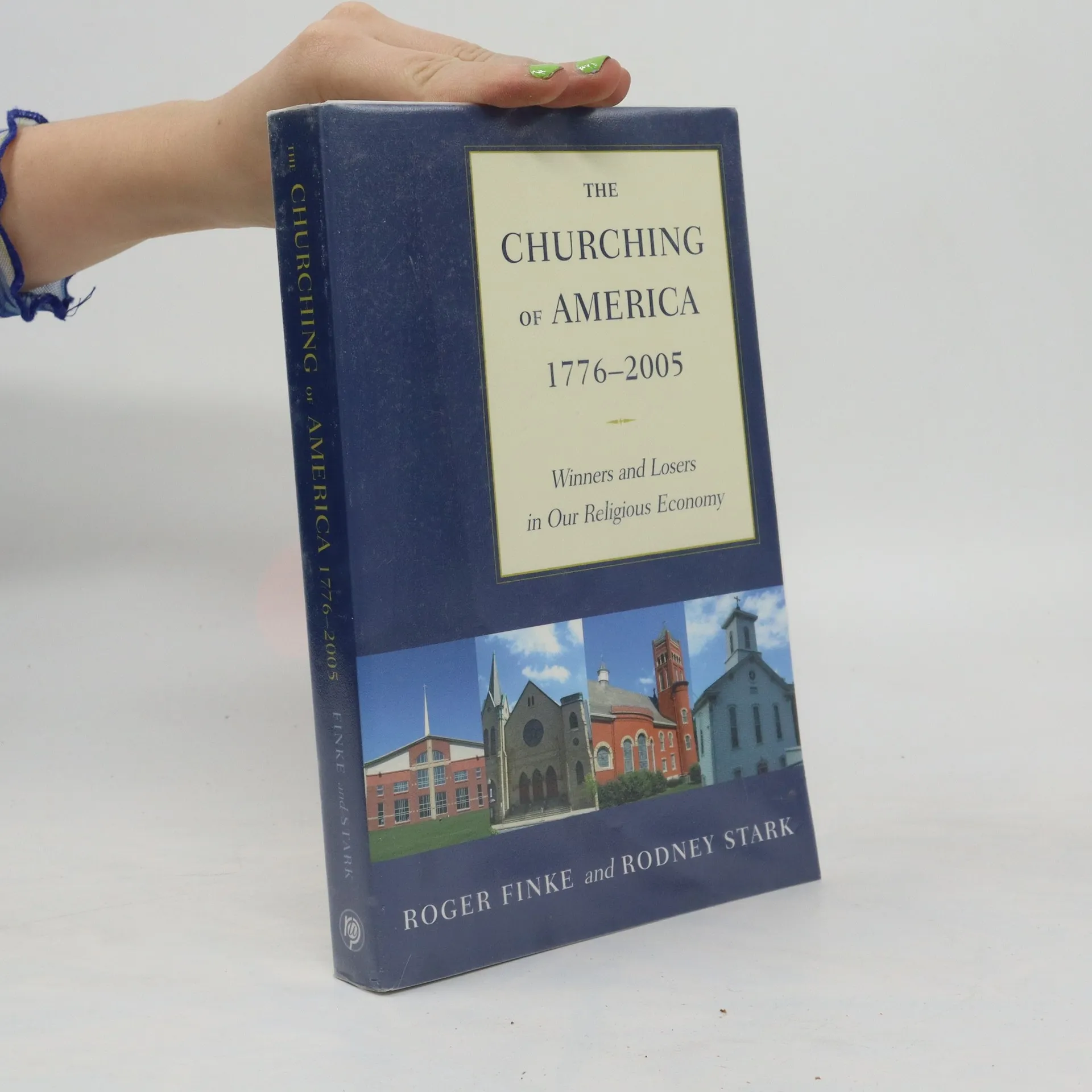
The Churching of America 1776-2005
Winners and Losers in Our Religious Economy
This edition offers research, statistics and stories that document-increased participation in religious groups in the US in the 21st century. New chapters chart the development of African American churches from the early 19th century and the ethnic religious communities of recent immigrants.
One True God
- 336 Seiten
- 12 Lesestunden
Western history would be vastly different without the belief in One True God. While wars would still exist, religious wars would be absent. Moral codes might prevail, but Commandments would not. If the Jews had been polytheists, they would be just another forgotten people, as extinct as the Babylonians. Likewise, if Christians had presented Jesus as just "another" God, their faith might have faded like Mithraism. Islam, too, would not have emerged from the desert had Muhammad not established Allah as the sole deity, distinct from Arab paganism. The three major monotheistic religions transformed everything. Rodney Stark, with his usual clarity, explores the immense power of monotheism to both unite and divide. He investigates the missionizing efforts of Jews, Christians, and Muslims, examining when and why these efforts stalled. Stark delves into the late eleventh century's rising intolerance towards Jews, leading to mass murders, and analyzes the geographic concentration of Christian and Muslim pogroms. He also considers how Jews managed to endure as a minority faith amidst intense conversion pressures and their instances of assimilation. In the final chapter, Stark reflects on the American experience, illustrating how committed monotheists can maintain civility toward one another. This sweeping social history reveals how monotheism has shaped the past and influenced the modern world.
First Published in 1997. Routledge is an imprint of Taylor & Francis, an informa company.
Sociology
- 619 Seiten
- 22 Lesestunden
SOCIOLOGY is truly a classic introductory text which introduces students to the methods and theories of sociology using Rodney Stark's hallmark "Over the Shoulder of a professional sociologist" approach, presenting sociology on a personal level. Stark describes what sociologists do and how they do it, focusing first on the questions they pose and how they search for and formulate their answers, and then moving on to study their answers and conclusions. In this way, he effectively explores themes, raising issues in a straightforward manner with historical accuracy and solid research. The text employs a unique feature titled "A Closer View," which illustrates seminal research studies to introduce students to the sociological imagination and the world around them.
Kniha vyvracia zaužívané mýty a nepravdy o katolíckej cirkvi, pričom sa zaoberá témami ako inkvizícia, križiacke výpravy, postoj cirkvi k vede a slobodnému podnikaniu. Autor, Rodney Stark, profesor sociológie na Baylor University, nie je katolíkom, no jeho práca je podložená výskumom rešpektovaných vedcov. Niektoré protikatolícke mýty sú jednoduché na vyvrátenie; pohľad na gotickú katedrálu naznačuje, že „temný“ stredovek nebol až taký temný. Križiacke výpravy, ak si spomenieme na historické kontexty, sa už nemusia javiť ako nevyprovokovaná agresia. Skutočný rozsah týchto mýtov, ktoré mnohí z nás prijali, sa objasňuje až po prečítaní Starkovej knihy. Vladimír Palko, bývalý minister vnútra SR, vyjadruje vďaku autorovi za jeho nezlomnú húževnatosť a snahu o pravdu, a vyzýva historikov, aby prehodnotili svoje verdikty. Michael Novak, americký filozof slovenského pôvodu, tiež oceňuje Starkovu prácu a jeho prínos k historickej pravde. George Weigel, autor životopisu Jána Pavla II., tvrdí, že Starkova kniha je cenným príspevkom pre každého, kto sa zaoberá spoločenskými vedami.