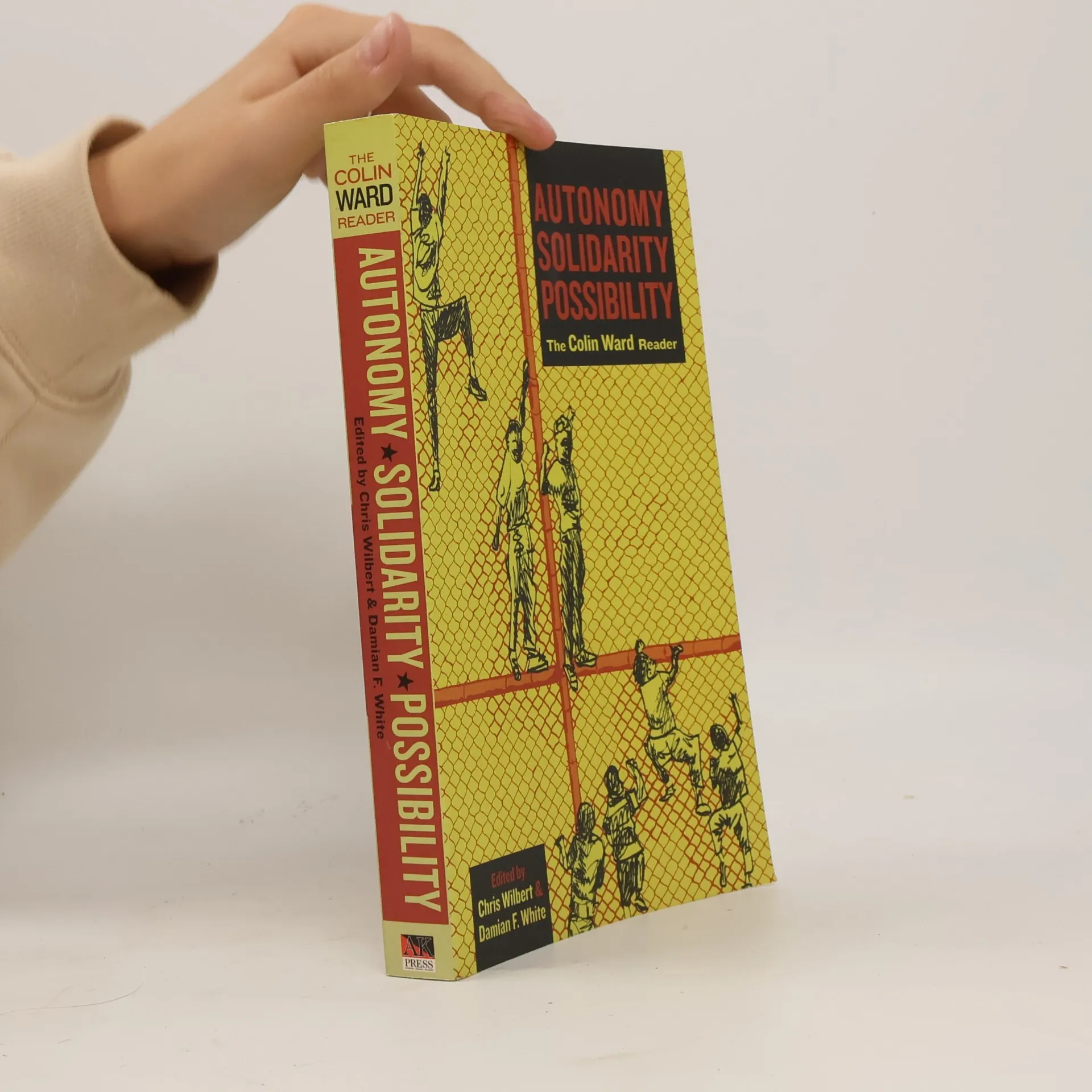
Colin Ward war ein bedeutender britischer anarchistischer Schriftsteller, dessen Werk nicht-hierarchische Organisationsformen und anarchistische Lösungen für Wohnungs- und Stadtplanungsprobleme befürwortete. Er untersuchte kritisch die Themen informeller Siedlungen und plädierte für flexible, selbstverwaltete Wohnansätze, inspiriert von Architekten wie Walter Segal. Ward glaubte an den Abbau autoritärer Strukturen und schlug vor, dass dezentrale, persönliche Gemeinschaftsgruppen den besten Schutz gegen bürokratische Tendenzen böten. Seine Schriften erforschten konsequent, wie Individuen und Gemeinschaften durch Selbstverwaltung und gegenseitige Hilfe gestärkt werden können, insbesondere im Hinblick auf Landnutzung und Wohnraum.
Colin Ward (1924-2010) war ein britischer Anarchist, Architekt und Schriftsteller, dessen Werke sich mit Soziologie, Anthropologie und Stadtplanung befassen. Er propagierte einen pragmatischen Anarchismus, der auf informellen, selbstorganisierenden Netzwerken basiert, anstatt die bestehende Gesellschaft abzulehnen. Sein Buch „Anarchism in Action“ behandelt, wie Menschen in verschiedenen Gesellschaften organisieren.
The argument of this book is that an anarchist society, a society which organises itself without authority, is always in existence. Through a wide-ranging analysis - drawing on examples from education, urban planning, welfare, housing, the environment, the workplace, and the family, to name but a few - Colin Ward demonstrates that the roots of anarchist practice are not so alien or quixotic as they might at first seem but lie precisely in the ways that people have always tended to organise themselves when left alone to do so.
An account of life on the terraces in the 1970s and 80s, this book is an inside story of a football fan. Colin Ward's experiences at Arsenal, Chelsea and England matches, at home and abroad and his experiences of camaraderie and confrontations, chavinism, hatred and colourful terrace characters are charted.
What do anarchists want? Can anarchy ever function effectively as a political force? Is anarchism more 'organized' and 'reasonable' than is currently perceived? Colin Ward explains what anarchism means and who anarchists are in this illuminating and accessible introduction to the subject.
"Britain's leading anarchist philosopher." —Anne Power, London School of Economics Drawing inspiration from the everyday creativity of ordinary people, Colin Ward long championed a unique social and environmental politics that is premised on the possibilities of democratic self-organization and self-management from below. This collection provides a wide-ranging overview of Ward's earliest journalism, with seminal essays, extracts from his most important books, and examples of his most recent work. Damian F. White is assistant professor of sociology at the Rhode Island School of Design . Chris Wilbert is a lecturer in geography and tourism at Anglia Ruskin University.
All Quiet on the Hooligan Front is a compelling exploration into the changing face of football. Covering the years just prior to the Hillsborough disaster up to the present day, it shows how the mood of English football has changed dramatically since the era of hooliganism described in its predecessor, the hugely successful Steaming In. The book revolves around the author’s travels and gives a vivid portrayal of the fun that fans have when supporting their team. It looks at how football has changed now that the terraces have gone, and gives an insight into how members of the press often distort the truth about the game in order to sell more papers. The book emphasises the importance now assigned to marketing within football and, on a darker note, looks at the advent of the drugs culture amongst fans. All Quiet on the Hooligan Front chronicles all of the changes which have occurred in the game post-Hillsborough, and leaves it for the reader to decide whether these have been good or bad for the beautiful game.
The argument of this book is that an anarchist society, a society which organizes itself without authority, is always in existence, like a seed beneath the snow, buried under the weight of the state and its bureaucracy, capitalism and its waste, privilege and its injustices, nationalism and its suicidal loyalties, religious differences and their superstitious separatism. Anarchist ideas are so much at variance with ordinary political assumptions and the solutions anarchists offer so remote, that all too often people find it hard to take anarchism seriously. This classic text is an attempt to bridge the gap between the present reality and anarchist aspirations, “between what is and what, according to the anarchists, might be.” Through a wide-ranging analysis—drawing on examples from education, urban planning, welfare, housing, the environment, the workplace, and the family, to name but a few—Colin Ward demonstrates that the roots of anarchist practice are not so alien or quixotic as they might at first seem but lie precisely in the ways that people have always tended to organize themselves when left alone to do so. The result is both an accessible introduction for those new to anarchism and pause for thought for those who are too quick to dismiss it.