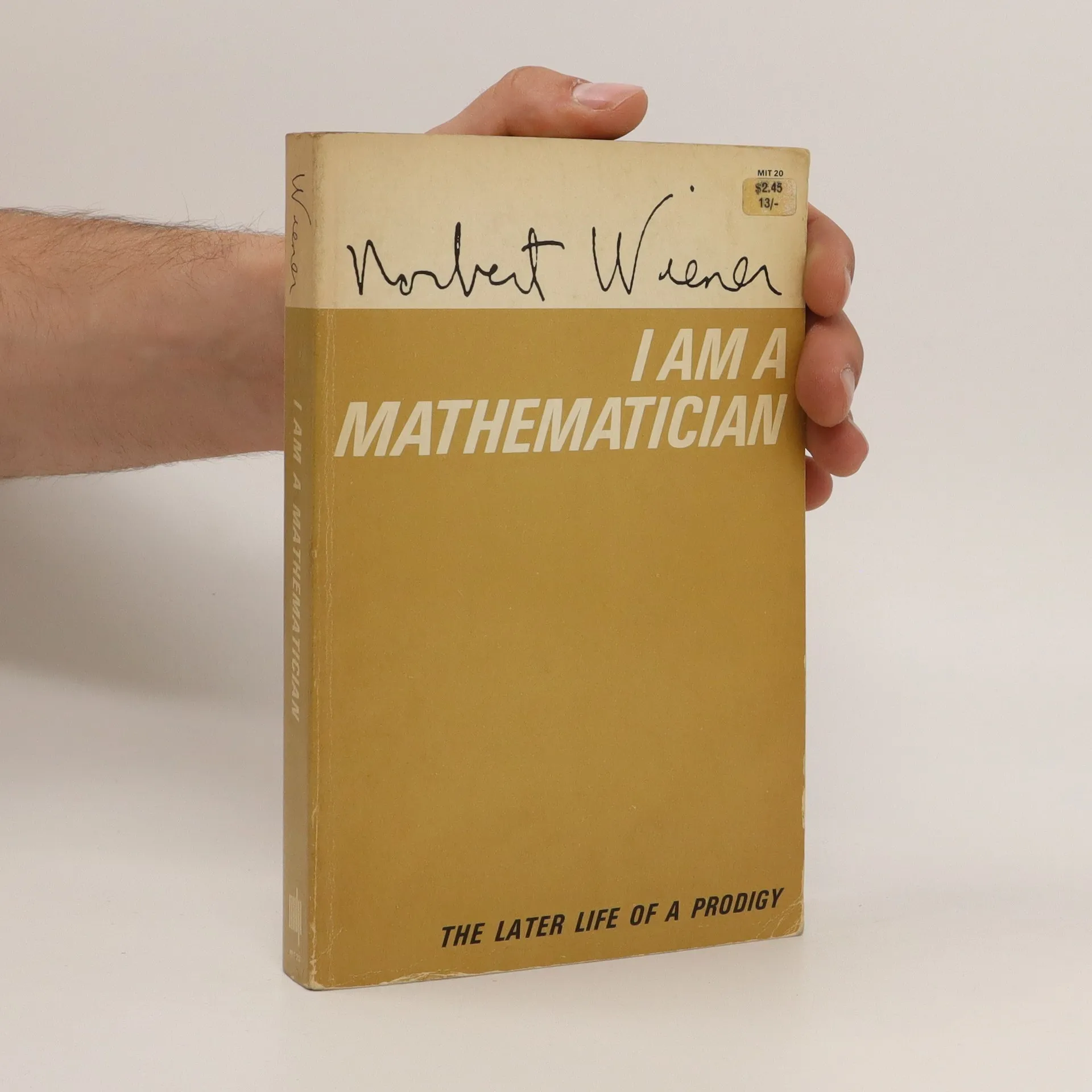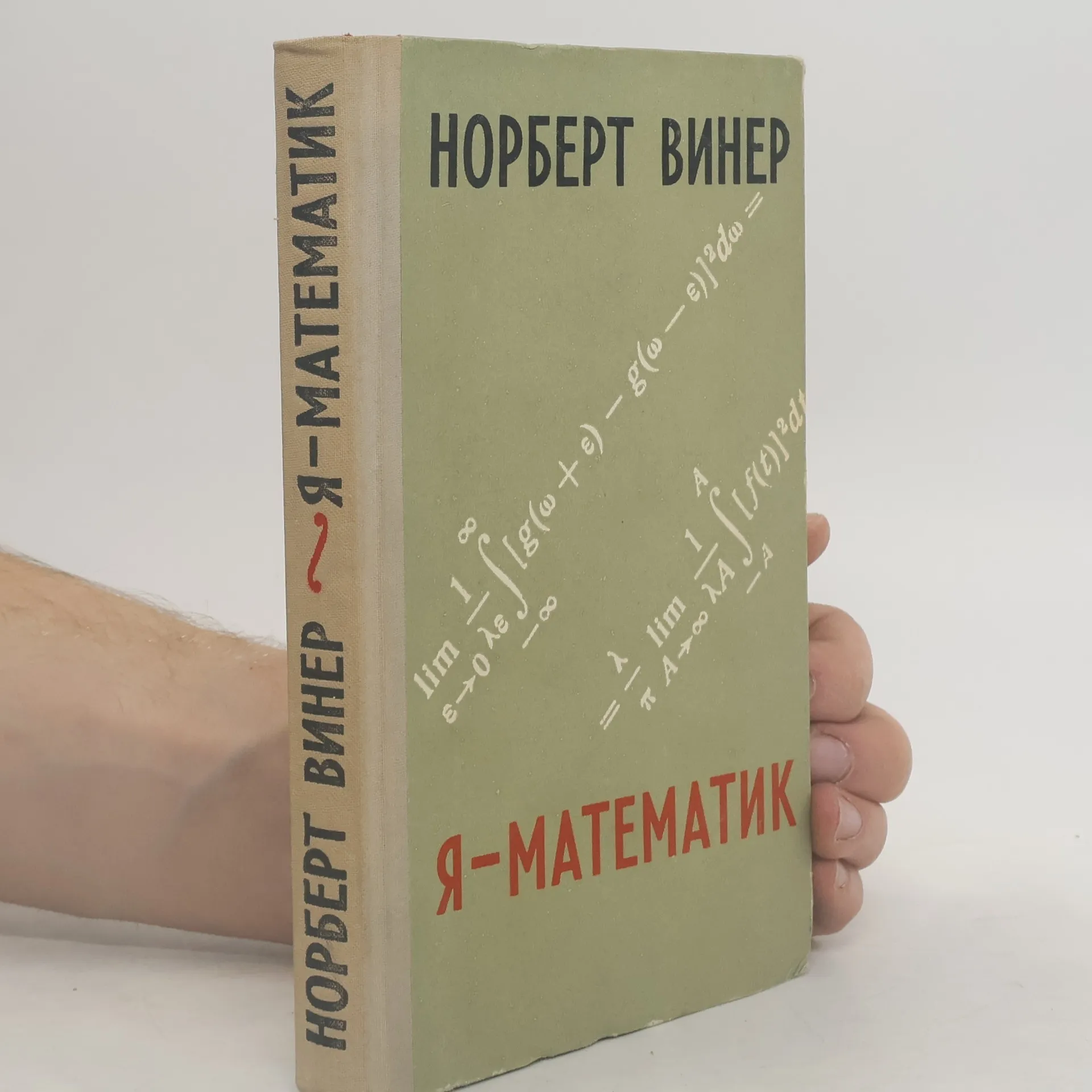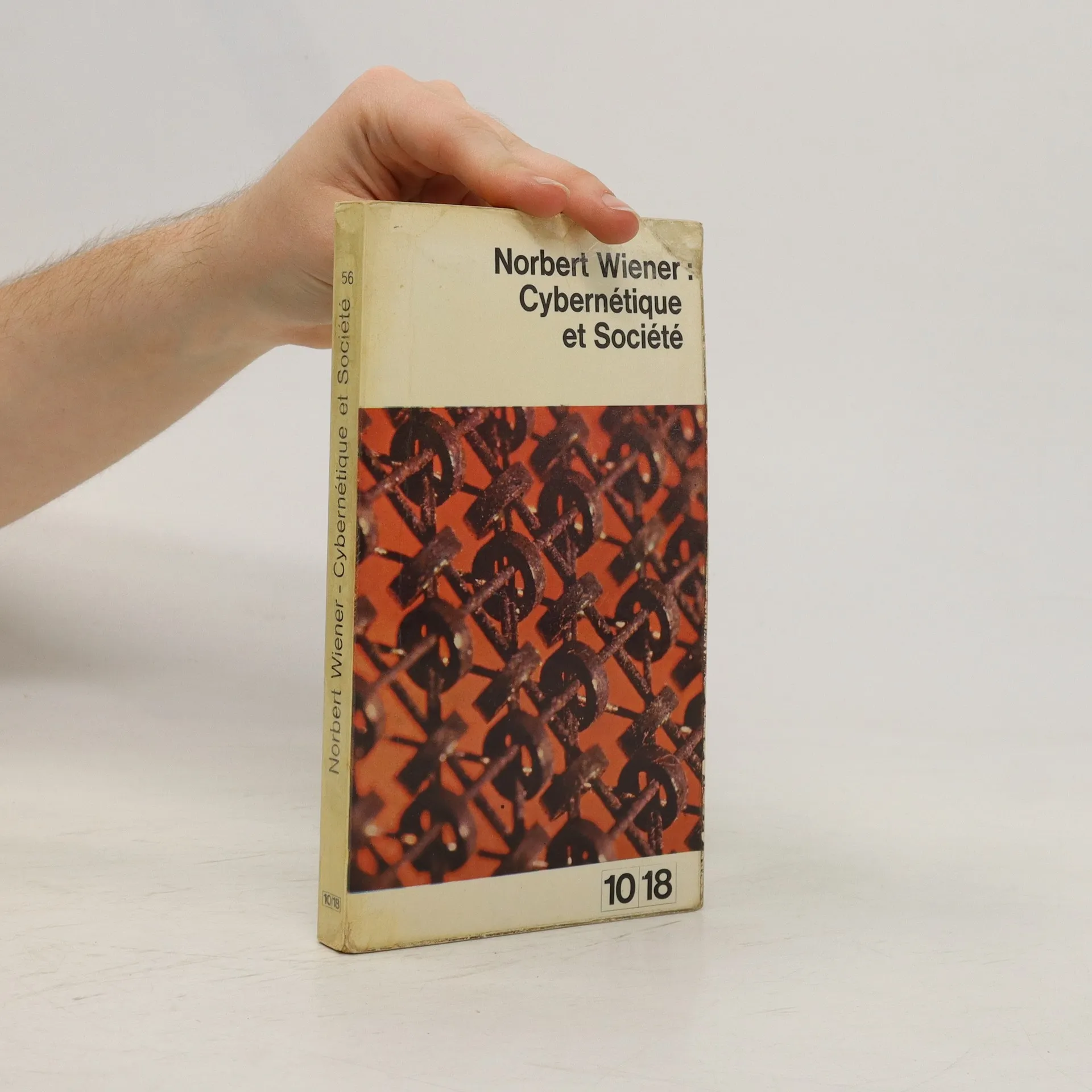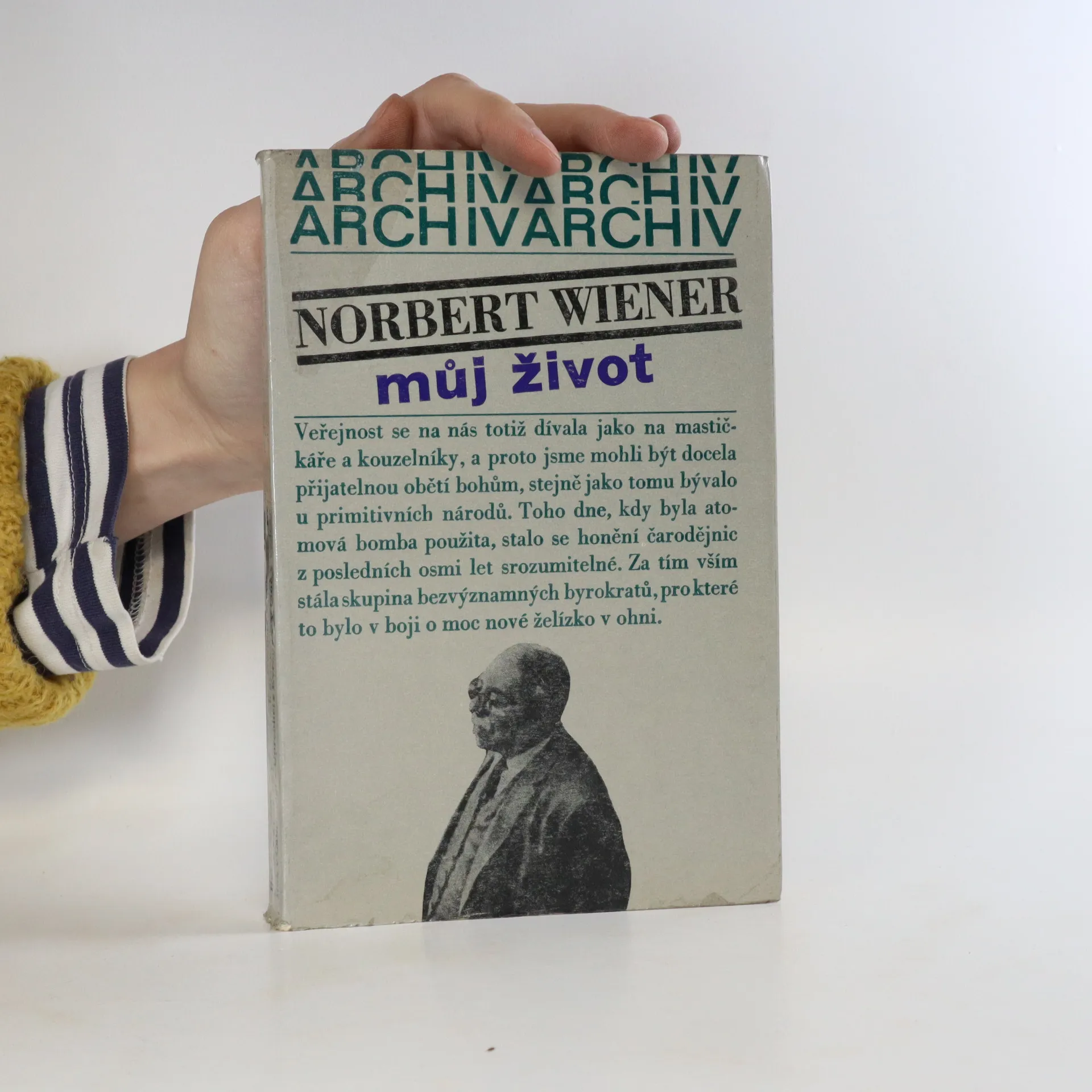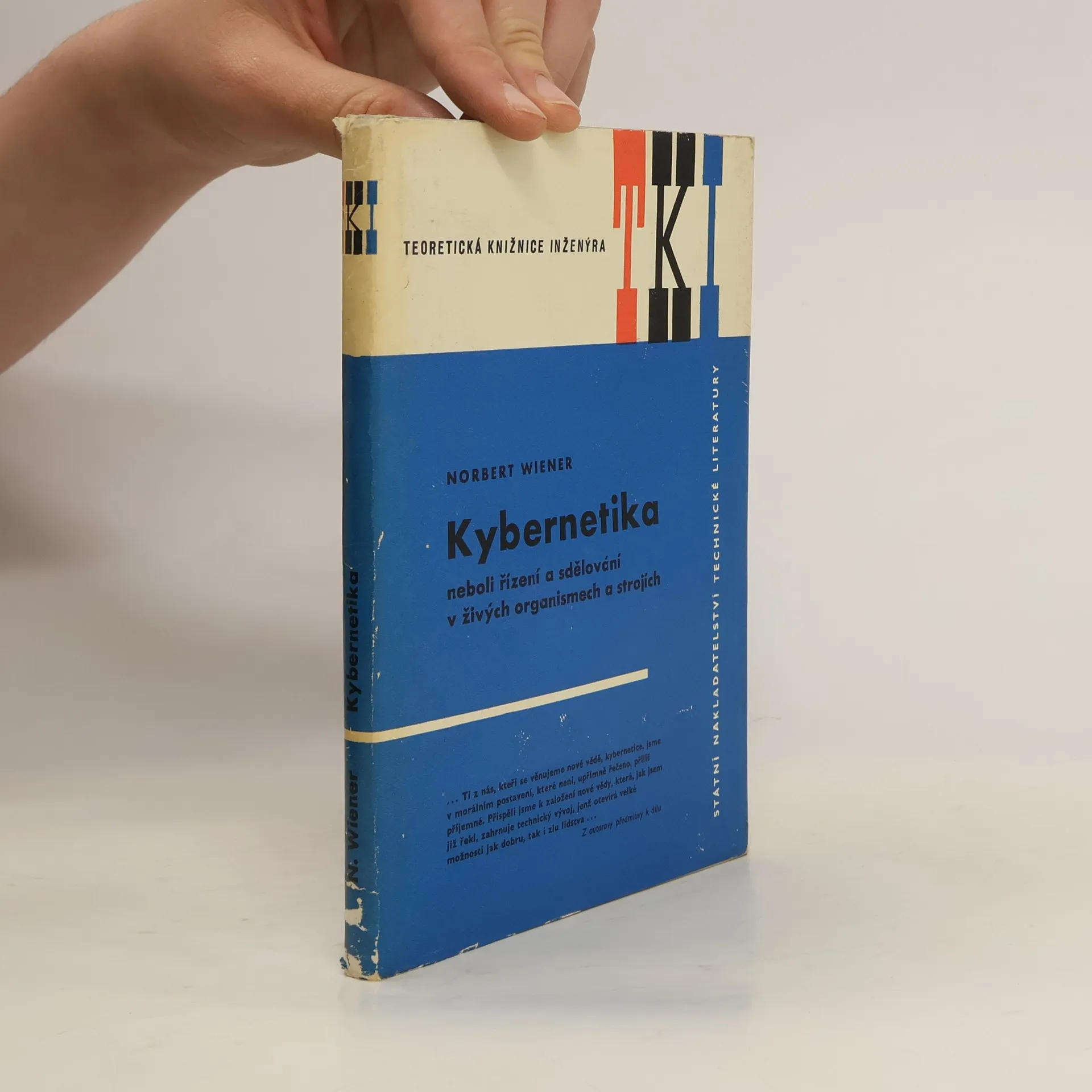
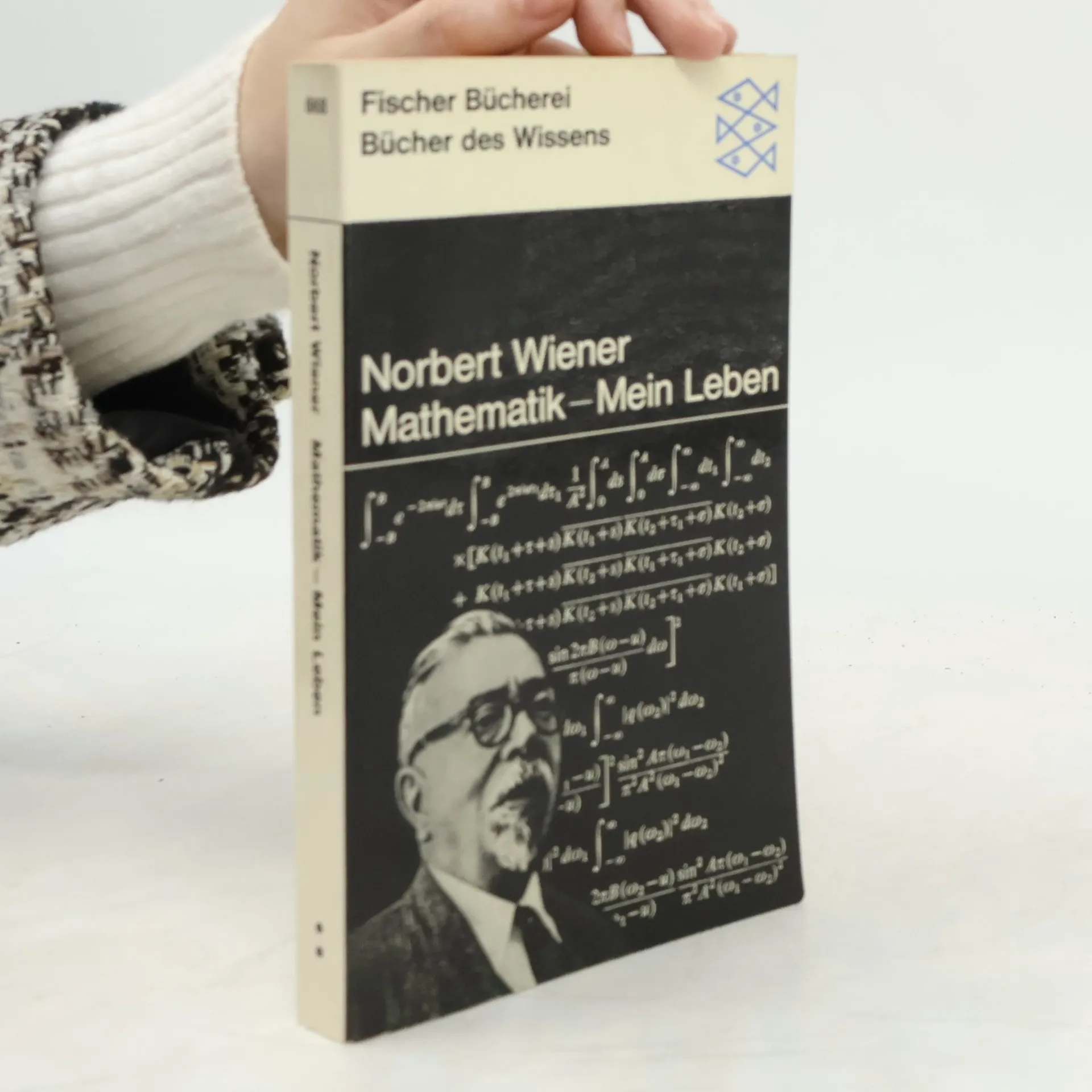


Das Buch "Mensch und Menschmaschine" des amerikanischen Mathematikers und Philosophen Norbert Wiener (1894-1964) ist eine zugänglich geschriebene Einleitung in die Organisationsidee der modernen Gesellschaft. Als bekanntester Pionier der Kybernetik, der Wissenschaft und Technik der Steuerung von Regelkreisläufen, warnt Wiener vor den Möglichkeiten eines solchen Wissens. Im Zentrum seiner Überlegungen steht eine maschinenhafte Regierungstechnologie, in welcher der Mensch nur eine Rückkopplungs-Information, ein Signal von Zustimmung oder Ablehnung geworden ist. Der moderne Mensch wird zu einem Individuum, dessen Individualität die wesentliche Eigenschaft hat, von Sozial-Ingenieuren gesteuert werden zu können. In dieser komfortablen, weil geregelten Sozial-Maschine kann der Mensch nicht anders als bestätigen, was die Gesellschaft für notwendig und fortschrittlich erachtet
Norbert Wiener Bücher


Nonlinear Problems in Random Theory
- 142 Seiten
- 5 Lesestunden
The book presents a collection of lectures that explore the significance of nonlinear processes across various fields, including physics, mathematics, electrical engineering, physiology, and communication theory. It offers insights into how these processes influence different scientific and engineering disciplines, emphasizing their fundamental role in understanding complex systems. This reprint maintains the integrity of the original 1958 edition, ensuring that the content remains accessible and relevant for contemporary readers.
Cybernetics
- 212 Seiten
- 8 Lesestunden
It appears impossible for anyone seriously interested in our civilization to ignore this book. It is a ‘ must’ book for those in every branch of science . . . in addition, economists, politicians, statesmen, and businessmen cannot afford to overlook cybernetics and its tremendous, even terrifying implications. "It is a beautifully written book, lucid, direct, and despite its complexity, as readable by the layman as the trained scientist." -- John B. Thurston, "The Saturday Review of Literature" Acclaimed one of the "seminal books . . . comparable in ultimate importance to . . . Galileo or Malthus or Rousseau or Mill," "Cybernetics" was judged by twenty-seven historians, economists, educators, and philosophers to be one of those books published during the "past four decades", which may have a substantial impact on public thought and action in the years ahead." -- Saturday Review
Norbert Wiener-A Life in Cybernetics
- 526 Seiten
- 19 Lesestunden
Norbert Wiener's celebrated autobiography, available for the first time in one volume. číst celé
God & Golem, Inc.
- 99 Seiten
- 4 Lesestunden
The Fourier Integral and Certain of Its Applications
- 216 Seiten
- 8 Lesestunden
Focusing on harmonic analysis, this book presents lectures from the University of Cambridge with a balance of rigor and readability. It explores the Plancherel theorem related to Fourier transforms and discusses Tauberian theorems, influenced by G. H. Hardy's work, including applications to prime number theorems. Aimed at both pure and applied mathematicians, this reprint of a classic text captures Wiener's fundamental contributions to the field, making it essential reading for those engaged in harmonic analysis.
Focusing on technical aspects of time series and communication engineering, this book serves as a companion to Wiener's earlier work, "Cybernetics." It is designed for engineers and includes an introduction, five chapters, and three appendices. The content covers generalized harmonic analysis, prediction, filtering, and multiple prediction theory. Additionally, it discusses the application of these methods to approximate differentiation, providing practical tools for professionals in electrical communication and related fields.