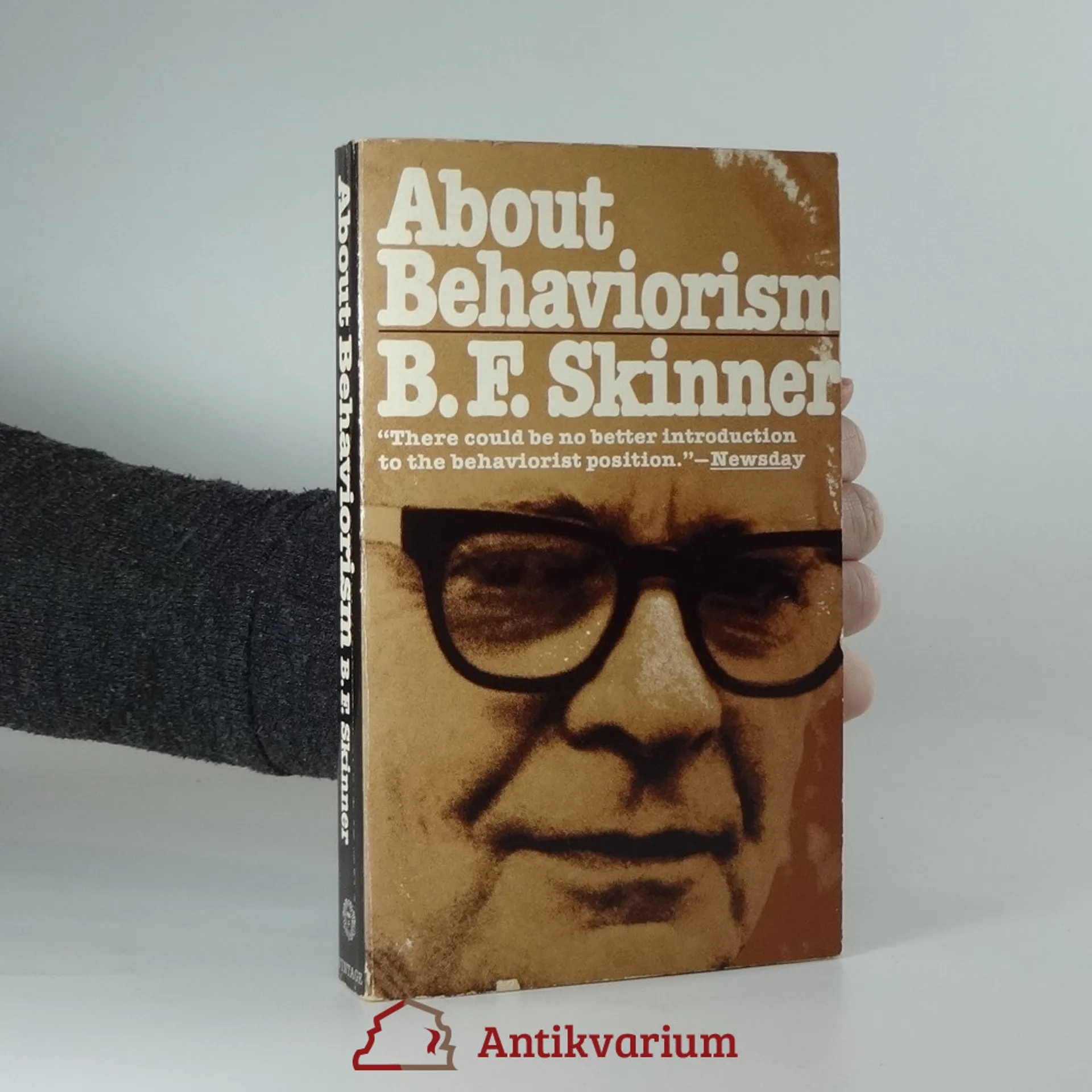





Nauka i zachowanie człowieka to kluczowa publikacja B.F. Skinnera, w której autor w przekonujący sposób przedstawia naukowe podejście do analizy ludzkiego zachowania. Skinner argumentuje, że możliwe jest opisywanie, wyjaśnianie, przewidywanie i kontrolowanie zachowań na podstawie wyników badań. Szczegółowo omawia czynniki wpływające na ludzkie zachowanie oraz analizuje specyficzne zdolności, takie jak samokontrola, myślenie czy poczucie ja. W kolejnych rozdziałach podejmuje temat zachowań społecznych oraz złożonych kwestii, takich jak rząd, prawo, religia, psychoterapia, kontrola ekonomiczna i edukacja. Książka kończy się refleksją na temat możliwości kontrolowania ludzkiego zachowania z perspektywy kulturowej. Skinner dowodzi, że nauka powinna być fundamentem praktycznych działań, a zachowanie można kształtować i modyfikować, korzystając z metod opartych na badaniach eksperymentalnych. Publikacja ta pozostaje aktualna, a jej wznawianie świadczy o jej znaczeniu. Autor podkreśla, że kluczowe jest zrozumienie natury człowieka na wysokim poziomie, co może być naszą jedyną nadzieją na skuteczne zastosowanie nauki w codziennym życiu.
B. F. Skinner Reihenfolge der Bücher (Chronologisch)
B. F. Skinner war eine Schlüsselfigur der Psychologie des 20. Jahrhunderts, die unser Verständnis menschlichen Verhaltens maßgeblich prägte. Er ist bekannt für sein Konzept des radikalen Behaviorismus, das Verhalten als Ergebnis von Umweltinteraktion und Verstärkung untersucht. Skinners Einfluss reicht weit über die akademische Welt hinaus, seine Ideen beeinflussen Bildung, Therapie und sogar die Gestaltung von Gesellschaftssystemen. Sein Ansatz betont beobachtbares Verhalten und dessen Kontrolle und bietet Lesern eine einzigartige Perspektive auf die Mechanismen, die unser Handeln bestimmen.


Verbal behavior
- 492 Seiten
- 18 Lesestunden
2015 Reprint of 1957 Edition. Full facsimile of the original edition. Not reproduced with Optical Recognition Software. The significance of this work was grasped immediately. Osgood wrote that "Verbal Behavior is certainly one of the two or three most significant contributions to this field in our time." (Osgood, 1958, p. 212). Morris wrote that "Skinner is both elegant and admirable (Morris, 1958, p. 213.) Both predicted a promising future for the book and such did turn out to be the case. Over more than half a century after its initial publication in 1957, "Verbal Behavior" has remained in demand and continues to be relevant. The documented efficacy of Skinner's practices, especially with autism, has assured its relevance. His functional analysis of language continues to inform contemporary research in the field of linguistics. Contents: A functional analysis of verbal behavior -- General problems -- The mand -- Verbal behavior under the control of verbal stimuli -- The tact -- Special conditions affecting stimulus control -- The audience -- The verbal operant as a unit of analysis -- Multiple causation -- Supplementary stimulation -- New combinations of fragmentary responses -- The autoclitic -- Grammar and syntax as autoclitic processes -- Composition and its effects -- Self-editing -- Special conditions of self-editing -- Self-strengthening of verbal behavior -- Logical and scientific verbal behavior -- Thinking.

Poza wolnością i godnością
- 235 Seiten
- 9 Lesestunden
Wissenschaft und menschliches Verhalten
- 427 Seiten
- 15 Lesestunden
Beyond Freedom and Dignity
- 225 Seiten
- 8 Lesestunden
In this landmark work, Skinner presents his definitive views on humans and society, asserting that world problems can only be solved by effectively addressing behavior. He argues that traditional concepts of freedom and dignity, while historically significant in fighting tyranny, now hinder progress by defending a notion of the autonomous individual. This defense perpetuates punishment and obstructs the development of more effective cultural practices. Drawing on his pioneering experimental analyses of behavior, Skinner dismisses traditional explanations rooted in mental states, advocating instead for understanding behavior through the interaction of genetic endowment and personal history. He contends that rather than viewing freedom and dignity as inherent personal attributes, we should focus on the physical and social environments that shape individuals. To achieve the traditional goals of freedom and dignity, it is the environment that must be transformed. This work challenges us to reconsider accepted ideals and explore a radically behaviorist approach to human issues, one that may seem at odds with these ideals but envisions a world where humanity can reach its fullest potential. Skinner, a prominent psychologist, earned his PhD from Harvard and had a distinguished career, returning there to teach until his retirement.
Walden Two
- 352 Seiten
- 13 Lesestunden
A Utopian community organized around behaviorist principles offers provocative alternatives to a society lacking direction.