Gratis Versand in ganz Österreich
Bookbot

Angelos Chaniotis

    8. November 1959

    Angelos Chaniotis ist Professor für Alte Geschichte und Klassische Philologie am Institute for Advanced Study in Princeton. Seine Arbeit konzentriert sich auf ein tieferes Verständnis der antiken Welt.

    Emotionen und Fiktionen
    Die Verträge zwischen kretischen Poleis in der hellenistischen Zeit
    Das antike Kreta
    Die Öffnung der Welt
    Historie und Historiker in den griechischen Inschriften
    Die Öffnung der Welt
    • 2023

      Die Emotionsgeschichte hat sich als faszinierendes Fach in der modernen Geschichtswissenschaft etabliert. Angelos Chaniotis, ein renommierter Althistoriker, untersucht in seiner neuen Arbeit die Bedeutung von Emotionen in der griechischen Antike. Er zeigt, dass Gefühle wie Liebe, Hoffnung, Angst, Zorn, Fürsorge, Mitgefühl und Ekel seit jeher Gemeinschaften geprägt haben und bereits damals zur Beeinflussung politischer Verhältnisse genutzt wurden. Ein Beispiel ist die Reaktion der Spartaner nach der Niederlage in Leuktra im Jahr 371 v. Chr., als die Ephoren den Witwen befahlen, ihre Trauer still zu ertragen, während die Angehörigen der Gefallenen am nächsten Tag mit strahlenden Gesichtern umhergingen. Chaniotis verdeutlicht, wie Emotionen zur Schaffung von Erzählungen beitrugen, die für den sozialen Zusammenhalt entscheidend waren. Das wachsende Interesse an Emotionen erstreckt sich über alle Geisteswissenschaften bis hin zur Alten Geschichte und Archäologie. Indem wir die Rolle sinnlicher und emotionaler Impulse in unserem Handeln anerkennen, eröffnet sich ein neues Analysefeld, das durch zahlreiche aktuelle Studien gestützt wird. Chaniotis, der am Institute of Advanced Study in Princeton forscht, hat die neuesten Erkenntnisse in seiner Arbeit zusammengetragen und lädt ein, seine brillante Analyse zu entdecken.

      Emotionen und Fiktionen
    • 2022

      Die Öffnung der Welt

      Eine Globalgeschichte des Hellenismus

      5,0(1)Abgeben

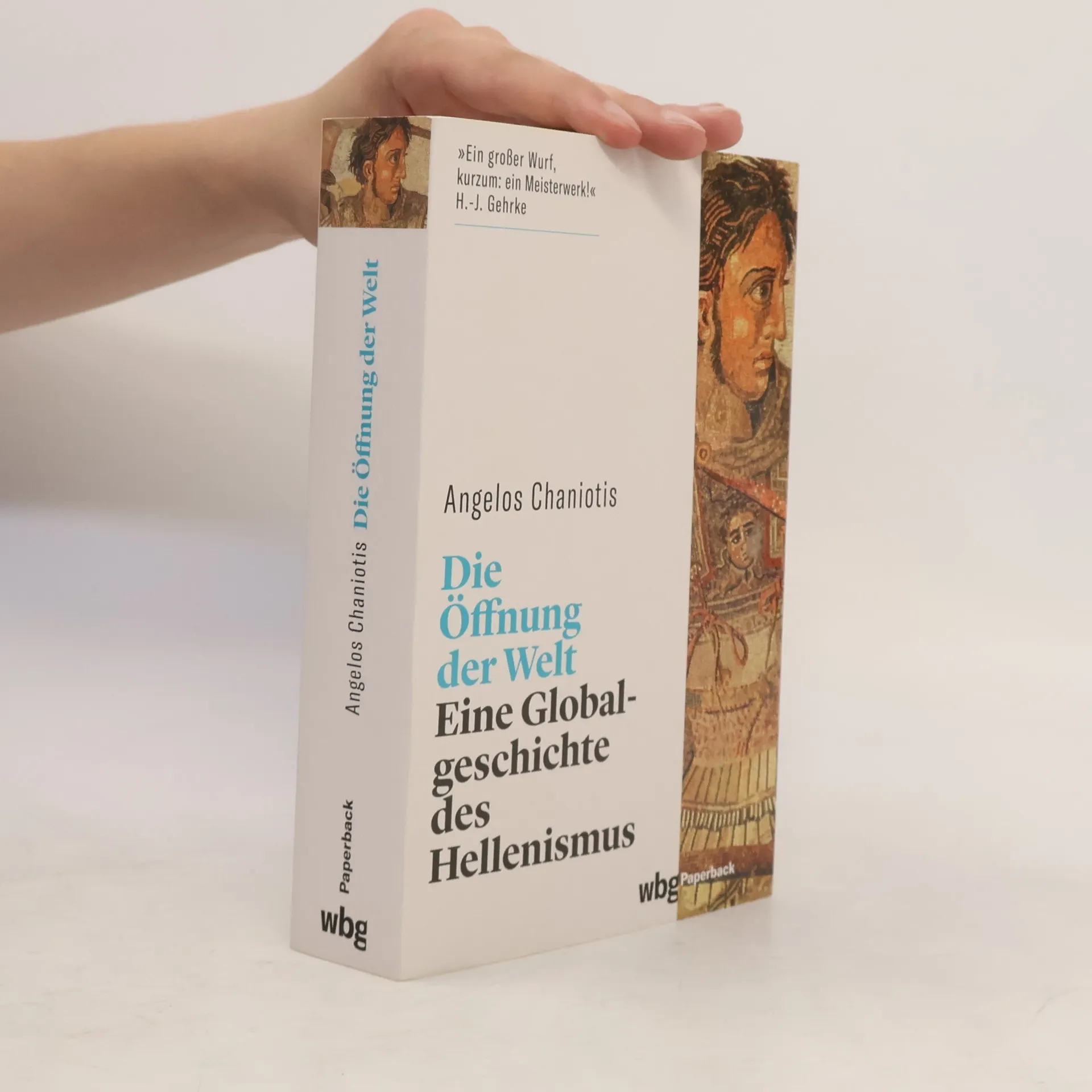
      Alexander der Große öffnete die Grenzen nach Osten, bis ans Ende der Welt, bis nach Indien. Mit ihm beginnt die Vernetzung großer Teile Europas, Asiens und Nordafrikas und das lange Zeitalter des Hellenismus. Bis in das Rom Kaiser Hadrians im 2. Jh. n.Chr. verfolgt Angelos Chaniotis die Spuren des kulturellen Austauschs, der Europa bis heute prägt.

      Die Öffnung der Welt
    • 2019

      Die Kultur der Griechen prägte das Römische Reich und Europa nachhaltig. Alexander der Große öffnete mit seinen Eroberungen die Grenzen nach Osten bis Indien und leitete damit das Hellenismus-Zeitalter sowie die Vernetzung großer Teile Europas, Asiens und Nordafrikas ein. Der Historiker Angelos Chaniotis erzählt die Geschichte des hellenistischen Zeitalters und der frühen römischen Kaiserzeit, die oft getrennt betrachtet werden. Er zeigt, wie die griechische Kultur die folgenden Epochen bis weit über die Zeit der römischen Kaiser hinaus beeinflusste. Chaniotis bricht mit der traditionellen Epochengliederung und bietet einen kenntnisreichen Überblick über Kaiser, Provinzen, Könige, Stadtstaaten, Bürger und Religionen. Er zeichnet ein faszinierendes Bild eines kosmopolitischen Zeitalters von Alexander bis Kaiser Hadrian, das die europäische Geschichte maßgeblich prägte. Die Eroberungen Alexanders schufen zwar kein dauerhaftes Weltreich, legten aber die Grundlagen für ein umfassendes politisches, wirtschaftliches und kulturelles Netzwerk. Merkmale dieser Zeit sind die Entstehung von Metropolen, Weltbürgertum, technologische Innovationen, neue Religionen wie das Christentum sowie soziale Konflikte und Kriege. Die Themen Globalisierung, Mobilität und Multikulturalität, die die alten Griechen beschäftigten, sind auch heute von großer Relevanz. Dieses Sachbuch bietet eine ausgezeichnete Möglichkeit, die Anfänge der Globalisierung i

      Die Öffnung der Welt
    • 2018

      Age of Conquests

      • 480 Seiten
      • 17 Lesestunden
      4,1(15)Abgeben

      Subject: The ancient world that Alexander the Great transformed in his lifetime was transformed once more by his death. The imperial dynasties of his successors incorporated and reorganized the fallen Persian empire, creating a new land empire stretching from the shores of the Mediterranean to as far east as Bactria. In old Greece a fragile balance of power was continually disturbed by wars. Then, from the late third century, the military and diplomatic power of Rome successively defeated and dismantled every one of the post-Alexandrian political structures. The Hellenistic period (c. 323-30 BC) was then one of fragmentation, violent antagonism between large states, and struggles by small polities to retain an illusion of independence. Yet it was also a period of growth, prosperity, and intellectual achievement. A vast network spread of trade, influence and cultural contact, from Italy to Afghanistan and from Russia to Ethiopia, enriching and enlivening centres of wealth, power and intellectual ferment. From Alexander the Great's early days building an empire, via wars with Rome, rampaging pirates, Cleopatra's death and the Jewish diaspora, right up to the death of Hadrian, Chaniotis examines the social structures, economic trends, political upheaval and technological progress of an era that spans five centuries and where, perhaps, modernity began

      Age of Conquests
    • 2013

      Unveiling emotions

      • 387 Seiten
      • 14 Lesestunden

      The study of emotions has emerged as one of the most dynamic topics of research in Ancient History, Classics, and Archaeology. Studying a variety of sources (historiography, Greek and Latin poetry and oratory, the New Testament, inscriptions, medical authors, Greek vase-painting and sculpture, skeletal remains) and using different methodological approaches, the authors of this volume address a selection of questions related with the study of emotions in Greek and Roman culture: the representation of emotion in literature and art; the arousal of emotion through texts and images; the expression of emotion through metaphor and metonymy; the display of emotions in rituals; intellectual discourse concerning specific emotions (pride, grief, fear); emotional communities; and the importance of emotions in public life, value systems, and social relations.

      Unveiling emotions
    • 2011

      This volume assembles approaches to rituals in several cultures of the Ancient Mediterranean (Egyptian, Punic, Greek, Italian, Roman) from the second millennium BCE to Late Antiquity. 'Ritual dynamics' is the common theme of the fourteen chapters. Rituals are understood as complex socio-cultural constructs that are connected with tensions: tensions within the cult community; tensions between norm and performance, expectation and reality, traditional significance and re-interpretation, stereotype and variability. Exploiting a variety of sources (literary sources, inscriptions, iconography), the authors approach the questions of how such tensions influence the performance and impact of rituals, how they generate change, how ritual agency is connected with gender and social standing, how rituals trigger particular emotions and create emotional communities, and how the literary and visual representations of rituals reflect their cultural relevance.

      Ritual dynamics in the ancient Mediterranean
    • 2010

      Held in Heidelberg from September 29 to October 2, 2008, the international conference “Ritual Dynamics and the Science of Ritual,” organized by the collaborative research center SFB 619 “Ritual Dynamics,” gathered leading experts and over 600 participants to reassess traditional studies on rituals in light of recent research. The findings are presented in five volumes, marking a significant advancement for future transcultural, interdisciplinary, and multi-methodical research on rituals. The conference highlighted a wide range of disciplines and diverse methods, covering various topics across cultural geography and spanning from antiquity to the present. The proceedings illustrate the broad definition of rituals and examine the conditions, modes, and functions of ritual actions in different cultures, both past and present. A key conclusion is that no single model for rituals exists, emphasizing the importance of interdisciplinary collaboration in ritual research, along with the development of innovative research methods. The five volumes include: Volume I: Grammars and Morphologies of Ritual Practices in Asia; Volume II: Body, Performance, Agency, and Experience; Volume III: State, Power, and Violence; Volume IV: Reflexivity, Media, and Visuality; Volume V: Transfer and Spaces. A set price for all five volumes is available (978-3-447-06206-0).

      Body, performance, agency, and experience
    • 2004

      War in the Hellenistic World

      • 336 Seiten
      • 12 Lesestunden
      3,8(22)Abgeben

      Exploiting the abundant primary sources available, this book examines the diverse ways in which war shaped the Hellenistic world. An overview of war and society in the Hellenistic world. Highlights the interdependence of warfare and social phenomena.

      War in the Hellenistic World
    • 2004

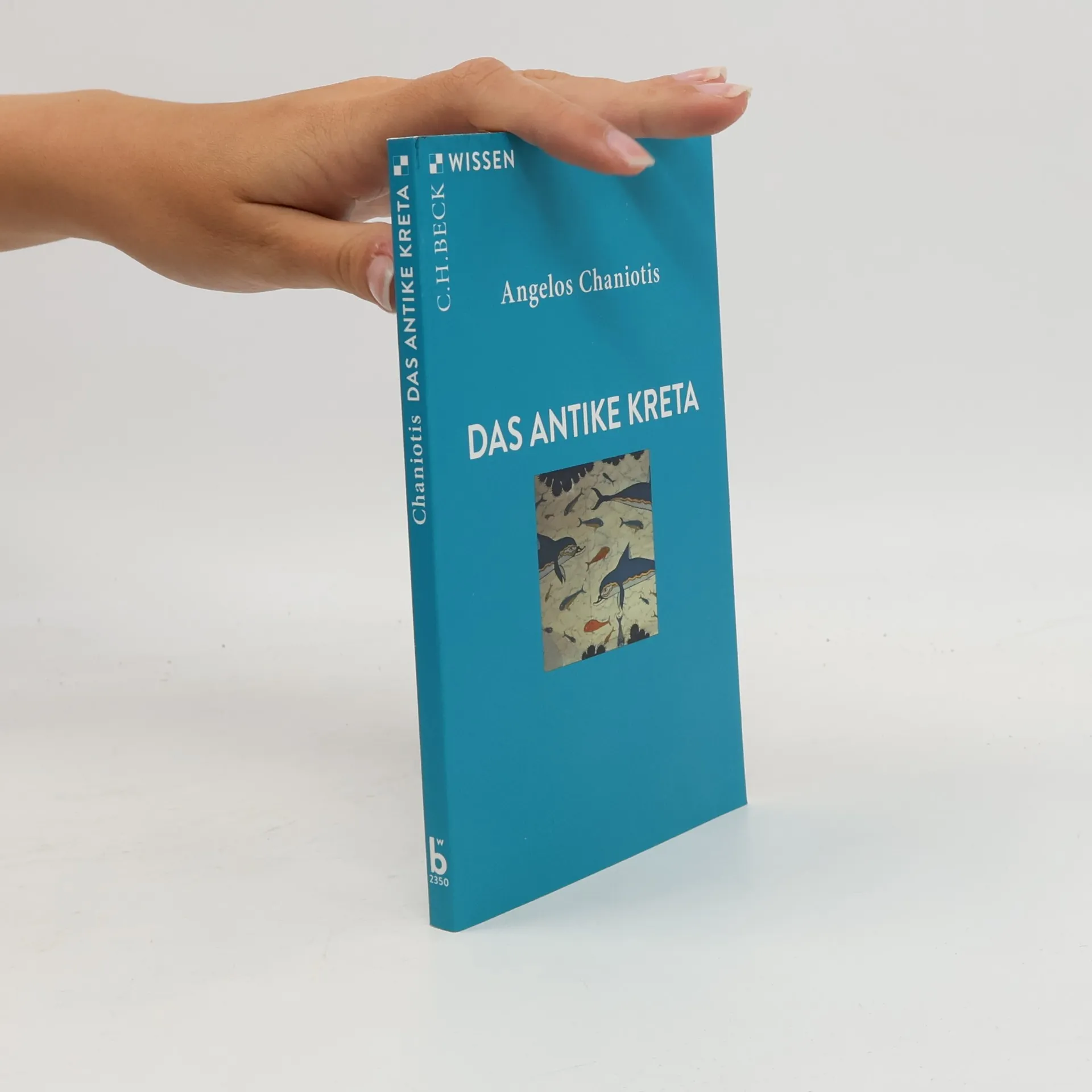
      Angelos Chaniotis bietet eine gut lesbare Einführung in Geschichte und Kultur Kretas vom 3.Jahrtausendv. Chr. bis zur Spätantike. Er erläutert die Grundzüge der minoischen Hochkultur, beschreibt die Einwanderung der griechischen Stämme, die orientalischen Einflüsse auf die Entwicklung Kretas sowie Staat und Gesellschaft auf Kreta in archaischer und klassischer Zeit. Die Darstellung Kretas im Hellenismus als Pirateninsel und die Zeit der Insel unter römischer Verwaltung beschließen den Band.

      Das antike Kreta
    • 2002

      The 12 essays, written by leading specialists in the fields of social and military history, explore the direct and indirect influence exercised by the armed forces on government, society, and politics in Assyria, India, Persia, Greece, and in the Roman Empire. Central themes of the volume are the role played by the army in political takeovers, in maintening polical power, in social hierarchy and mobility, and in the domination and control of occupied territories.

      Army and power in the ancient world