


Parameter
- 256 Seiten
- 9 Lesestunden
Mehr zum Buch
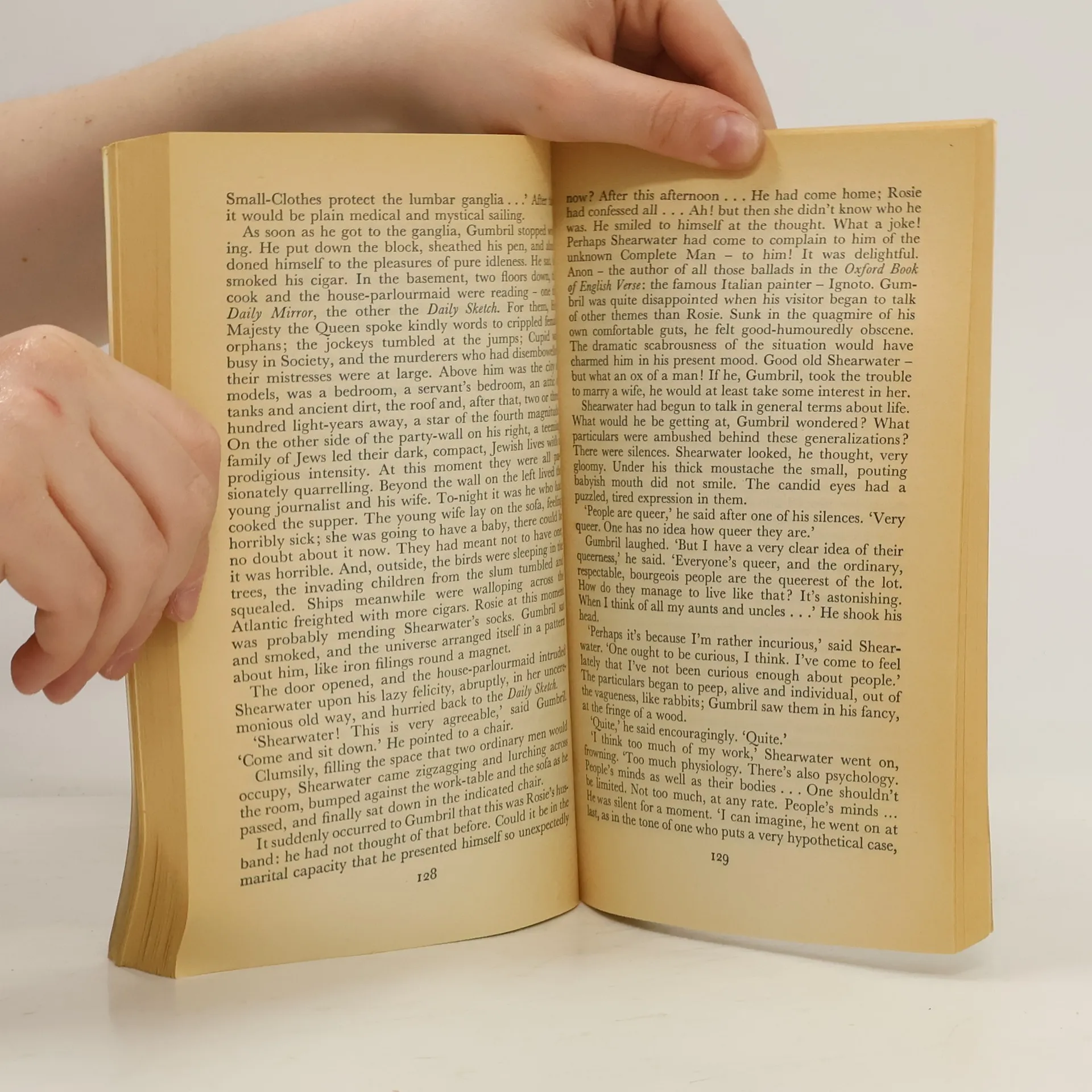
London life just after World War I, devoid of values and moving headlong into chaos at breakneck speed - Aldous Huxley's Antic Hay, like Hemingway's The Sun Also Rises, portrays a world of lost souls madly pursuing both pleasure and meaning. Fake artists, third-rate poets, pompous critics, pseudo-scientists, con-men, bewildered romantics, cock-eyed futurists - all inhabit this world spinning out of control, as wildly comic as it is disturbingly accurate. In a style that ranges from the lyrical to the absurd, and with characters whose identities shift and change as often as their names and appearances, Huxley has here invented a novel that bristles with life and energy, what the New York Times called "a delirium of sense enjoyment!"



Buchkauf
Antic Hay, Aldous Huxley
- Sprache

- Erscheinungsdatum
- 1980
- product-detail.submit-box.info.binding
- (Paperback)
Hier könnte deine Bewertung stehen.
- Titel
- Antic Hay
- Sprache
- Englisch
- Autor*innen
- Aldous Huxley
- Verlag
- Granada
- Erscheinungsdatum
- 1980
- Einband
- Paperback
- Seitenzahl
- 256
- ISBN10
- 0586044337
- ISBN13
- 9780586044339
- Reihe
- Schlagwörter
- Belletristik, Historisches Thema, Humor, Philosophisches Thema, Klassiker, 20. Jahrhundert, Britische Literatur
- Bewertung
- 3,25 von 5 Sternen
- Beschreibung
- London life just after World War I, devoid of values and moving headlong into chaos at breakneck speed - Aldous Huxley's Antic Hay, like Hemingway's The Sun Also Rises, portrays a world of lost souls madly pursuing both pleasure and meaning. Fake artists, third-rate poets, pompous critics, pseudo-scientists, con-men, bewildered romantics, cock-eyed futurists - all inhabit this world spinning out of control, as wildly comic as it is disturbingly accurate. In a style that ranges from the lyrical to the absurd, and with characters whose identities shift and change as often as their names and appearances, Huxley has here invented a novel that bristles with life and energy, what the New York Times called "a delirium of sense enjoyment!"