

The first comprehensive history of the decisive Fall Campaign of 1813, which determined control of Central Europe following Napoleon's catastrophic defeat in Russia the previous year. Using German, French, British, Russian, Austrian and Swedish sources, Michael V. Leggiere provides a panoramic history which covers the full sweep of the struggle in Germany. He shows how Prussia, the weakest of the Great Powers, led the struggle against Napoleon and his empire. By reconstructing the principal campaigns and operations in Germany, the book reveals how the defeat of Napoleon in Germany was made possible by Prussian victories. In particular, it features detailed analysis of the strategy, military operations, and battles in Germany that culminated with the epic four-day Battle of Nations at Leipzig and Napoleon's retreat to France. This study not only highlights the breakdown of Napoleon's strategy in 1813, but constitutes a fascinating study in coalition warfare, international relations, and civil-military relations.
Michael V. Leggiere Reihenfolge der Bücher (Chronologisch)
Michael V. Leggiere ist ein Geschichtsprofessor mit Spezialisierung auf Militärgeschichte. Seine Arbeit befasst sich eingehend mit den tiefgreifenden strategischen und politischen Dimensionen der Kriegsführung, untersucht die Entwicklung der Kriegführung im Laufe der Zeit und analysiert die Schlüsselfaktoren, die zum Sieg oder zur Niederlage beitragen. Durch seine Forschung beleuchtet er die Komplexität militärischer Entscheidungsfindung und deren Einfluss auf historische Ergebnisse.


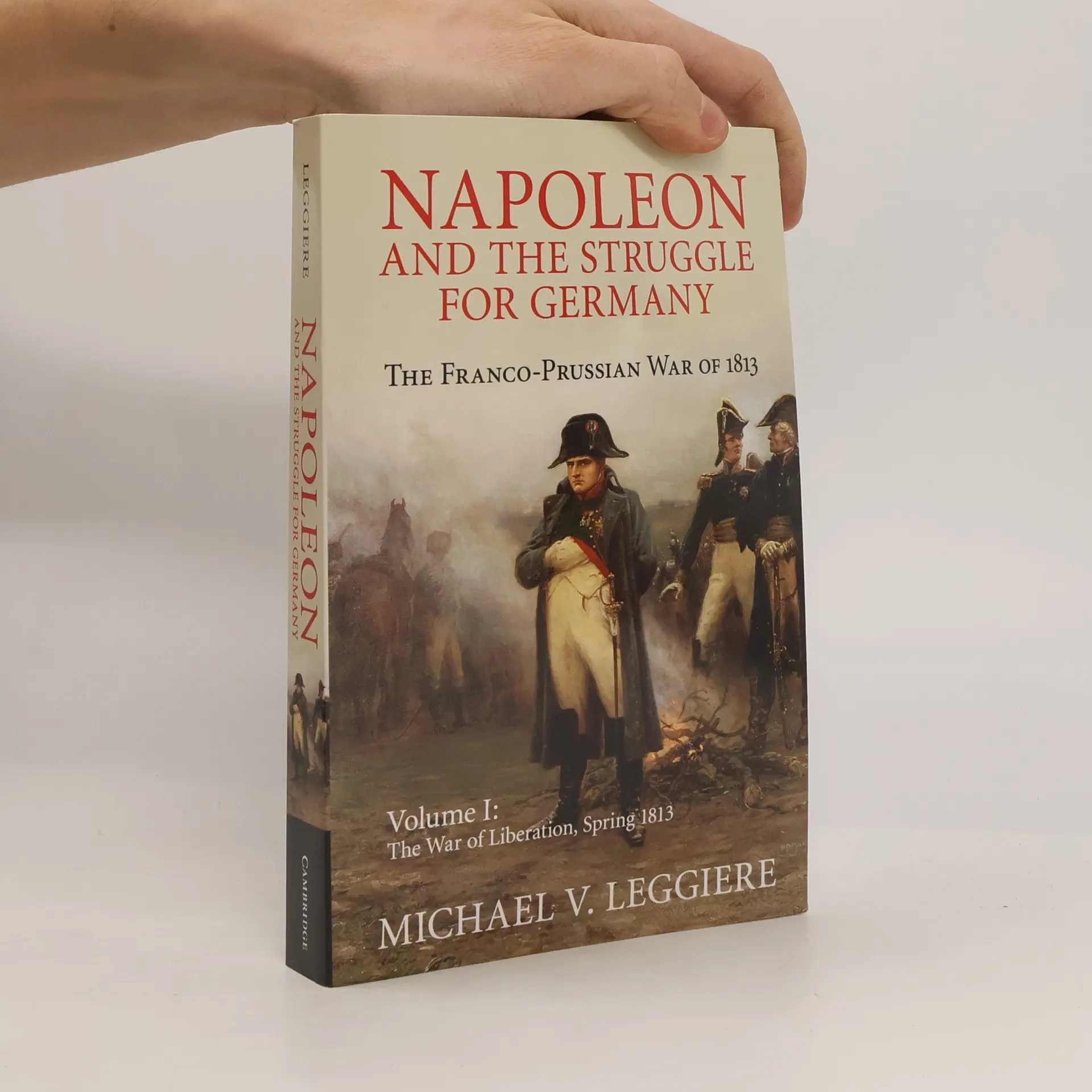
Cambridge Military Histories - 1: Napoleon and the Struggle for Germany
The Franco-Prussian War of 1813: The War of Liberation, Spring 1813
- 502 Seiten
- 18 Lesestunden
This is the first comprehensive history of the campaign that determined control of Germany following Napoleon's catastrophic defeat in Russia. Michael V. Leggiere reveals how, in the spring of 1813, Prussia, the weakest of the great powers, led the struggle against Napoleon as a war of national liberation. Using German, French, British, Russian, Austrian and Swedish sources, he provides a panoramic history that covers the full sweep of the battle for Germany from the mobilization of the belligerents, strategy, and operations to coalition warfare, diplomacy, and civil-military relations. He shows how Russian war weariness conflicted with Prussian impetuosity, resulting in the crisis that almost ended the Sixth Coalition in early June. In a single campaign, Napoleon drove the Russo-Prussian army from the banks of the Saale to the banks of the Oder. The Russo-Prussian alliance was perilously close to imploding, only to be saved at the eleventh-hour by an armistice.
This book provides the first complete English-language study of the invasion of France along a front that extended from Holland to Switzerland.