

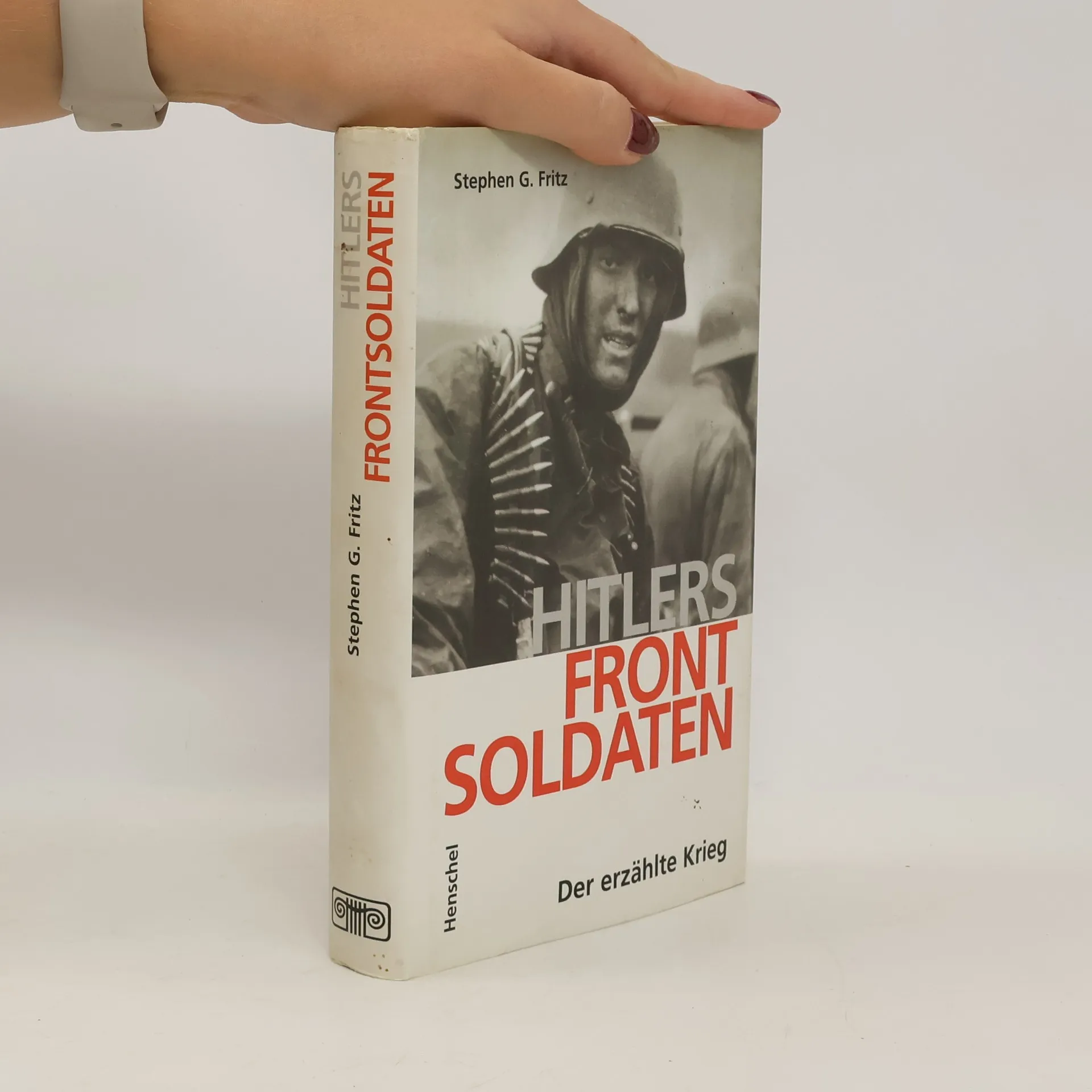
Auch Jahrzehnte nach Kriegsende sind Fragen nach den Menschen und ihrem Beteiligtsein, nach dem Verhältnis von Soldat und Führung, Schuld und Betroffensein hochaktuell. Der Autor stellt die reale Situation des Durchschnittssoldaten im Zweiten Weltkrieg anhand von Briefen, Tagebüchern, Erinnerungen und mündlichen Berichten dar
Stephen G. Fritz Bücher

Ostkrieg
- 688 Seiten
- 25 Lesestunden
On June 22, 1941, Germany launched the greatest land assault in history on the Soviet Union, an attack that Adolf Hitler deemed crucial to ensure German economic and political survival. As the key theater of the war for the Germans, the eastern front consumed enormous levels of resources and accounted for 75 percent of all German casualties. Despite the significance of this campaign to Germany and to the war as a whole, few English-language publications of the last thirty-five years have addressed these pivotal events. In Ostkrieg: Hitler's War of Extermination in the East, Stephen G. Fritz bridges the gap in scholarship by incorporating historical research from the last several decades into an accessible, comprehensive, and coherent narrative. His analysis of the Russo-German War from a German perspective covers all aspects of the eastern front, demonstrating the interrelation of military events, economic policy, resource exploitation, and racial policy that first motivated the invasion. This in-depth account challenges accepted notions about World War II and promotes greater understanding of a topic that has been neglected by historians.