

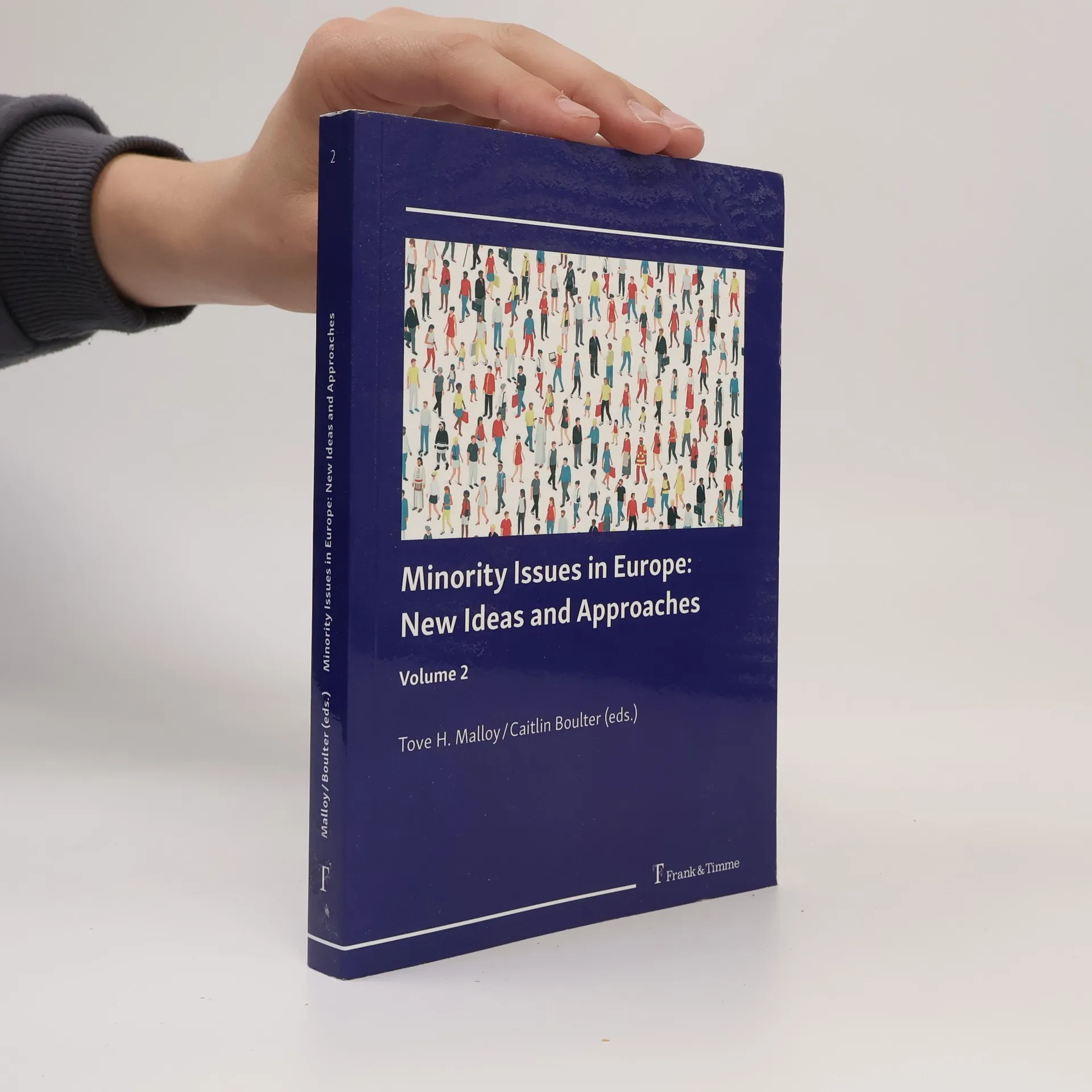
As the political landscape of Europe transforms, so too does the field of minority issues. New areas of focus encompass topics as varied as populism and media representation, anthropological insights and intersectional feminist considerations, education in human rights and participatory mechanisms, and the changing categories and roles of minority communities as important actors in a variety of forums. Volume 2 of „Minority Issues in Europe“ reflects a growing range of disciplinary approaches to the field, and a fresh outlook on the issues facing Europe’s diverse communities. Bringing together research from experienced experts and young researchers, this book aims to equip students with critical and considered insights to some of the most pressing questions in minority studies today.
Tove H. Malloy Bücher

Minorities have been part of European history and politics since the middle of the 16th Century, often seen as obstacles to state-building and later as a threat to nation-building. Traditional minorities have had to fight their own way to be able to remain in their homelands, while new arrivals have been met with rejection and were expected to return home. Minorities are still seen as a threat to peace and security and mostly as outsiders. In the early 21st Century of inter-connected societies, minorities are more than ever an issue often seen as a threat to social cohesion. This book provides the advanced student with a multi-disciplinary, informed perspective on minority history and politics as well as social and cultural issues related to minority identity and minority existence in Europe.