



Gratis Versand ab € 14,99. Mehr Infos.
Bookbot

Philip Jenkins

    3. April 1952

    John Philip Jenkins hat sich als bedeutender Kommentator religiöser Angelegenheiten etabliert und sich von seinem ursprünglichen Fokus auf die frühe britische Neuzeit auf eine breite Palette zeitgenössischer Themen verlagert. Seine Arbeit zeichnet sich durch scharfe Einblicke sowohl in die Vergangenheit als auch in die Gegenwart der Religion aus, insbesondere im globalen Kontext. Jenkins ist für seinen prägnanten Schreibstil bekannt, der oft als klar und zurückhaltend beschrieben wird und es den Lesern ermöglicht, sich tiefgehend mit komplexen Themen auseinanderzusetzen. Durch umfangreiche Forschung und die Fähigkeit, komplexe Informationen zugänglich zu präsentieren, ist er zu einer führenden Stimme in der Religionswissenschaft geworden.

    Next Christendom
    Laying Down the Sword
    He Will Save You from the Deadly Pestilence
    The Great and Holy War
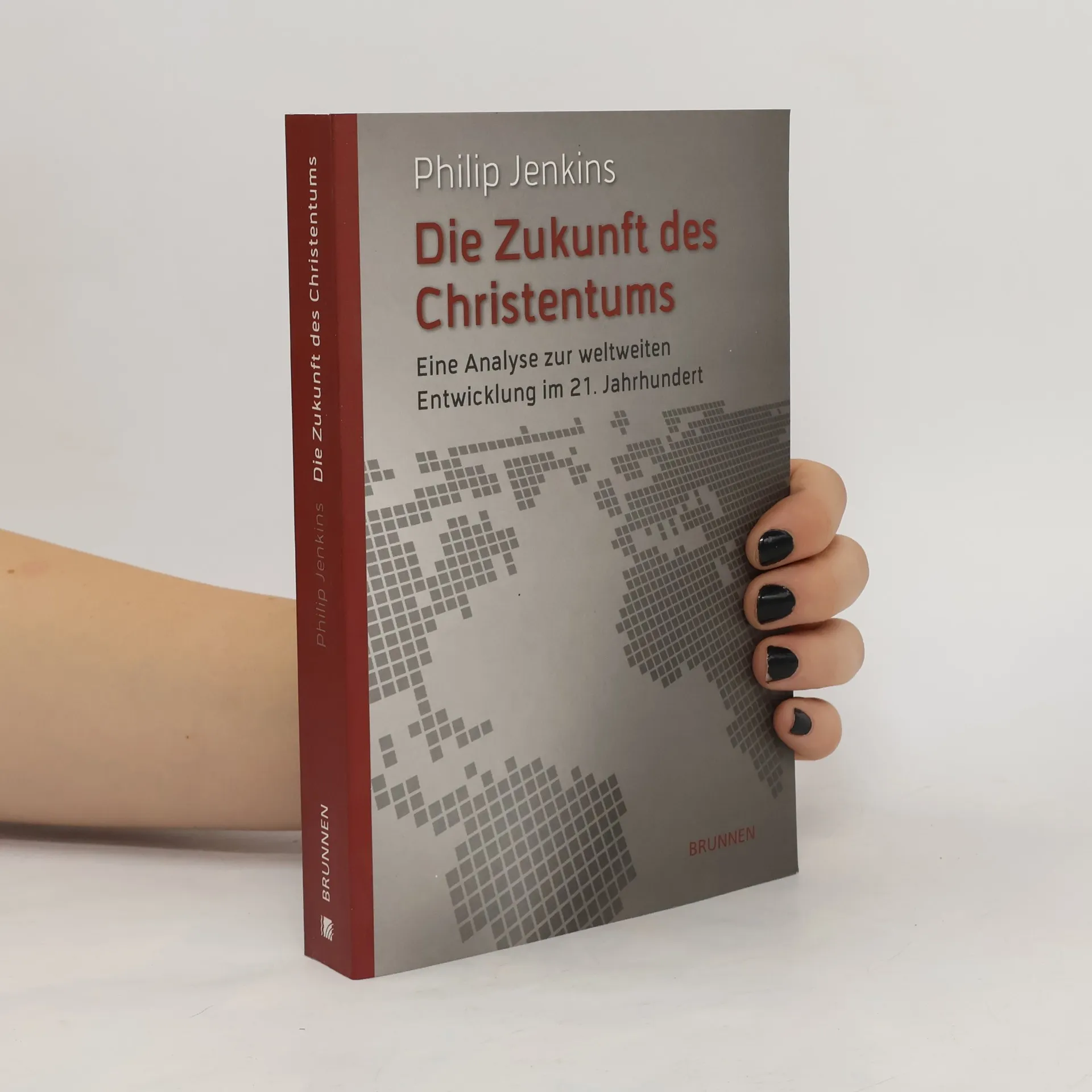
    Die Zukunft des Christentums. Eine Analyse zur weltweiten Entwicklung im 21. Jahrhundert
    Gottes Kontinent?
    • In He Will Save You From the Deadly Pestilence, acclaimed religious scholar Philip Jenkins illustrates how the evolving uses of Psalm 91 allow us to map developing ideas about religion and the supernatural, theology and politics, medicine and mysticism.

      He Will Save You from the Deadly Pestilence2023
      4,0
    • Laying Down the Sword

      • 320 Seiten
      • 12 Lesestunden

      Exploring the complex themes of violence and sacrifice, this book offers a fresh perspective on the instances of bloodshed found in biblical texts. It delves into the historical and cultural contexts that shaped these narratives, aiming to uncover deeper meanings behind the violence. The author encourages readers to reconsider traditional interpretations and to engage with the moral and ethical implications of these stories, ultimately seeking a more compassionate understanding of the biblical message.

      Laying Down the Sword2021
      3,7
    • This textbook provides a dynamic and concise overview of the Cold War. Offering balanced coverage of the whole era, it takes a firmly global approach, showing how at various times the focus of East-West rivalry shifted to new and surprising venues, from Laos to Katanga, from Nicaragua to Angola. Throughout, Jenkins emphasises intelligence, technology and religion, as well as highlighting themes that are relevant to the present day. A rich array of popular culture examples is used to demonstrate how the crisis was understood and perceived by mainstream audiences across the world, and the book includes three ‘snapshot’ chapters, which offer an overview of the state of play at pivotal moments in the conflict – 1946, 1968 and 1980 – in order to illuminate the inter-relationship between apparently discrete situations. This is an essential introduction for students studying Cold War, twentieth century or Global history.

      A Global History of the Cold War, 1945-19912021
    • "[The author] draws out the complex relationship between religion and climate change. He shows that the religious movements and ideas that emerge from climate shocks often last for many decades, and become a familiar part of the religious landscape, even though their origins in particular moments of crisis may be increasingly consigned to remote memory" -- From jacket flap.

      Climate, Catastrophe, and Faith2021
      3,5
    • The Great and Holy War

      How World War I Became a Religious Crusade

      • 448 Seiten
      • 16 Lesestunden

      Exploring the intersection of religion and warfare, this book delves into how faith influenced the First World War and contributed to its duration. Historian Philip Jenkins examines this era as a modern crusade, highlighting its profound impact on Western civilization and the lasting repercussions that followed throughout the twentieth century. This insightful analysis sheds light on the often-overlooked religious motivations and implications surrounding one of history's most significant conflicts.

      The Great and Holy War2020
      4,2
    • Gottes Kontinent?

      • 399 Seiten
      • 14 Lesestunden

      Was hält die Zukunft für das Christentum in Europa bereit? Viele prognostizieren seinen Zusammenbruch unter dem Druck der Globalisierung, des westlichen Säkularismus und eines Anstiegs muslimischer Einwanderer, was die Vorstellung nährt, Europa könnte zu "Eurabia" werden. Philip Jenkins stellt diese Behauptungen in Frage und bietet eine differenzierte Sicht auf die religiöse Landschaft Europas. Er erkennt bestehende Spannungen an, argumentiert jedoch, dass die Erzählung von einem muslimisch dominierten Europa auf Mythen basiert, wie der Vorstellung, Muslime seien die einzigen neuen Einwanderer. Tatsächlich kommen auch Christen aus Afrika, Asien und Osteuropa in westliche Länder und bereichern das europäische Christentum mit lebendigen Glaubensüberzeugungen. Jenkins erkennt an, dass sowohl das Christentum als auch der Islam in einer säkularen Kultur vor erheblichen Herausforderungen stehen, doch anstatt zu schwinden, passen sich beide Glaubensrichtungen an. Obwohl die Kirchenbesuche zurückgehen, zeigen Zeichen anhaltender christlicher Loyalität, wie die Beliebtheit von Pilgerreisen, die Millionen anziehen – mehr als in früheren "Zeitaltern des Glaubens". Jenkins bietet eine hoffnungsvolle Perspektive auf die Widerstandsfähigkeit und Transformation des europäischen Christentums im Angesicht des Wandels.

      Gottes Kontinent?2007
      3,8
    • Next Christendom

      • 346 Seiten
      • 13 Lesestunden

      This new and substantially expanded edition of Philip Jenkins's influential book The Next Christendom tracks the remarkable expansion of Christianity in the global South, in Africa, Asia and Latin America, and the implications of that shift in numbers and influence away from the traditional Christian heartlands of Europe and North America.

      Next Christendom2007
      3,9
    • Philip Jenkins beleuchtet den Wandel des Christentums, das sich von Europa nach Afrika, Asien und Lateinamerika verlagert. Er prognostiziert das Ende des westlich geprägten Christentums und beschreibt, wie neue Zentren der Christenheit in Städten wie Kinshasa und Buenos Aires entstehen. Eine umfassende Analyse der globalen Entwicklungen im Glauben.

      Die Zukunft des Christentums. Eine Analyse zur weltweiten Entwicklung im 21. Jahrhundert2006