Steve Fuller ist eine Schlüsselfigur im Bereich der Sozialen Epistemologie und erforscht die komplexe Beziehung zwischen Wissen und Gesellschaft. Seine Arbeit befasst sich mit der Zukunft der Menschheit und untersucht mögliche Transformationen und die Entwicklung des menschlichen Fortschritts. Fuller untersucht, wie gesellschaftliche Strukturen und wissenschaftliche Fortschritte unser Weltverständnis und unser kollektives Schicksal prägen. Sein Ansatz zeichnet sich durch seine interdisziplinäre Natur und eine kritische Auseinandersetzung mit zeitgenössischen Entwicklungen aus.
A lively and engaging book that provides sharp and insightful overviews of some of the most important concepts and terms on the cultural and philosophical aspects of knowledge. An essential reference.
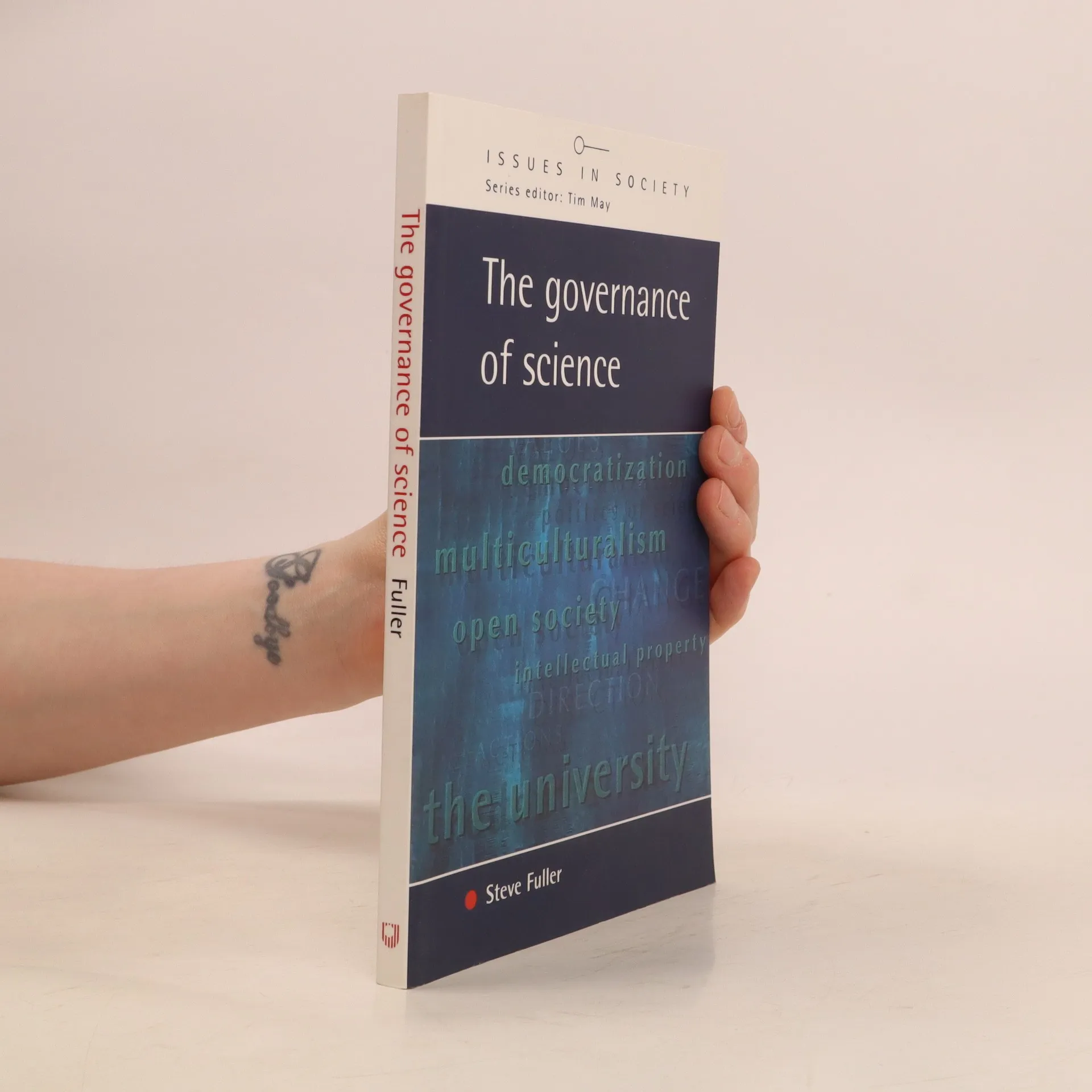
What does social and political theory have to say about the role of science in society? Do scientists and other professional enquirers have an unlimited 'right to be wrong'? What are the implications of capitalism and multiculturalism for the future of the university? This ground-breaking text offers a fresh perspective on the governance of science from the standpoint of social and political theory. Science has often been seen as the only institution that embodies the elusive democratic ideal of the 'open society'. Yet, science remains an elite activity that commands much more public trust than understanding, even though science has become increasingly entangled with larger political and economic issues. Fuller proceeds by rejecting liberal and communitarian ideologies of science, in favor of a 'republican' approach centred on 'the right to be wrong'. He shows how the recent scaling up of scientific activity has undermined the republican ideal. The centrepiece of the book, a social history of the struggle to render the university a 'republic of science' focuses on the potential challenges posed by multiculturalism and capitalism. Finally, drawing on the science policy of the US New Deal, Fuller proposes nothing short of a new social contract for 'secularizing' science.
Exploring the necessity of universities in modern society, this volume argues for a revival of Wilhelm von Humboldt's vision, which positioned universities as key institutions of Enlightenment. It highlights the challenges posed by contemporary views on academic disciplines and nation-states, while emphasizing the enduring relevance of Humboldt's ideals. The book examines the interconnected roles of research and teaching, advocating for a model where academics serve as exemplars of critical judgment and free expression. Its seven chapters delve into the historical and philosophical implications of this vision.
This work discusses whether Kuhn's The Structure of Scientific Revolutions was revolutionary. Steve Fuller argues that Kuhn held a profoundly conservative view of science and how one ought to study its history.
""One of the freshest books that I have read in a long time. It will shake you up. You will not always agree with Fuller, but he will force you to rethink some of your pet conceptions about how science works."" --Isis This is the book that launched the research program of social epistemology, which has fueled imaginations and provoked debates across many disciplines around the world. Its opening question remains as pressing as ever: How should knowledge production be organized? The second edition contains a substantial new introduction, in which Steve Fuller reflects on social epistemology's place in the history of analytic and continental epistemology and discusses the inspiration he has drawn from a wide variety of fields in the humanities and social sciences. It also includes a spirited attack on alternative philosophical groundings for social epistemology and a detailed response to the standard criticism that social epistemology has received from realist philosophers and natural scientists during the ""Science Wars."" In its new edition, the book remains a provocative contribution to the debate on the production, dissemination, and interpretation of knowledge in the sciences.
In this introduction to science Steve Fuller argues that if the various scientific disciplines share anything at all, it is more likely to be the way they strategically misinterpret their own history than any privileged access to the nature of reality.
Chomsky, Dawkins, Germaine Greer, Martin Amis . . . with regular TV appearances, newspaper columns and cultural commentary, intellectuals are indispensable characters of modern life. But what is an intellectual? What distinguishes them from philosophers, scientists, politicians or entrepreneurs? Why are they happy to be insulted as long as they are not ignored? As well as a history of the intellectual from Ancient Greece to post-9/11, Steve Fuller introduces exemplars from the past - Voltaire, Sartre, Norman Mailer and Bertrand Russell - alongside many living examples in this essential guide to intellectual life.