

What responsibility do the Manhattan Project scientists have for the atomic devastation of Hiroshima? Krupps scientists for the crematoriums at Auschwitz? Is there no way to revisit the ideals of science once devoted to creating a more reasonable and open society free from prejudices? Disturbing questions like these are at the heart of this sobering exploration of scientific and intellectual responsibility.
Raphael Sassower Bücher


The exploration of hypocrisy reveals its dual role as a protective mechanism and a means of fostering social bonds. By tracing its origins from Greek theater masks to Hebrew chameleons, Sassower critiques traditional views on hypocrisy, challenging the notion of a uniform mind and the connection between intention and behavior. He highlights the complexities of personal conduct and the situational nature of hypocrisy, suggesting that accusations among friends can enhance trust and community, while also addressing the limitations of conventional moral and political frameworks.
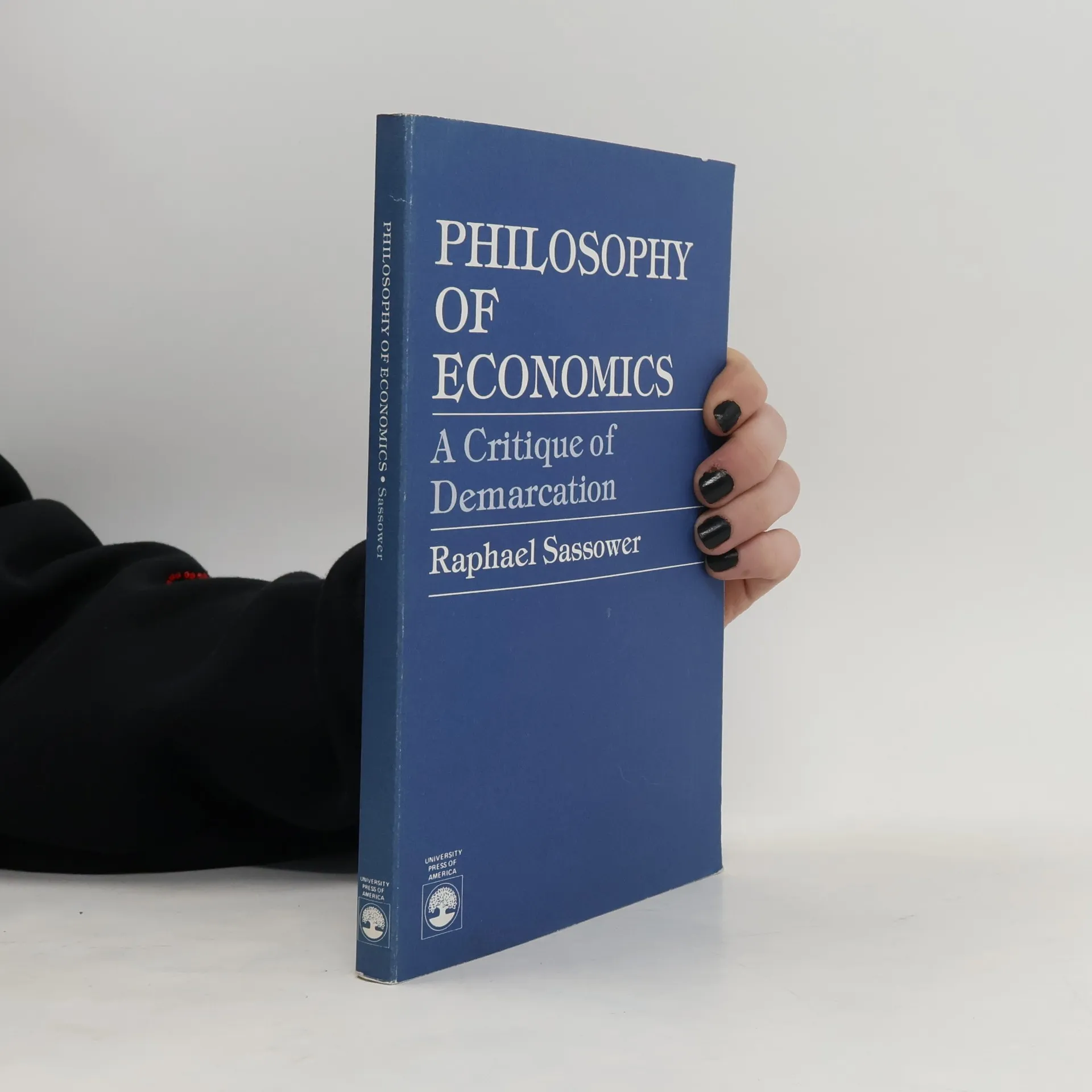
Utilizing the history of economic theory, this text provides a critical and philosophical survey of the traditional criteria of demarcating science from non-science as it applies to the field of political economy/economics. Also focuses on methods of qualification, model construction, predictive power of theories, graphical representation of theories, and the allegedly scientific psychological laws and principles which economic theory uses as assumptions.