

A highly detailed, illustrated history of the A-7 Corsair II and its service from the end of the Vietnam War through to Desert Storm. At the A-7 Corsair II's peak in the mid-1980s, some 30 US Navy squadrons flew various versions of the aircraft, including six Naval Air Reserve units, and many of these units saw action across the Middle East. By the time the jet saw combat in Operation Desert Storm (1991), there remained only two fleet squadrons--many fleet squadrons having either disestablished or transitioned to the F/A18 Hornet--but both of these units (VA-46 and VA-72) played a major role in the campaign to free Kuwait. The book details the technological development and improvements that were introduced to the airframe post-Vietnam (the FLIR targeting pod from 1979 and AGM-88 HARM missile from 1983 being the most important), and how they shaped operational employment of the aircraft. The jet's combat experiences in conflicts during the 1970s (Cambodia), 1980s (Lebanon, Grenada, Libya, and Iran), and 1990s (Iraq) are explained in detail, and Peter Mersky's expert analysis is supported by numerous first-hand accounts from naval aviators that saw action with the A-7 during these campaigns.
Peter Mersky Reihenfolge der Bücher


- 2021
- 2007
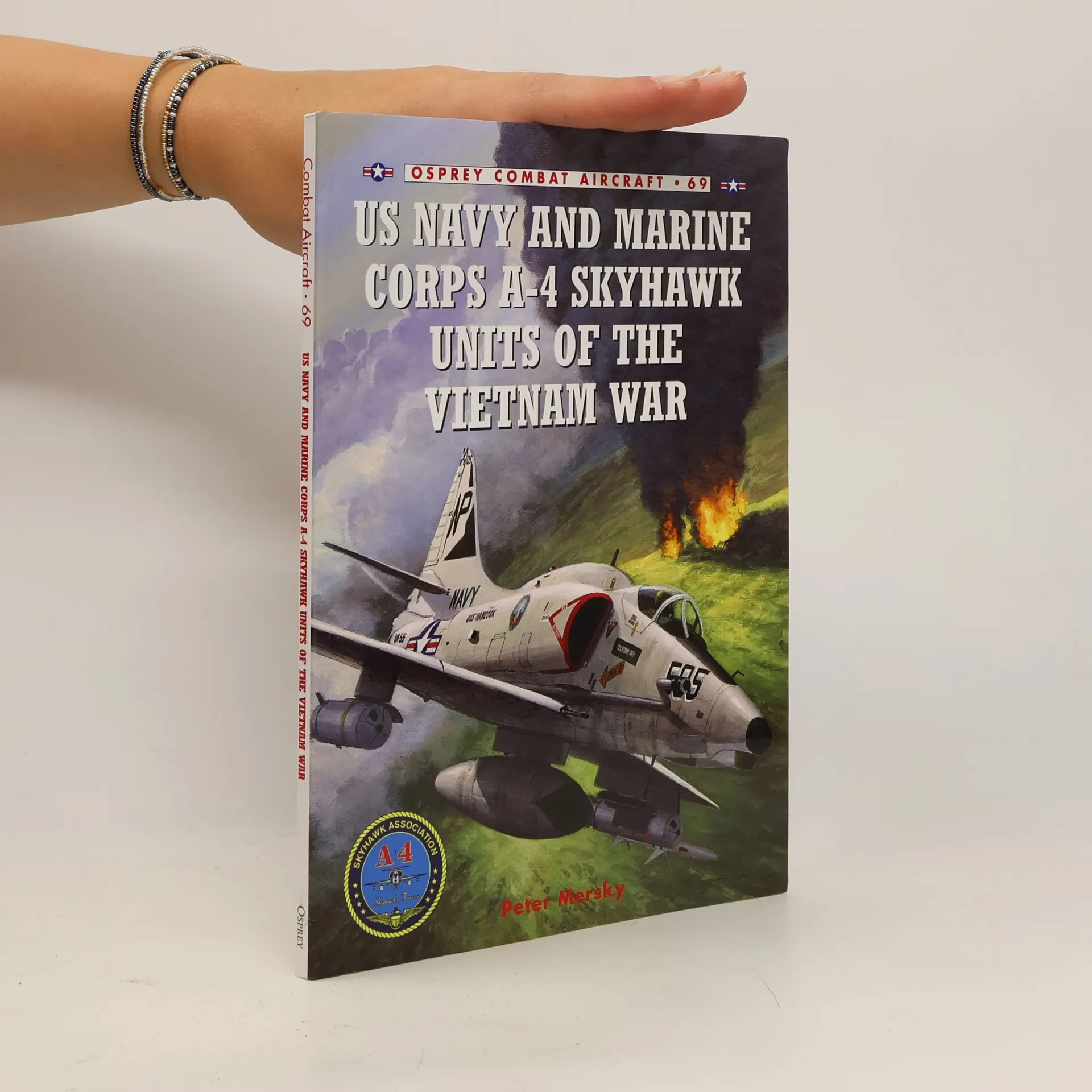
US Navy and Marine Corps A-4 Skyhawk Units of the Vietnam War 1963-1973
- 112 Seiten
- 4 Lesestunden
Seeing considerable combat in the nearly 50 years since its service introduction, the Skyhawk was involved in the Vietnam War (1955-1975) from the very beginning. Navy and Marine Corps A-4s quickly established a presence in Southeast Asia, flying from aircraft carriers and land bases in South Vietnam in thousands of sorties against the entrenched communist forces from Hanoi to the communist supply lines along the Ho Chi Minh Trail. This book includes details of missions including the siege of Khe Sanh, Lam Son and the contentious invasion of Laos and Cambodia in 1971 and gives a fascinating account of the variety of missions pilots were asked to perform. These operations were not without risk, and large numbers of A-4s were shot down and their pilots killed or, like Edward Alvarez, imprisoned as POWs for up to eight years in appalling conditions