

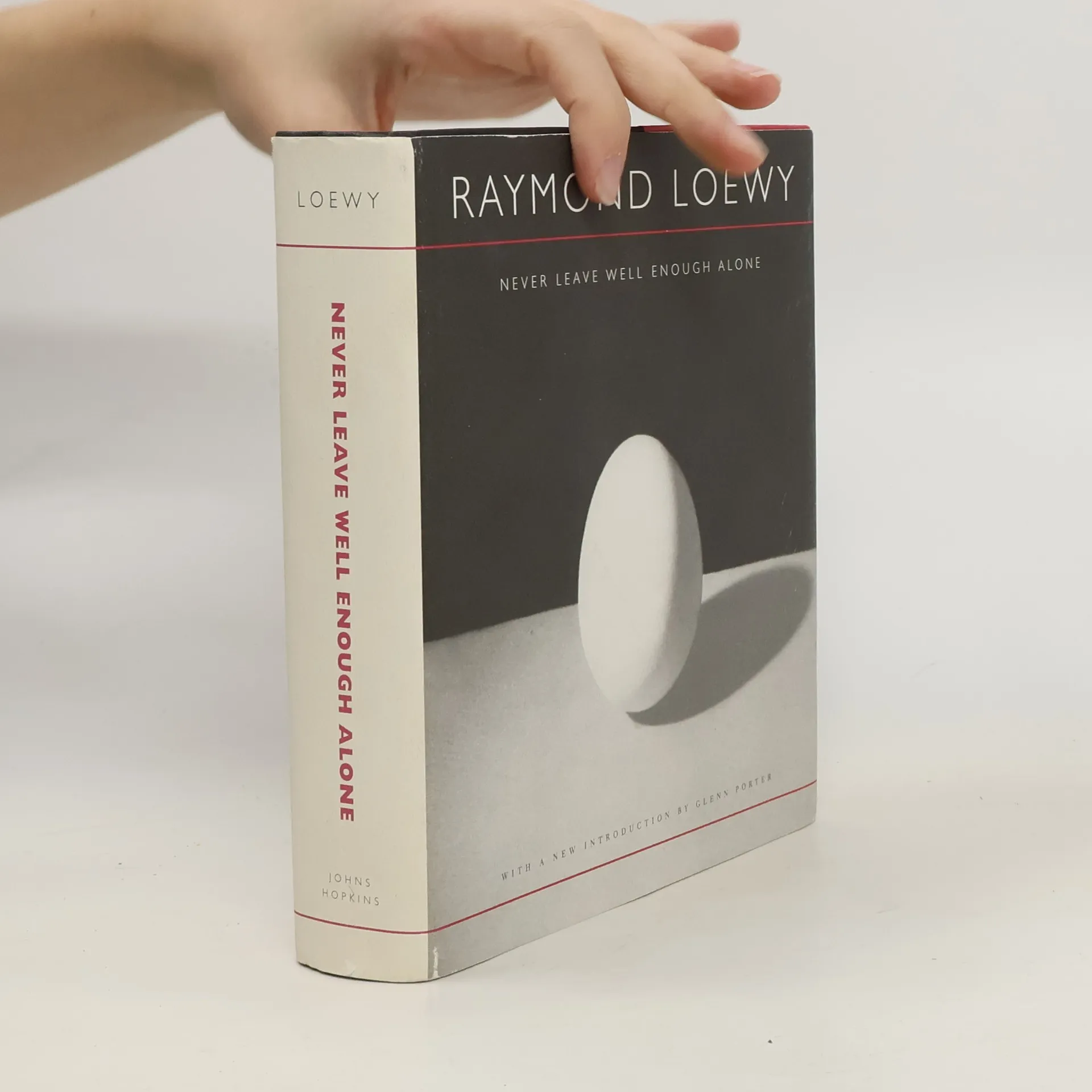
Never Leave Well Enough Alone
- 488 Seiten
- 18 Lesestunden
Between the 1930s and the 1960s, Raymond Loewy's streamlined designs transformed countless consumer goods, from toasters to automobiles, significantly altering American life. Known as the father of modern industrial design, he graced the cover of Time in 1949 and was named one of Life's "100 Most Important Americans of the 20th Century" in 1990. Mid-century Americans unknowingly inhabited a Loewy-designed world, influencing everything from cigarette packaging (Lucky Strike) to Coca-Cola dispensers, Pepsodent tubes, Studebaker cars, Greyhound buses, Pennsylvania Railroad trains, and department stores like Gimbel's and Lord & Taylor. His 1951 publication captures the height of his career, showcasing his firm, Raymond Loewy Associates, which consulted for over a hundred major corporations, generating more than $3 billion in product sales annually. This richly illustrated book serves as both an autobiography and a design manifesto, celebrated for its wit, unique perspectives, and insights into the Loewy aesthetic. It stands as a significant document of the American Century and a vital reflection on the role of industrial design in everyday life.