

Prehistory is all around us. We just need to know where to look. Juan José Millás has always felt like he doesn't quite fit into human society. Sometimes he wonders if he is even a Homo sapiensat all, or something simpler. Perhaps he is a Neanderthal who somehow survived? So he turns to Juan Luis Arsuaga, one of the world's leading palaeontologists and a super-smart sapiens, to explain why we are the way we are and where we come from. Over the course of many months, the two visit different places, many of them common scenes of our daily lives, and others unique archaeological sites. Arsuaga tries to teach the Neanderthal how to think like a sapiens and, above all, that prehistory is not a thing of the past: that traces of humanity through the millennia can be found anywhere, from a cave or a landscape to a children's playground or a toy shop. Millás and Arsuaga invite you on a journey of wonder which unites scientific discovery with the greatest human invention of all: the art of storytelling.
Millás Juan José Bücher
Juan José Millás ist ein spanischer Autor, der dafür gefeiert wird, das Alltägliche in das Fantastische zu verwandeln und so ein intimes literarisches Erlebnis zu schaffen. Er hat ein eigenes Genre, das 'Articuento', geprägt, in dem gewöhnliche Erzählungen zu fantasievollen Erkundungen werden, die die Leser ermutigen, die Realität kritischer zu betrachten. Seine Werke tauchen in psychologische und introspektive Themen ein und erforschen oft Identität, Symmetrie und die Komplexität menschlicher Beziehungen. Millás' weithin beachtete journalistische Beiträge werden für ihre Subtilität, Originalität und aufschlussreichen Kommentare zu aktuellen Themen gelobt.

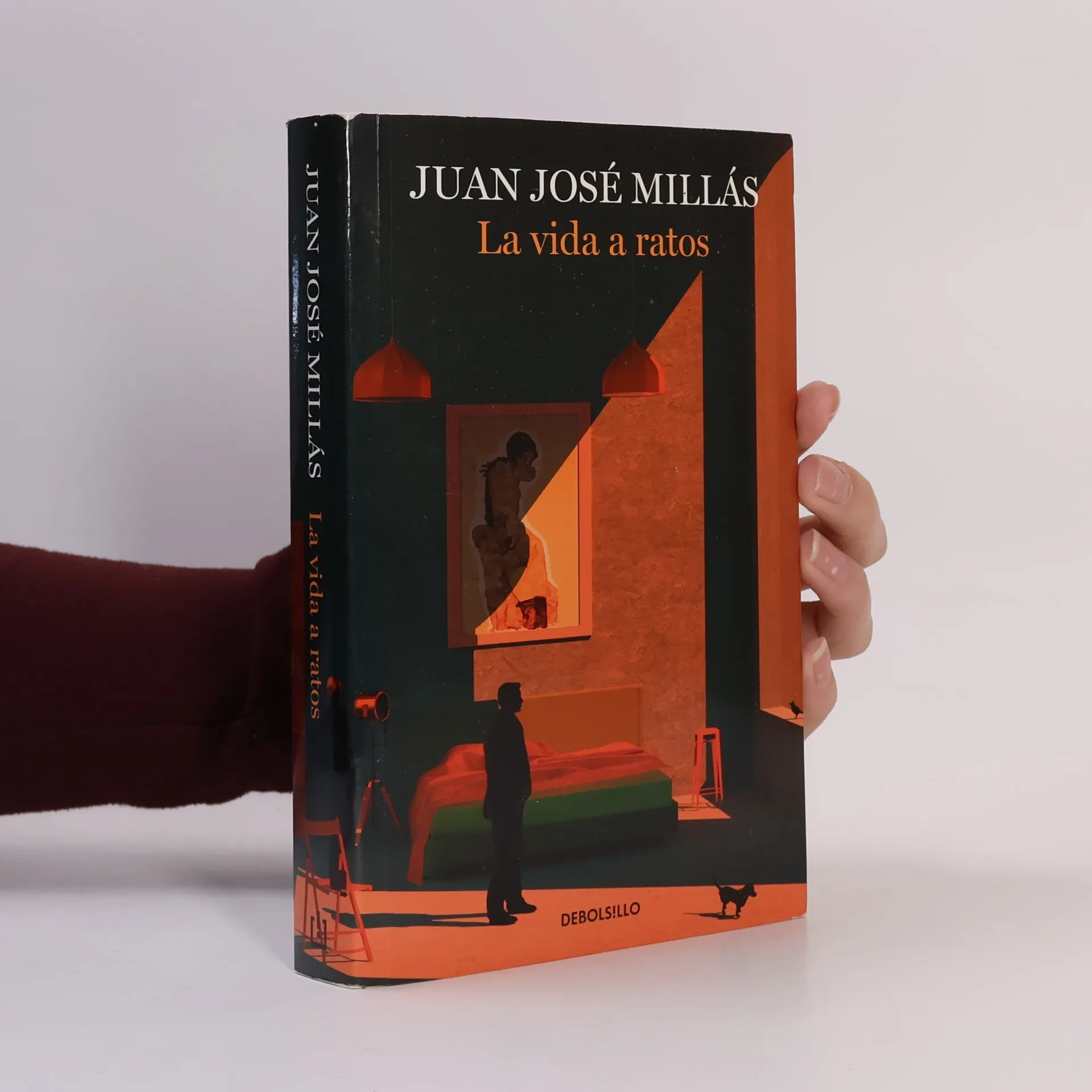
La vida a ratos
- 480 Seiten
- 17 Lesestunden
En La vida a ratos el lector es tan protagonista como el narrador, porque descubre en secreto un relato que, en la ficción, no ha sido creado para ser conocido por nadie más que aquel que lo escribe. Es el diario de más de tres años de vida de un personaje -curiosamente también llamado Juan José Millás-, que se muestra tan libre, tan neurótico, y divertido, e irónico e hipocondriaco como solo nos mostramos cuando nadie nos ve. Las visitas a la psicoanalista, el taller de escritura, los paseos por una ciudad que no deja de colocarle ante situaciones sorpresivas, la familia, los amigos... Todo es normal, todo parece anodino hasta que, al volver una esquina de la realidad, aparece lo extraordinario, lo surrealista. Y nos deslumbra.
Death As Told by a Sapiens to a Neanderthal
- 320 Seiten
- 12 Lesestunden
A dazzling follow-up to Life As Told by a Sapiens to a Neanderthal. 'We would love to discover that each species has a biological clock in its cells, because, if that clock existed and if we were able to find it, perhaps we could stop it and thus become eternal,' Arsuaga tells Millás in this book, in which science is intertwined with literature. The paleontologist reveals essential aspects of our existence to the writer, who discovers that old age is a country in which he still feels like a foreigner. After the extraordinary international reception of Life as Told by a Sapiens to a Neanderthal,the most brilliant double act in Spanish literature once again dazzle the reader by addressing topics such as death and eternity, longevity, disease, ageing, natural selection, programmed death, and survival. Here you will find humour, biology, nature, life, a lot of life ... and two fascinating characters, the Sapiens and the Neanderthal, who surprise us on every page with their sharp reflections on how evolution has treated us as a species. And also as individuals.