
Francois J. BonnetReihenfolge der Bücher (Chronologisch)
François J. Bonnet ist ein Komponist und bildender Künstler, der auch unter dem Namen Kassel Jaeger aufnimmt. Als Leiter der Groupe de Recherches Musicales am INA-GRM in Paris steht er einer wegweisenden Institution vor, die sich der Klangforschung und -schöpfung widmet. Seine Arbeit erforscht häufig die komplexe Beziehung zwischen Klang, Raum und Wahrnehmung. Bonnets künstlerische Praxis ist tief von seinem akademischen Hintergrund geprägt und trägt zu einer einzigartigen Synthese aus theoretischer Untersuchung und klanglicher Erkundung bei.
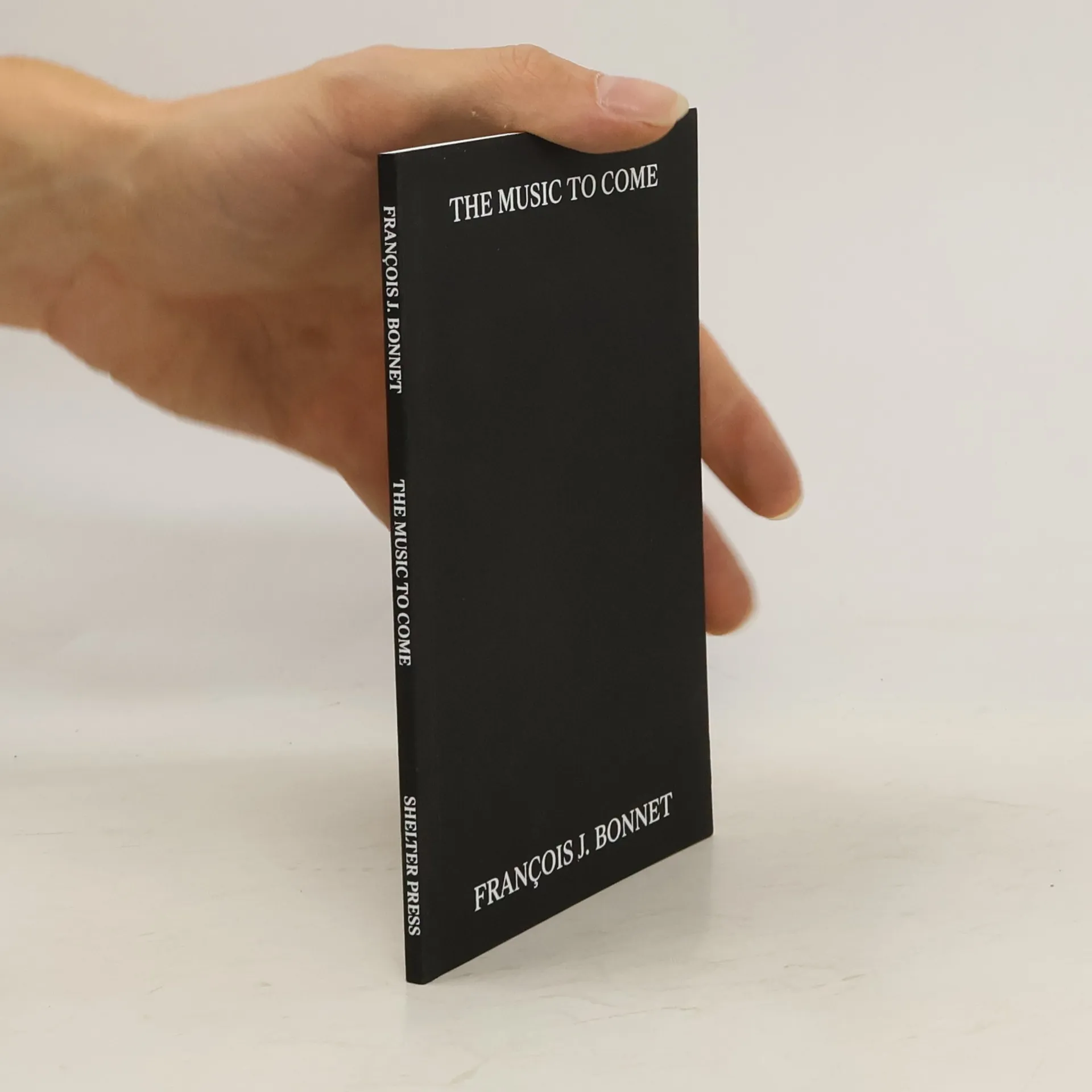
This is not a study. It is a manifesto for a peculiar conviction: that music remains to be discovered, that it is still hidden. That, nonetheless, it does sometimes appear, but most often incompletely and unevenly. And that what we have hitherto referred to as “music” is in fact only a preliminary, a prodrome. That all musics produced up until now have been nothing but simulacra, rituals to call music forth. This may sound crazy, and indeed unwelcome. But the sole concern of the following text will be to make this statement legible, understandable, and perhaps even to some extent acceptable. Its hope is that, setting out from a few intuitions, the possibility of a music to come can be formulated. That this obscure becoming will emerge, one trait at a time; that the shape of this music to come will reveal itself, gradually, by way of a cluster of assumptions, the reading of a multiple history, and the examination of damaging paradigms that have taken music far from itself. That the subjectivity of a writing, with all of its beliefs, its errors, its biases, its injustices and its shaky certainties, may yet manage to cast a singular and inspiring light upon the idea of music―this, ultimately, is the ambition of the lines to come.
A disturbing portrait of a society deliriously dreaming itself as eternal, instantaneous, and infinite. At least for the time being, we humans are still finite and mortal—but death isn't what it used to be. As the body is technologically extended in space and time, we are split between our finitude and our doubled presence in a limitless web of signs, an “immortal” world of information. After Death offers a penetrating philosophical diagnosis of our contemporary condition, describing not only an anesthesia, but an amnesia in which the compulsions of a hyper-present colonize both past and future, prevailing over any sense of duration, becoming, or appreciation of the “thickness of the real.” Are we living in a kind of counterfeit eternity in which we are effectively already dead? Against the anxiety of the constant present, how can we hope to return to the experience of being in time and facing death? After Death is a disturbing portrait of a society deliriously dreaming itself as eternal, instantaneous, and infinite.
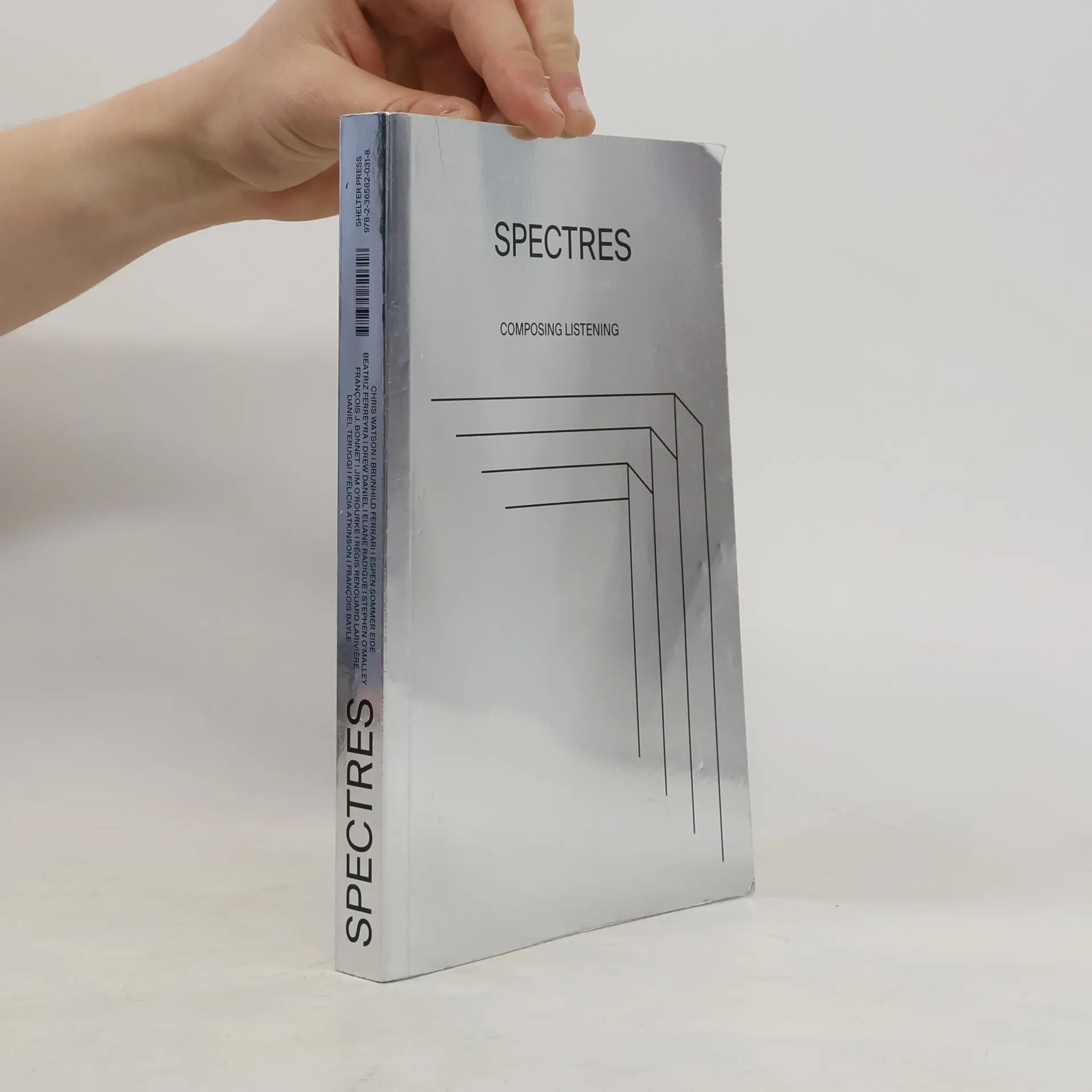
ENGLISHThis book has been conceived as both a prism and a manual. Following the “traditional” arc of electroacoustic composition (listen—record—compose—deploy—feel), each of the contributions collected together here focuses in on a personal aspect, a fragment of that thrilling territory that is sonic and musical experimentation.Although the term “experimental music” may now have be understood as referring to a genre, or even a particular style, we ought to hold on to the original use of this term, which was based more on an approach than on any particular aesthetic line to be followed. The experimental is first and foremost a spirit, the spirit of the exploration of unknown territories, a spirit of invention which sees musical composition more as a voyage into uncertain territories than as a self-assured approach working safe within the bosom of fully mapped out and recognized lands.FRANCAISLe livre qui suit a été pensé comme un prisme et un manuel. Suivant l’arc « traditionnel » de la composition électroacoustique (écouter — enregistrer — composer —déployer — ressentir), chacune des contributions regroupées ici pointe un aspect personnel, fragment de territoire passionnant qu’est celui de l’expérimentation sonore et musicale. Si le terme de musique expérimentale a pu être assimilé à un genre, voir à un style, il ne faut pour autant pas oublier l’usage initial de ce terme, qui était basé plus sur la démarche que sur la ligne esthétique adoptée.L’expérimental, en effet, est d’abord un esprit, un esprit d’exploration des territoires inouïs, un esprit d’invention qui voit dans la composition musicale plus un voyage vers des terres incertaines qu’une démarche assurée produisant dans le giron de terres balisées et reconnues.CONTENTS / SOMMAIRE1. Chris Watson Recording Enregister2. Brunhild Ferrari The Microphone’s Gaze Le regard du microphone3. Espen Sommer Eide Exercises in Non-Human Listening Exercices d’écoute non-humaine4. Beatriz Ferreyra Perceive, Feel, Hear… Percevoir, ressentir, écouter…5. Drew Daniel Towards a Heterology of Sound: on Bataille and Musique Concrète Vers une hétérologie de son : à propos de Bataille et de la musique concrète6. Eliane Radigue Time Is of No Importance Le temps n’a pas d’importance7. Stephen O’Malley Sound Matters Sons élémentaires8. François J. Bonnet Underneath Listening En deçà de l’écoute9. Jim O’Rourke Chair and Table Une chaise et une table10. Régis Renouard Larivière Acousmatic Recreations Récréations acousmatiques11. Daniel Teruggi Spaces of Mind Les espaces de l’esprit12. Félicia Atkinson On the Patio: The Voice, Doubt, Perspective and Immersion Dans le patio : la voix, le doute, la perspective et l’immersion13. François Bayle Space in Question L’espace en question