
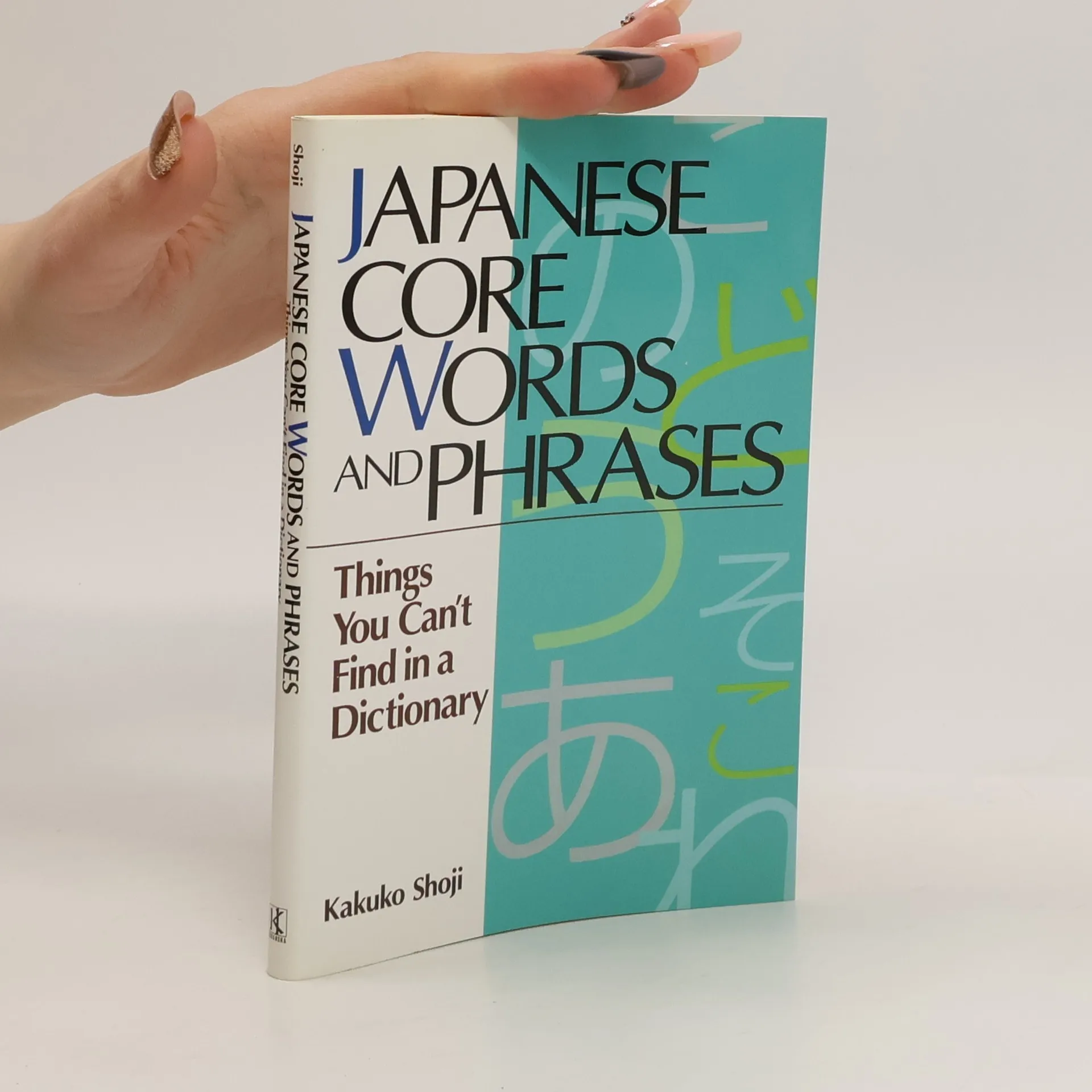

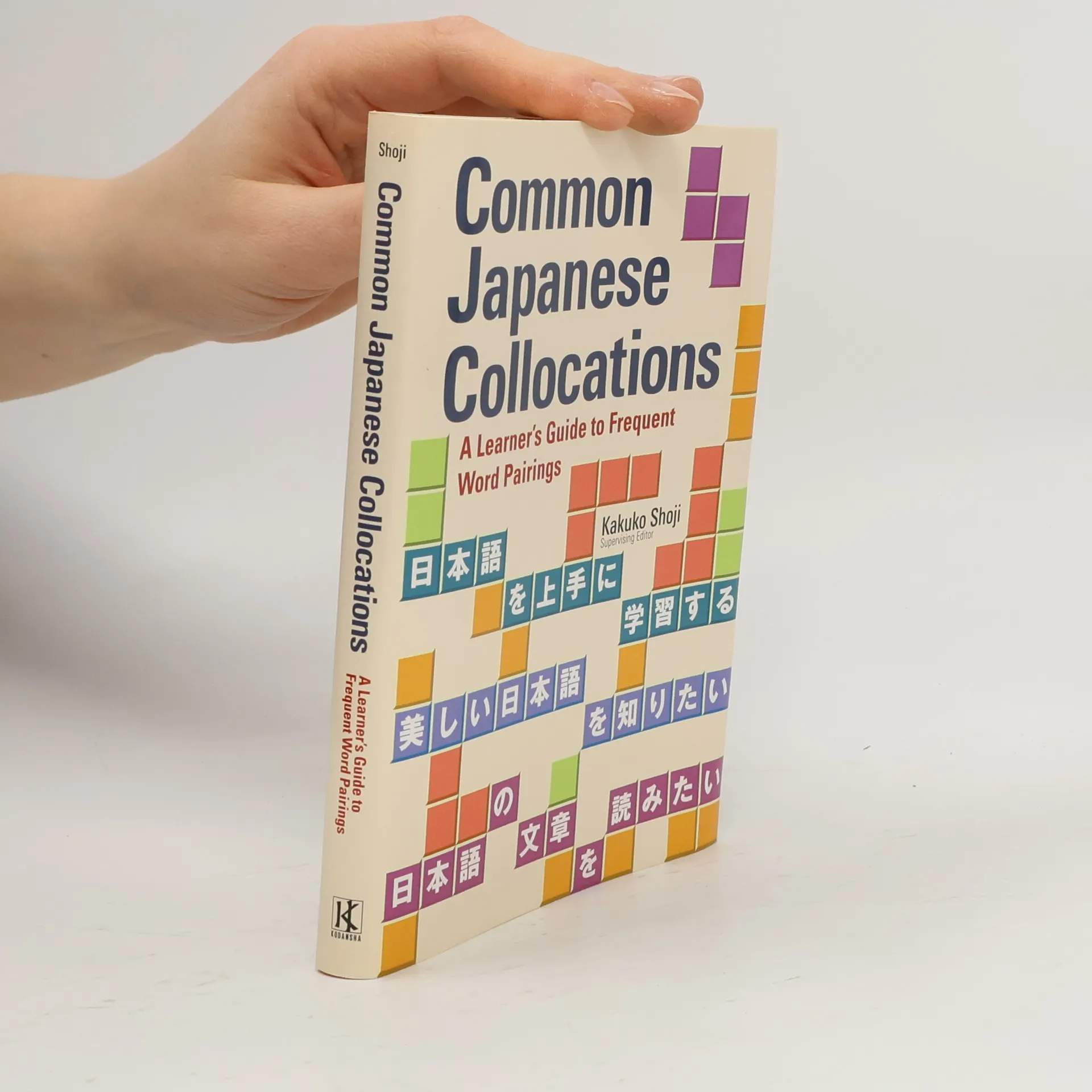
Some Japanese words and phrases, even though they lie at the core of the language, forever elude the student's grasp. They are not explained satisfactorily in dictionaries or textbooks for the simple reason that they cannot be conveniently defined. Japanese Core Words and Phrases brings theserecalcitrants to bay.The book is divided into two parts, each of which is arranged in alphabetical order. The first part is devoted to words indicating physical as well as psychological distance-roughly equivalent to "this," "that," "that over there," and "where," but quite different in usage. Physical distance iscovered in most textbooks, but psychological distance-every student's nemesis-is not.The second part of the book covers a variety of idiomatic expressions, many of which appear in Japanese proficiency tests. Each entry word or phrase is not simply explained but exemplified in sentence form, clarifying its meaning (in the case of many students) for the very first time.Japanese Core Words and Phrases has a great deal to offer the beginning student and much to offer the intermediate student. Little more can be asked of a book on the Japanese language.Previously published in the Power Japanese series as Core Words and Things You Can't Find in a Dictionary .
Kakuko Shoji Bücher


Basic Connections: Making Your Japanese Flow
- 160 Seiten
- 6 Lesestunden
Basic Connections provides basic information about expressions and usages that facilitate the flow of ideas and thoughts in written and spoken Japanese. It explains how words and phrases dovetail, how clauses pair up with other clauses, how sentences come together to create harmonious paragraphs. Since this is a book about the basics it starts with the fundamentals, explaining first the two types of Japanese sentence—"A is B" and "A does B." Then it proceeds to the problem of the modifier and the modified—a matter of "which is which." Wa and ga naturally get considerable play; after all, it is downright impossible to speak properly without them. There is also a discussion of linking nouns and noun phrases, not to speak of verbs and verb phrases. The book goes on to devote a whole chapter to common mistakes and troublesome usages. The final chapter attempts to pin down some particularly slippery locutions: such as toshite, imada ni, sore kara, whoppers like "Sentence A-te sae inakereba, Sentence B," and many more. Any beginning or intermediate student, having spent a certain amount of time and energy studying this book, will be able to speak and read Japanese in a much more coherent fashion.