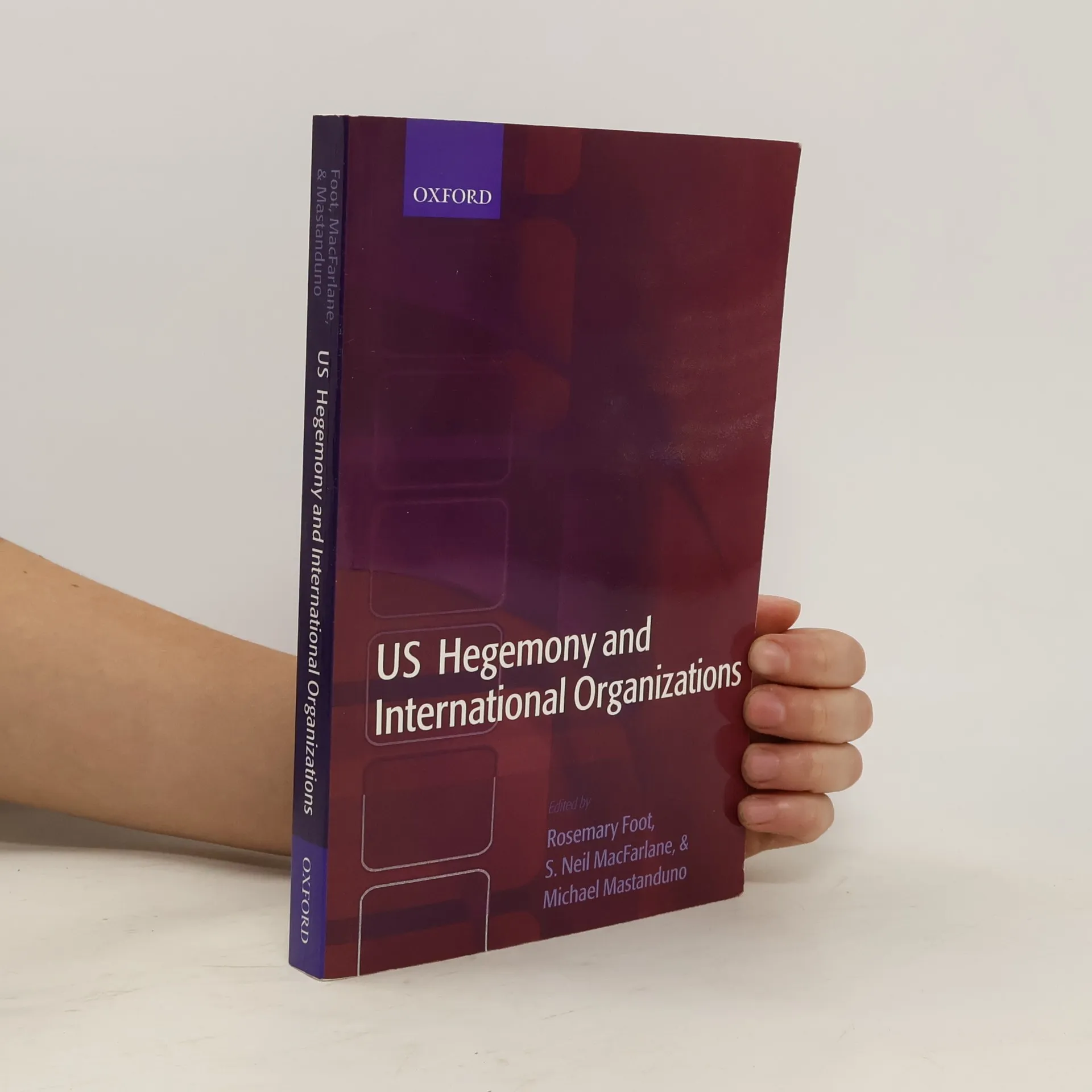
'US Hegemony and International Organizations', written by a group of leading scholars from the US and around the world, examines the role of the United States in a variety of global and regional organizations, including the United Nations, the World Bank and IMF, the WTO, NATO, and the Organization of American States.
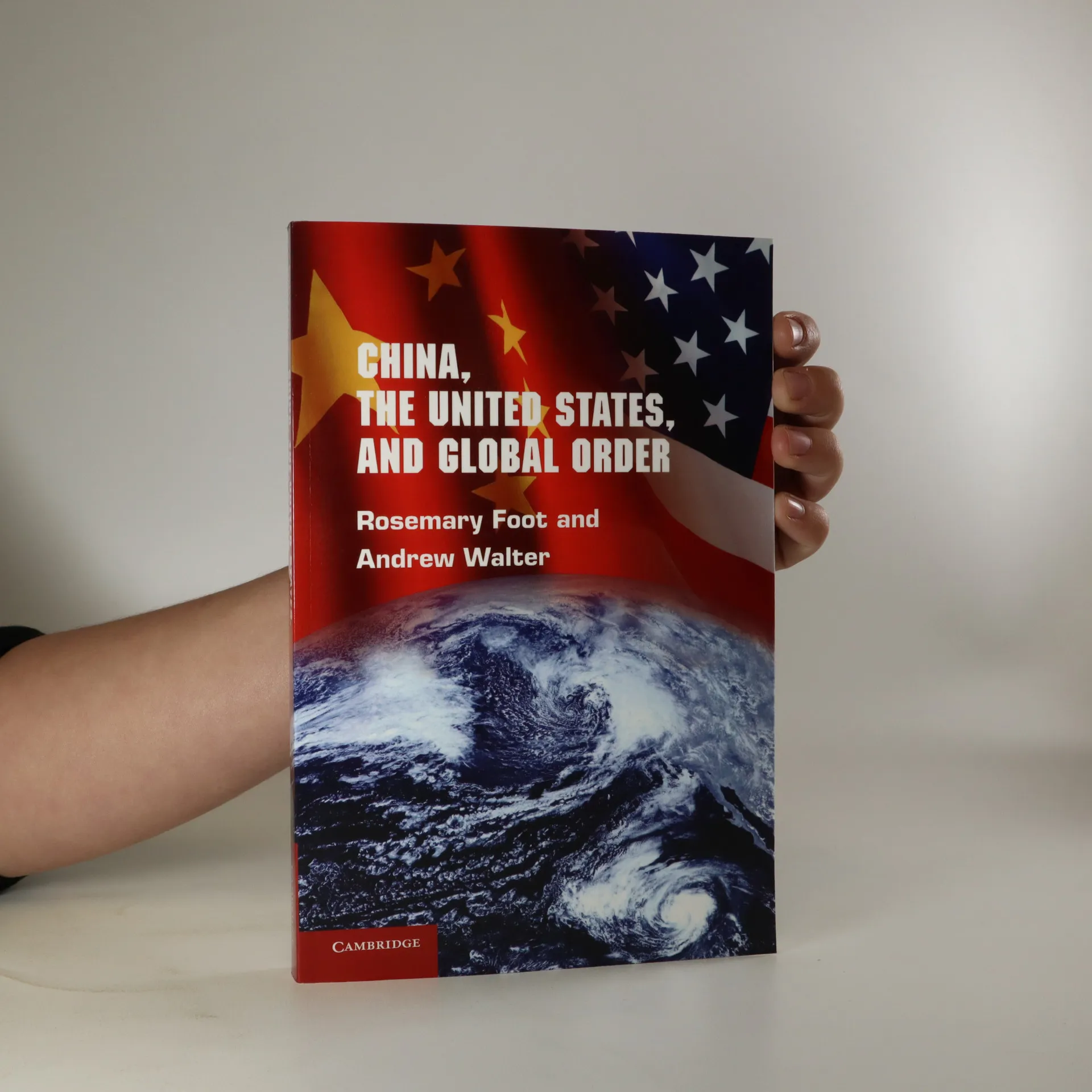
The United States and China are the two most important states in the international system and are crucial to the evolution of global order. Both recognize each other as vital players in a range of issues of global significance, including the use of force, macroeconomic policy, nonproliferation of nuclear weapons, climate change, and financial regulation. In this book, Rosemary Foot and Andrew Walter, both experts in the fields of international relations and the East Asian region, explore the relationship of the two countries to these global order issues since 1945. They ask whether the behaviour of each country is consistent with global order norms, and which domestic and international factors shape this behaviour. They investigate how the bilateral relationship of the United States and China influences the stances that each country takes. They also assess the global implications of national decisions, coming to the sobering conclusion that China and the United States tend to constrain rather than encourage more cooperative solutions to key global challenges. This is a sophisticated analysis that adroitly engages the historical, theoretical, and policy literature.